
Discover Zgorzelec
Accommodation in Zgorzelec
Zgorzelec combines a rich urban history with cultural venues, a section of the Camino de Santiago and a crossing over the Nysa Łużycka to Görlitz. Which of these aspects you would like to explore more closely gives your travel plans a focus of their own.
Zgorzelec at a glance
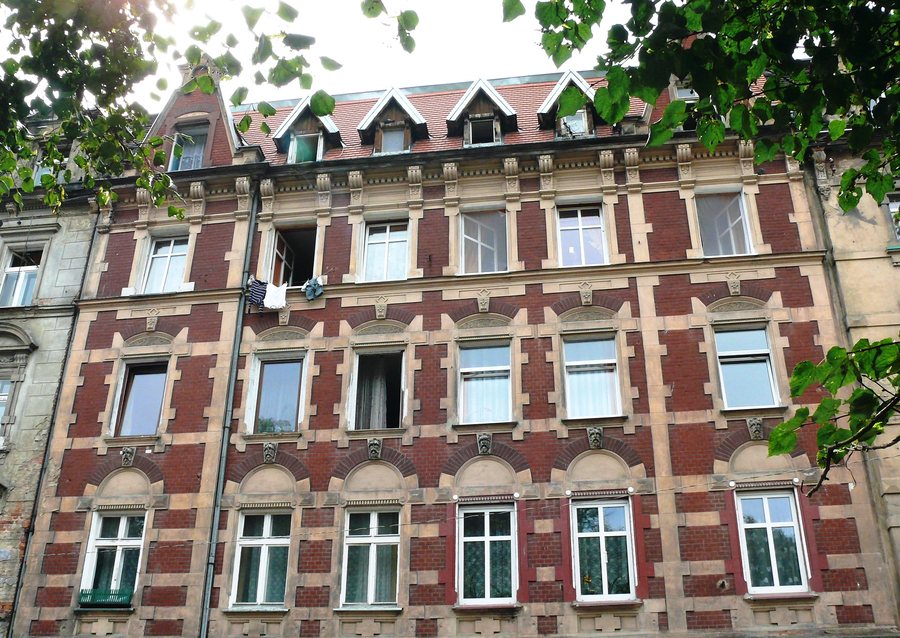
Przedmieście Nyskie is the oldest historically developed part of Zgorzelec. The Muzeum Łużyckie is located there, amid historic tenement houses along the Nysa Łużycka. The Most Staromiejski connects the riverbanks and leads directly to the old town of German Görlitz. Zgorzelec also lies on the Polish section of the Camino de Santiago, which leads to the Cathedral of Santiago de Compostela.
What urban history can you discover?
The Muzeum Łużyckie focuses on exhibitions about Zgorzelec, its history and the culture of Upper Lusatia. Its location in Przedmieście Nyskie brings together two aspects of the city: its position by the river and the district’s historic tenement houses. If you are interested in urban history, you can make a visit to the museum a distinct part of your itinerary.
The histories of individual buildings and memorials also tell of different eras. Today’s Miejski Dom Kultury was built between 1898 and 1902; Górnołużycka Hala Pamięci was the building’s former name. A plaque on one of its front walls commemorates the signing of the Treaty of Zgorzelec on 6 July 1950. The treaty established the border along the Oder and Neisse rivers. This brings architectural history and the memory of an important date in the city’s history together in a cultural building.
Another part of the cultural heritage is associated with Jakub Böhme. The Domu Jakuba Böhme commemorates the mystic and Protestant theologian of the 17th century, who lived from 1575 to 1624. Przedmieście Nyskie also has other places connected with Zgorzelec’s history and notable residents.
What experiences suit your stay?
The Most Staromiejski provides a crossing over the Nysa Łużycka and leads directly into the old town of German Görlitz. This means a stay in Zgorzelec can also include a look at the other side of the river. The bridge and the Camino de Santiago offer different experiences: one is a crossing between the riverbanks and to Görlitz’s old town, while the other is a route leading to the Cathedral of Santiago de Compostela.
If you prefer to get around by running, you could consider the Parkrun in Park Nadnyski. This free 5-kilometre event takes place every Saturday at 9:00 a.m. It is open to all ages, fitness levels and running speeds. This makes it a specific weekend activity for travellers who would like to take part in a run during their stay.
Another historical trace lies on the southern outskirts of the city: a stone obelisk with a relief and commemorative plaque stands at the former site of Stalag VIII A on Łużycka Street. After the war, the cemetery site of Stalag VIII A became a national memorial. This place offers a different, more sombre perspective on Zgorzelec’s history than the museum, cultural centre or Camino de Santiago.
Which places would you like to include in your travel comparison?
For a broader comparison, you can also include other places in your travel plans: Trójca, Bierna, Dłużyna Dolna, Jędrzychowice, Pieńsk, Bogatynia, Ruszów and Sławnikowice. When choosing a hotel in Zgorzelec, you could first consider whether you want to focus mainly on the city’s history, its cultural offerings, the Camino de Santiago or the Parkrun.
FAQ
What is Przedmieście Nyskie?
It is the oldest historically developed part of Zgorzelec. The Muzeum Łużyckie is located there, amid historic tenement houses along the Nysa Łużycka.
When does the Parkrun in Zgorzelec take place?
The free 5-kilometre Parkrun takes place every Saturday at 9:00 a.m. in Park Nadnyski.
Where does the Most Staromiejski lead?
It connects the banks of the Nysa Łużycka and leads directly to the old town of German Görlitz.
To the higher-level travel overview: Zgorzelecki.

