
Ruszów: History, Memorial Sites and Jagodowe Lato
Accommodation in Ruszów
Ruszów brings together early local history, memorials and the recurring open-air festival Jagodowe Lato. When planning your trip, it is helpful to distinguish historical dates from specific festival dates.
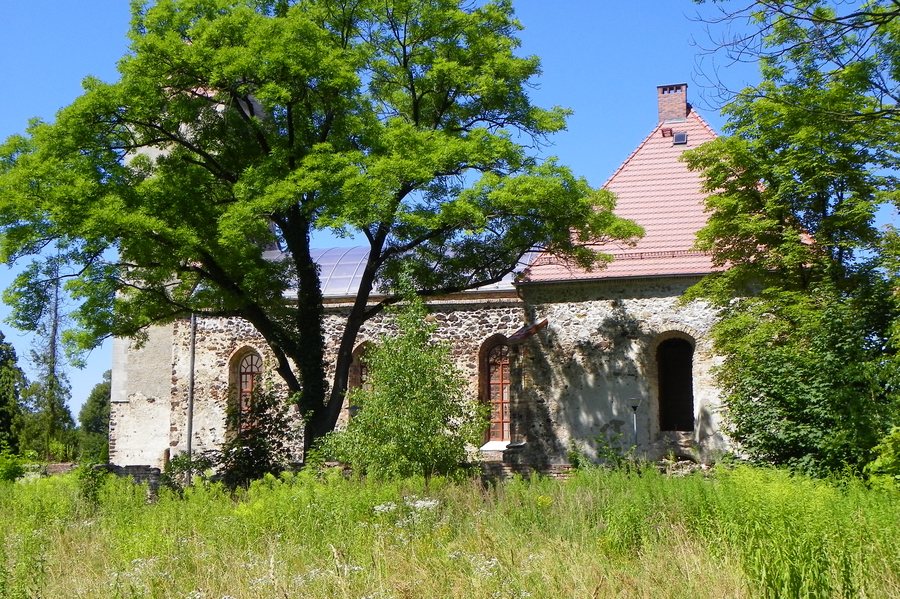 Ruszów, ruins of the 16th-century Evangelical church
Photo: Alfista33 via Wikimedia Commons, CC BY-SA 3.0
Ruszów, ruins of the 16th-century Evangelical church
Photo: Alfista33 via Wikimedia Commons, CC BY-SA 3.0
Ruszów at a Glance
- The earliest mentions of the settlement date back to 1438.
- Until 1708, there was a glassworks, a brewery, a distillery and a manor farm.
- The Broad Stone commemorates a capercaillie hunt by Prince Wilhelm II; the inscription gives the date as 23 April 1879.
- Jagodowe Lato is a recurring open-air festival in Ruszów.
- Memorial plaques were installed beside the church ruins in the cemetery.
What historical traces shape Ruszów?
The earliest mentions of Ruszów date back to 1438. The settlement initially belonged to the von Penzig family of Pieńsk; it was later acquired by the Zgorzelec town council. Until 1708, there was a glassworks, a brewery, a distillery and a manor farm there. The area's history can therefore be explored through different aspects: early mentions, ownership and various establishments.
What do the memorials tell us?
The Broad Stone commemorates Prince Wilhelm II's successful capercaillie hunt. Its inscription states that the prince shot his first capercaillie there on 23 April 1879. This links a precise date to a particular person and a specific occasion.
Another historical point of reference is the memorial plaques installed beside the church ruins in the cemetery in Ruszów. The two details emphasize different things: the occasion is identified for the Broad Stone, while the location is given for the plaques.
What should you know about Jagodowe Lato?
Jagodowe Lato is described as a recurring open-air festival in Ruszów. The 2024 edition took place in the town park; the 2025 edition was announced for 12 July. The venue mentioned therefore refers to the 2024 edition, while the specific date belongs to the 2025 announcement. If you want to plan your trip around the festival, check the date of the edition relevant to your stay in advance.
The Jagodowe Lato offerings included homemade blueberry pierogi, fries made from locally grown potatoes, cakes, grilled pork neck and sausages, vegetable salads, bread, and fresh blueberry preserves from Edyta and Gosia. Blueberries featured in both the pierogi and the preserves, alongside savoury dishes and baked goods on the festival programme.
How can you factor these topics into your travel plans?
In Ruszów, you can choose between historical topics and a stay centred around the festival. Several dates and memorials are key to the area's history, while attending the festival depends on the date of the particular edition. So, if you are looking for a hotel in Ruszów, first decide whether a specific event date or your interest in local history is the reason for your trip.
Discover more destinations: Sławnikowice, Bierna, Jędrzychowice, Dłużyna Dolna, Pieńsk, Bogatynia, Zgorzelec, Trójca.
FAQ
How far back do mentions of Ruszów go?
The earliest mentions date back to 1438. The settlement initially belonged to the von Penzig family of Pieńsk; it was later acquired by the Zgorzelec town council.
What does the Broad Stone commemorate?
It commemorates Prince Wilhelm II's successful capercaillie hunt. The inscription states that he shot his first capercaillie there on 23 April 1879.
What dates are given for Jagodowe Lato?
The 2024 edition took place in Ruszów town park. The 2025 edition was announced for 12 July.
What food was offered at the festival?
Items mentioned include homemade blueberry pierogi, fries made from locally grown potatoes, cakes, grilled pork neck, sausages, salads, bread and blueberry preserves from Edyta and Gosia.
Where were the memorial plaques installed?
The memorial plaques were installed beside the church ruins in the cemetery in Ruszów.
For the broader travel overview: Zgorzelecki.

