
Królik Polski: Wooden Houses, Remembrance and Lemko History
Accommodation in Królik Polski
Królik Polski has thatched wooden houses; by the river in front of the church is a mass grave. To the south lay the Lemko settlement of Królik Wołoski. Its history and the buildings on its former site add a distinct local perspective to the destination’s historical themes.
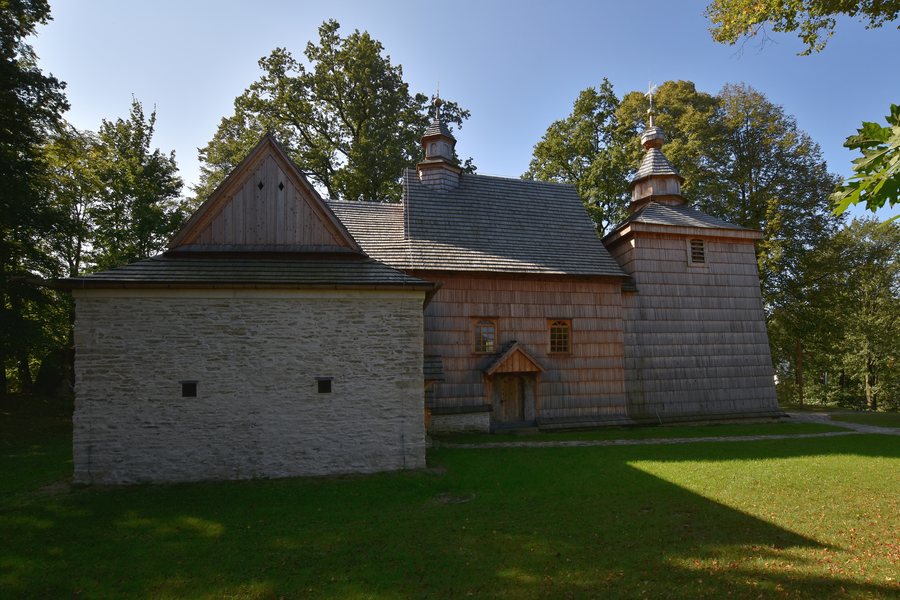 Królik Polski, Church of the Nativity of the Blessed Virgin Mary and Saint Wenceslaus (HB2)
Photo: Henryk Bielamowicz via Wikimedia Commons, CC BY-SA 4.0
Key facts about Królik Polski
- The thatched wooden houses in Królik Polski date from the second half of the 19th century.
- The mass grave by the river in front of the church commemorates those shot during the German pacification operation.
- To the south lay the Lemko settlement of Królik Wołoski. The site of the former settlement contains church ruins, a cemetery by the church, and a brick chapel.
What distinguishes the wooden houses?
The houses in Królik Polski combine wooden construction with thatched roofs. These two features describe different aspects of their construction: wood is the material used for the houses, while straw covers their roofs. The buildings date from the second half of the 19th century. This makes them comparable with the church ruins on the site of the former Królik Wołoski to the south: these are built of masonry and date back to the early years of the 19th century. The comparison highlights two differences that are useful for understanding the buildings: the materials used and their respective dates.
The houses and church ruins are not at the same location. The wooden houses stand in Królik Polski; the ruins are on the site of the former settlement of Królik Wołoski. Visitors interested in historic architectural forms can thus distinguish between two separate local points of interest and different construction methods, rather than treating all the buildings as a single ensemble.
What remembrance is associated with the place?
By the river in front of the church in Królik Polski is a mass grave of those shot during the German pacification operation. This memorial site represents a different historical perspective from the houses and church buildings: its focus is remembering those who were killed. For a cultural understanding of the destination, architectural history and remembrance are therefore distinct, independent themes.
What can be found on the site of the former Królik Wołoski?
The Lemko settlement of Królik Wołoski lay south of Królik Polski. Its former site contains the ruins of a brick church dating from the early years of the 19th century, as well as a cemetery by the church. A brick chapel also stands east of the road, in the southern, so-called upper part of the former settlement.
These location details help distinguish the historical points of reference: Królik Wołoski was a separate settlement south of Królik Polski, not another name for the present-day place. The church ruins, cemetery, and chapel are associated with the site of the former Lemko settlement. This makes it possible to distinguish between the houses and memorial site in Królik Polski, on the one hand, and the buildings at the former settlement site, on the other.
What themes can you compare?
The historical features can be grouped by construction method, period, and significance. For the wooden houses, the key features are the wood, thatched roofs, and their construction in the second half of the 19th century; the brick church ruins date back to the early years of the 19th century. The chapel and cemetery help visitors find their way around the site of the former Królik Wołoski, while the mass grave in Królik Polski is a memorial site. If you are planning a culturally focused trip, you can consider whether you are most interested in architectural history, the former Lemko settlement, or remembrance.
Discover more destinations: Rymanów-Zdrój, Krasna, Krosno, Iwonicz-Zdrój, Wrocanka, Trzciana, Bóbrka, Węglówka
FAQ
Where was Królik Wołoski located?
The Lemko settlement of Królik Wołoski lay south of Królik Polski. The church ruins, cemetery by the church, and a chapel are located on its former site.
Which 19th-century buildings are described?
The thatched wooden houses in Królik Polski date from the second half of the 19th century. The brick church ruins on the site of the former Królik Wołoski date back to the early years of the 19th century.
Where is the mass grave located?
It is by the river in front of the church in Królik Polski and commemorates those shot during the German pacification operation.
Go to the main travel overview: Krośnieński.

