
Discover Galșa: Churches, House Museum and Castle
Accommodation in Galșa
Galșa brings together several cultural points of interest that can be explored as part of a quiet and thoughtful travel plan: a house museum in the rectory churchyard, churches with different historical and architectural layers, a castle, and the ruins of a church near Curtilici. If you would like to compare culture, regional history and the distinctive features of smaller places in Eastern Europe, Galșa offers concrete points of reference. The following stops will help you understand the character of the place and consciously set the focus of your trip.
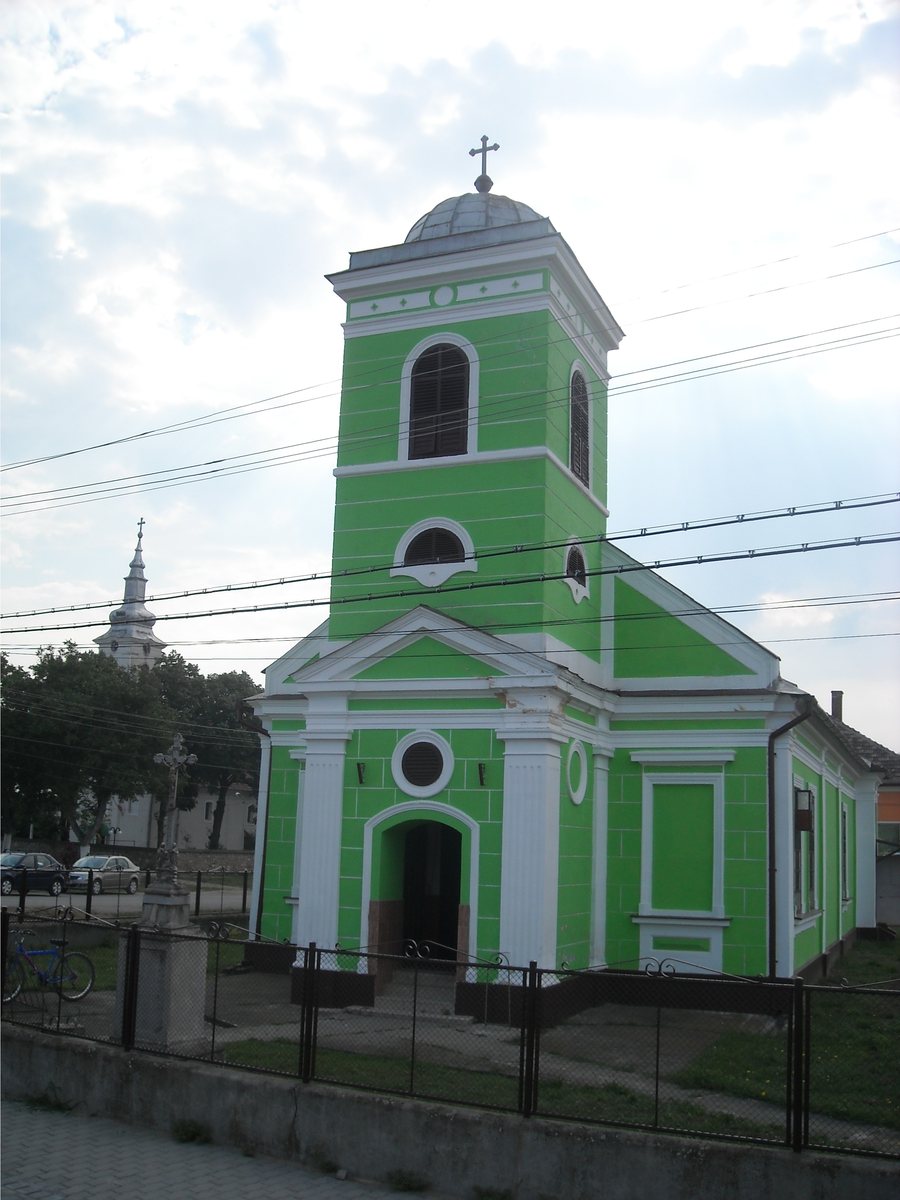
The cultural character of Galșa includes the parish house museum, the Orthodox Church of “Adormirea Maicii Domnului,” a Baroque castle with Neoclassical elements, and the church ruins located near Curtilici in the vineyards on the border between Șiria and Galșa. The buildings represent different historical periods and show how religious, family and regional traditions can come together in different ways at a travel destination. For your planning, it is helpful to consider the individual sites not only as attractions, but also according to their themes: architecture, local history, ecclesiastical art and regional memory.
What does the parish house museum tell us?
The Galșa parish house museum originated from a farmhouse dating from 1928. The building was moved to the churchyard of the parish church and converted into a museum there. This development alone makes the site interesting for travellers who are not interested exclusively in grand representative buildings, but also in the history of everyday buildings and family life. The museum is intended to highlight the importance of family traditions. Thus, alongside its visible architecture, Galșa also focuses on a subject more closely connected with memory, origins and the passing on of customs.
Here, you can connect different questions: How do buildings change through their use? What role does a farmhouse play within a churchyard? And how does family tradition become visible in a place? If you are travelling with several generations or want to take different cultural interests into account, this contrast between simple rural architecture and a religious setting can create an accessible basis for conversation.
What history do the churches of Galșa reveal?
The Orthodox Church of “Adormirea Maicii Domnului” was built between 1746 and 1749 and extended in 1894. Its main structure features elements of the provincial Baroque style; the later extensions added elements of the Neoclassical style. For visitors without specialist knowledge, this primarily means that the church does not represent just one construction phase, but also shows how a building can change over time.
The interior is also an important cultural point of reference. It contains an iconostasis attributed to Ștefan Tenețchi. An iconostasis is an elaborately designed screen of images that separates the altar area from the rest of the church interior in Orthodox churches. The attribution to Ștefan Tenețchi therefore directs attention to ecclesiastical art and not only to the exterior of the building. If you would like to consider architecture and art together, you can take both levels into account when planning: the Baroque main structure, the Neoclassical additions and the interior furnishings.
The church tower is 33 metres high and houses five bells. You do not need to make an art-historical classification; you can first take in the building through its proportions, its various stylistic features and its furnishings. For individual travel planning in particular, this combination of accessible observations and precisely described historical details is useful because it appeals to different interests without exaggerating the site with sweeping promises.
Which other historical sites form part of the cultural character?
The Baroque castle of Galșa, with Neoclassical elements, dates from the 18th and 19th centuries. Together with the Orthodox church, it offers a comparison between religious architecture and representative castle construction. If you would like to contrast several periods and types of buildings during a trip, Galșa provides a manageable selection of concrete themes for this purpose.
Near Curtilici, in the vineyards on the border between Șiria and Galșa, are the ruins of a church dating from the 14th to the 16th century. This site extends the view beyond the buildings in Galșa and also leads into a landscape associated with viticulture. The ruins are therefore a separate point of reference for your planning: they connect a historical period with a clearly defined location on the border between two places.
How can the cultural highlights be planned?
Galșa is particularly suitable for making a thematic selection when preparing your trip. You can focus on the architectural history of the Orthodox church, explore family traditions in the house museum, or compare the castle with church architecture. The ruins near Curtilici add another historical layer while also bringing the vineyards into the picture as a landscape reference. This creates not an arbitrary programme of individual names, but a comprehensible structure based on interests: religious art, historical architectural forms, family memory and the regional landscape.
If you are travelling with a group in which not everyone prefers the same topics, you can discuss these focal points separately and then bring them together. Travellers interested in architecture may pay attention to Baroque and Neoclassicism, while others may find the connection to family traditions or the ruins near Curtilici more fascinating.
Which accommodation decision suits your travel plans?
When choosing accommodation, you can consider the cultural focus of your trip as a separate criterion alongside price, location and facilities. The churches, house museum, castle and ruins near Curtilici provide points of reference for your interests, but do not determine a particular hotel location or type of accommodation. The decision to choose a hotel therefore remains a personal balance between the planned cultural programme and the conditions of the specific offer.
Which other destinations can you compare?
If you would like to compare other destinations, you can check Căprioara, Vladimirescu, Fântânele, Ghioroc, Moneasa, Hălmăgel, Şilindia and Șagu. These places serve as additional comparison options, while Galșa remains recognisable in this plan through its churches, house museum, castle and the historical points of reference near Curtilici.
FAQ
Where is the parish church of “Adormirea Maicii Domnului” located?
The parish church of “Adormirea Maicii Domnului” in Galșa is located on the right-hand side of the Șiria–Pâncota county road.
When does “Întâlnirea fiilor satului” take place?
The village sons’ gathering, “Întâlnirea fiilor satului,” takes place on the first Saturday in October. The venue alternates between Șiria, Galșa and Mâsca.
What did the Catholic church in Galșa belong to?
The Catholic church in Galșa belonged to the Archdeaconry of Pâncota.
To the main travel overview: Arad.

