
Arad: Hotels and Accommodation
Accommodation in Arad
The Parcul Natural Lunca Mureșului stretches along the Mureș River from Arad to the Hungarian border. It covers 17,455 hectares and includes the embanked, flood-prone river area of the Mureș.
Anyone wishing to stay overnight in Arad can book a hotel.
Nature
In Arad County, the Peștera „Grota Ursului“ is considered the only publicly accessible cave. It has 200 fully electrified metres and can only be visited as part of guided tours with specialist staff.
The signposted Dezna–Ruinele Cetății Dezna hiking trail is approximately 2.1 kilometres long, starts in the centre of Dezna and leads towards Moneasa.
Culture
The Muzeul Tramvaiului Electric displays electric trams from the 19th and 20th centuries. It also offers rides on a historic train along the Arad–Ghioroc route.
The necessary space for the exhibition of the Muzeul Memorial Ioan Slavici și Emil Monția was set up in the building of Bohuș Castle. The Ioan Slavici exhibition comprises three rooms with family photographs, diplomas, awards, manuscripts, books and newspapers. The permanent Emil Monția exhibition recreates his study with original furniture, a piano, a violin, sheet music, folklore collections and family photographs.
The Parcul de sculptură monumentală din Căsoaia emerged from the National Sculpture Symposium, which took place in summer from 1979 to 1985. The seven editions of the Căsoaia Symposium produced 72 monumental sculptures by 57 artists.
The Muzeul Satului in Moneasa recreates a traditional household using old tools, furniture, vessels, newspapers and traditional costumes. It can be visited by prior request at the telephone number 0755-830.548.
History
The Cetatea de la Șoimoș has been documented since 1278 and was completely rebuilt by Iancu de Hunedoara around 1440 to 1446.
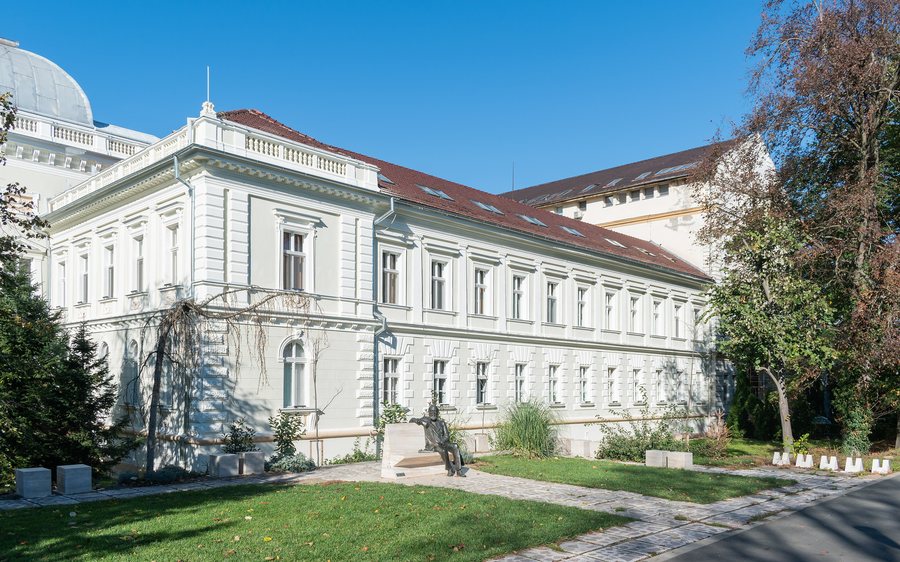
The museum of the Complexul Muzeal Arad opened in 1893 as an exhibition of relics from the 1848 Revolution. In the Palatul Cultural, the Complexul Muzeal Arad displayed collections on archaeology and medieval history, as well as a gallery of European art.
Wine
The wine-growing area of the Drumul Vinului stretches from Lipova to Ineu and passes through Păuliș, Ghioroc, Covăsânț, Șiria and Pâncota.
The current collection of the Stațiunea de Cercetare și Producție Viniviticolă Miniș comprises more than 50,000 wine bottles of different ages from the Riesling, Mustoasă, Fetească, Roșu Burgund, Cabernet and Merlot grape varieties.
The Muzeul Viei și al Vinului presents the history of viticulture and winemaking in the Miniș–Măderat wine-growing area.
Other linked places: Nadlac, Siria, Căprioara, Barzava, Almas, Comuna Vladimirescu, Săvârșin, Galșa, Gurahont, Șagu, Ineu, Ghioroc, Bata, Hălmăgel, Fântânele, Vinga, Buteni, Vladimirescu, Lipova, Şilindia, Alt-Petschka, Curtici, Arad, Moneasa.
To the higher-level travel overview: Romania.

.jpg)