
Curtea de Argeş: Monastery, Frescoes and Royal History
Accommodation in Curtea De Argeş
Curtea de Argeş deserves attention for the Mănăstirea Curtea de Argeș monastery complex. It includes the monumental Church of the Dormition of the Mother of God, the Agheasmatar, the Bishop's Palace and a ten-hectare French-style park.
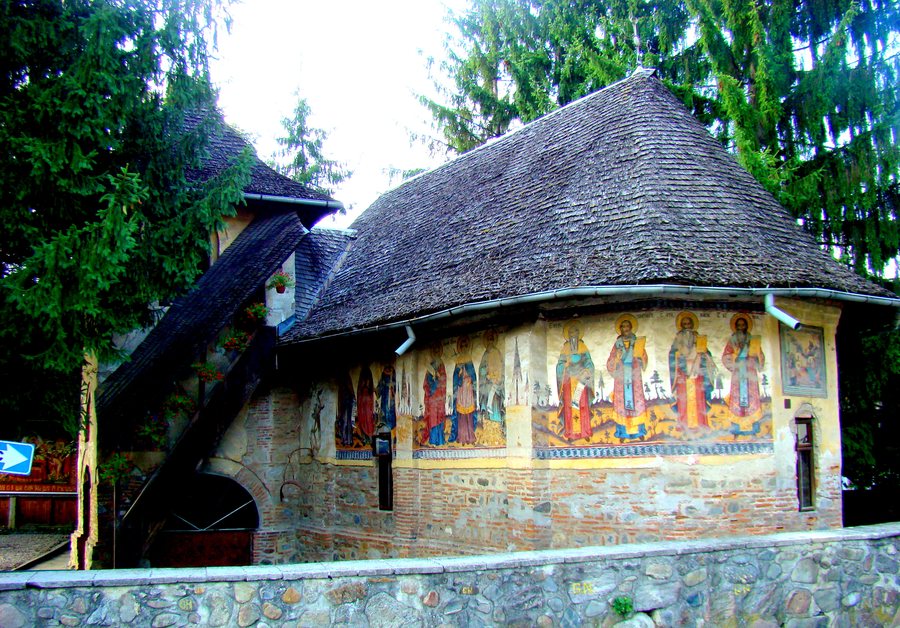 File:Biserica Adormirea Maicii Domnului - Olari din Curtea de Argeș.jpg
Photo: Țetcu Mircea Rareș via Wikimedia Commons, CC BY-SA 4.0
File:Biserica Adormirea Maicii Domnului - Olari din Curtea de Argeș.jpg
Photo: Țetcu Mircea Rareș via Wikimedia Commons, CC BY-SA 4.0
Culture
The Mănăstirea Curtea de Argeș houses a 17th-century iconostasis as well as several icons dating from the time of Șerban Cantacuzino. The pronaos of Mănăstirea Curtea de Argeș contains the tombs of the Wallachian princes Neagoe Basarab and Radu de la Afumați, as well as those of the Romanian royal couples Carol I and Elisabeta, and Ferdinand and Maria. The Noua Catedrală Arhiepiscopală in Curtea de Argeș serves as a royal and archiepiscopal necropolis and is dedicated to Saint Martyr Filoteea and the Holy Archangels Michael and Gabriel. Its royal necropolis has 16 burial places for members of the Romanian royal family and the archbishops of Argeș and Muscel.
The Biserica Domnească Sfântul Nicolae in Curtea de Argeș preserves its original 14th-century wall paintings. The ruins of the Biserica Sân Nicoară feature alternating rows of river stones and bricks. Archaeological excavations at the ruins uncovered glazed pottery fragments, silver and copper coins, silver rings from the 14th and 15th centuries, glass vessels and fragments of frescoes.
The Biserica Olari was built in the 17th century through the efforts of the nun Salomia. Its interior frescoes include a depiction entitled „Moartea“, considered unique in Romania and one of the few depictions of its kind worldwide. The Bishop's Palace in Curtea de Argeș houses a museum with four original frescoes from the monastery cathedral, as well as the iconostasis donated by Șerban Cantacuzino.
The Muzeul de etnografie Dumitru Norocea displays Argeș pottery, embroidery, textiles typical of the region, traditional costumes from the Argeș area, and tools for household activities and agricultural work. Casa Goangă was built at the beginning of the 19th century. It is the most extensive surviving traditional residential building in the historic center of Curtea de Argeș. The Gara Regală in Curtea de Argeș is classified as an architectural monument of national historical importance. The Fântâna Meșterului Manole is a fountain built in the rustic style in the 19th century beside Mănăstirea Curtea de Argeș.
When planning your trip to Curtea de Argeş, you can compare travel dates, room categories and cancellation policies side by side on hotel offer pages. This information provides a clear basis for comparing the financial framework and the desired type of accommodation, while the decision about the topics you visit remains yours.
Further destinations for your planning: Sălătrucu, Bălilești, Mioveni, Bradu, Arefu, Argeșelu, Valea Uleiului and Cotmeana.
Geographical Context
Poenari Castle is located in the wider regional surroundings of Curtea de Argeș. Dealul Robaia is a mountain in the wider regional surroundings of Curtea de Argeș. Albina, Ghitu and Obarsia are peaks in the wider regional surroundings of Curtea de Argeș.
To the higher-level travel overview: Argeş.

