
Făgăraș: Fortress, Museum and Churches
Accommodation in Făgăraş
Făgăraș combines a historic building with regional museum culture and sacred art. Făgăraş Fortress is considered one of Romania’s and Europe’s largest and best-preserved monuments. The various topics can be considered alongside one another when planning a trip.
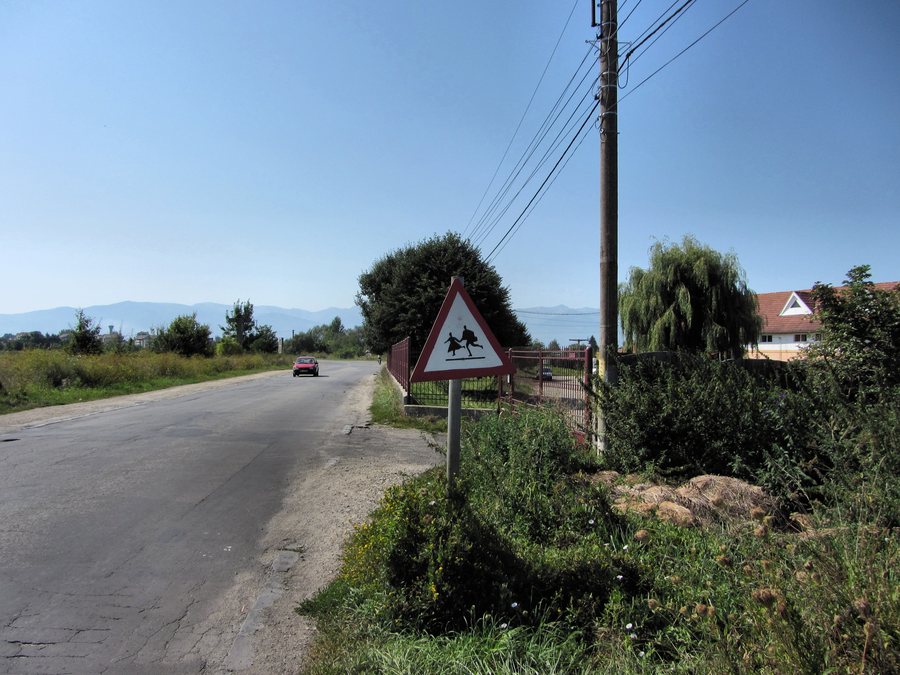 File:Warning Sign "Children" in Făgăraș (AP4L2466 1PSP) (20619302228).jpg
Photo: Alexandru Panoiu from Bucharest, Romania via Source, CC BY 2.0
File:Warning Sign "Children" in Făgăraș (AP4L2466 1PSP) (20619302228).jpg
Photo: Alexandru Panoiu from Bucharest, Romania via Source, CC BY 2.0
Culture and History
Construction of Făgăraş Fortress began at the end of the 14th century and continued through successive expansions until the middle of the 17th century. In the 15th century, the fortress had a bastion tower at each of its four corners, as well as an additional outpost tower on the eastern side.
The “Valer Literat” Museum of the Făgăraș Region was founded in 1923 on the basis of Professor Valeriu Literat’s ethnographic collection. It brings together history, ethnography and art and includes, among others, archaeological, military-historical, folkloric, religious-artistic and craft collections. The permanent exhibition is divided into the history of the Făgăraș region, the ethnography of the Olt Country and the Virgil Fulicea Sculpture Gallery. If you would like to mentally organise the museum’s offerings, you can consider the individual focuses separately while keeping the different subject areas clearly distinct.
Churches and Sacred Details
The Orthodox Church of Saint Nicholas was founded by the Wallachian prince Constantin Brâncoveanu and his wife Maria. It is considered Făgăraș’s oldest sacred building and was constructed in 1697–1698. Its original iconostasis is carved from oak in the Brâncovenesc style and covered with gold leaf. The Reformed Church of Făgăraș also contains a stone pulpit decorated with flowers, leaves and wreaths.
The churches Biserica Ortodoxă Sfânta Parascheva, Biserica Ortodoxă Sfântul Gheorghe, Biserica Naşterea Maicii Domnului and Biserica Ludişor are located in the surroundings of Făgăraș.
Geographical Location
Geographically, Făgăraș lies in the central northern part of the basin of the same name. This basin is bordered by the Făgăraș Mountains, the Perșani Mountains and the Olt River. Făgăraș is also located on the DN1 national road between Brașov and Sibiu. When planning, you can consider the town’s location and the destinations mentioned separately in the nearby and wider regional surroundings.
Landscape
The Dealul Netotului hill is located in the surroundings of Făgăraș. In the wider regional surroundings of Făgăraș are the peaks of Runcu, Pietriceaua and Vârful Chiciuni. Distinguishing between the surroundings and the wider regional surroundings helps organise the places mentioned according to their spatial relationship.
Event
The seventh edition of the folk costume festival “FĂGĂRAȘ, FOAIE DE CEAPĂ!” was announced for 26 July 2024.
For trip planning in Făgăraș, travel dates, room category and cancellation conditions can serve as separate comparison points. This allows a hotel to be considered on the basis of the same information, while the fortress, museum and churches define the cultural content of the trip. The question of accommodation thus remains a practical choice alongside the historical, sacred and landscape topics described.
Further Destinations
Further destinations: Cheia, Vama Buzăului, Tohanu Nou, Bran, Șirnea, Rupea, Săcele, Cristian
To the higher-level travel overview: Brasov.

_(20619302228).jpg)