
Budeşti between River Landscapes and Churches
Accommodation in Budesti
Budeşti is characterized by village districts, historic churches and transport connections. The town lies on the banks of the Dâmboviţa, where this river flows into the Argeş.
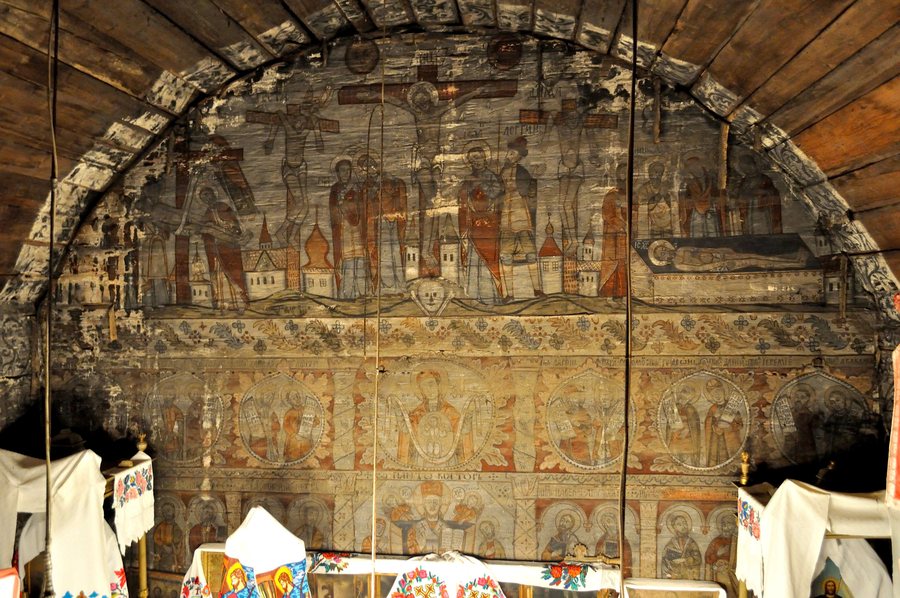 File:Biserica de lemn din Budești Susani (56).jpg
Photo: Țetcu Mircea Rareș via Wikimedia Commons, CC BY-SA 4.0
File:Biserica de lemn din Budești Susani (56).jpg
Photo: Țetcu Mircea Rareș via Wikimedia Commons, CC BY-SA 4.0
Budeşti lies on the Dâmboviţa at its confluence with the Argeş. National road DN4 passes through Budeşti and connects Olteniţa with Bucharest. In addition, Budeşti is served by Budeşti railway station on the Bucharest–Olteniţa railway line.
The area around Budeşti contains various landscape and cultural features. The village of Aprozi lies on the eastern edge of Lacului Aprozi. Budeşti has churches, each with its own construction and restoration history, while the ruins of Conacul Manu lie near the Argeş floodplain.
What characterizes the landscape around Budeşti?
Budeşti lies on the Dâmboviţa and at its confluence with the Argeş. The rivers form the landscape setting of the town; however, no specific recreational activities or accessible riverbank areas can be inferred from this.
The ruins of Conacul Manu lie near the Argeş floodplain. The year 1827 is associated with the ruins of Conacul Manu as the year of construction.
Which transport connections are important for planning?
DN4 passes through Budeşti and connects Olteniţa with Bucharest.
Budeşti railway station serves the town on the Bucharest–Olteniţa railway line.
Which churches tell the story of the town's history?
In the Budeşti district of Aprozi, the church Biserica Adormirea Maicii Domnului was built in 1841 at the initiative of Iancu Manu. The Church of Adormirea Maicii Domnului in Budeşti also houses a miraculous icon of the Holy Trinity dated 1864.
The present-day brick-built Biserica Sfinţii Împăraţi Constantin şi Elena is located in the Buciumeni district. It was built on 29 June 1841 by Constantin Lămotescu and his wife Alexandra, and restored in 1869 by Dumitru Marateea.
Which landscape features are located in the wider surrounding area?
Movila lui Kesa is a hill in the area around Budeşti. Dealul Radovanului is also a hill in the area around Budeşti.
The wider regional surroundings of Budeşti also include the springs La Fântânele and Fântâna lui Niţă Vasile.
Other places in the regional surroundings of Budeşti are Olteniţa, Cuza Voda, Călăraşi, Frăsinetu de Jos, Belciugatele and Ciocănești. For regional comparison, you can also include Călăraşi and Olteniţa.
FAQ
Where is Budeşti located?
Budeşti lies on the banks of the Dâmboviţa, where the river flows into the Argeş. The surrounding landscape also includes the village of Aprozi on the eastern edge of Lacului Aprozi.
Which transport connections are documented for Budeşti?
In addition, Budeşti is served by Budeşti railway station on the Bucharest–Olteniţa railway line.
Which historic churches are there in Budeşti?
The Biserica Adormirea Maicii Domnului, built in 1841 at the initiative of Iancu Manu, is located in the Aprozi district. The Biserica Sfinţii Împăraţi Constantin şi Elena, built on 29 June 1841 and restored in 1869, is located in Buciumeni.
What year of construction is associated with the ruins of Conacul Manu?
The year 1827 is associated with the ruins as the year of construction.
What other landscape features are part of the surrounding area?
The hills Movila lui Kesa and Dealul Radovanului are located in the area around Budeşti. The wider regional surroundings also include the springs La Fântânele and Fântâna lui Niţă Vasile.
For the overarching travel overview: Călăraşi.

.jpg)