
Olteniţa between Gumelniţa Culture and Danube Nature
Accommodation in Olteniţa
Olteniţa can be viewed from both a cultural-historical and a landscape perspective: evidence of the Gumelniţa Culture is followed by churches, monuments and the Danube region with its protected areas. This provides several clearly distinct topics for planning your own visit, ranging from exhibition content to river kilometres and named landforms.
Culture
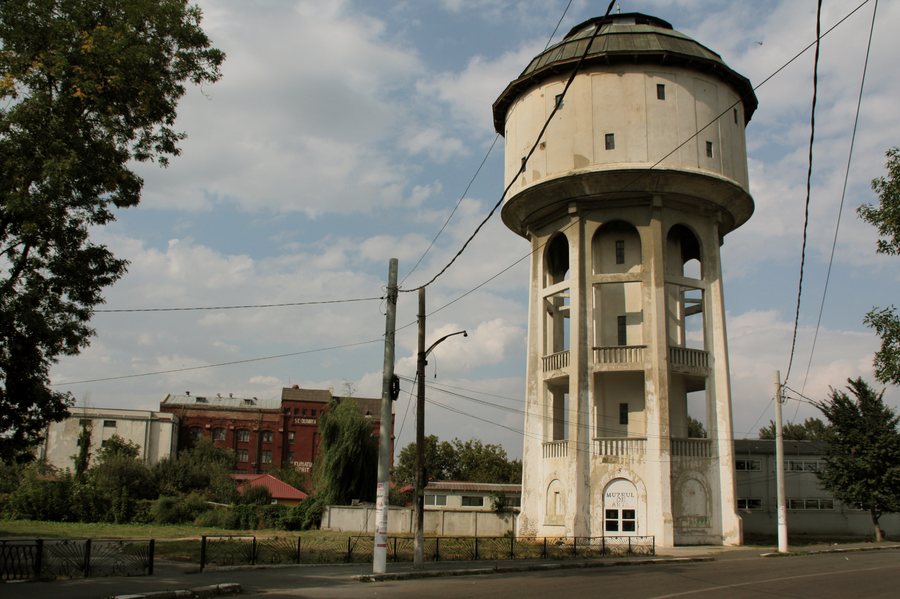
The Muzeul Civilizației Gumelnița was founded in 1957 on the basis of a donation of 902 archaeological artefacts. In a new exhibition space at 6A Argeşului Street, next to the central park and the old water tower of Olteniţa, there is an exhibition dedicated exclusively to the Gumelniţa Culture. Materials from the Chalcolithic Gumelniţa Culture are displayed: tools made of stone and antler, ceramics, figurines, anthropomorphic and zoomorphic vessels, harpoons, stone axes and sculptures.
East of Olteniţa, Măgura Gumelniţa is located nearby, a natural erosional remnant of the high Danube terrace. The archaeological site covers 3 hectares; the site was rediscovered as a prehistoric settlement in 1924.
The water tower of Olteniţa is made of reinforced concrete and was the first construction of its kind in the city. In 1992, it was declared a historic monument; it was subsequently used for temporary art exhibitions.
The Biserica Catedrală Sfântul Nicolae is Olteniţa's oldest church and is now an architectural monument. With the support of local residents, it was commissioned and built between 1858 and 1861.
The Biserica Sfântul Nicolae din Olteniţa Veche was burned down by the Turks during the Russo-Turkish War of 1806 to 1812, rebuilt from the ground up and painted on 28 May 1846. In the vicinity of Olteniţa are the Biserica Ortodoxă Sfântul Gheorghe, the Biserica Ortodoxă Sfântul Nicolae, the Biserica Adventistă Olteniţa and the Biserica Ortodoxă Sfântă Paraschiva.
The grounds of the Biserica Eroilor include the Tomb of the Unknown Hero, the Heroes' Cemetery and the 1916 Heroes' Monument. In the city centre stands the Monumentul Eroilor from the First World War, which was inaugurated on 29 June 1930. It was created by the sculptor Ion Iordanescu; it bears the names of 166 local soldiers who fell in the fighting during the First World War.
Nature
The ROSPA0038 Dunăre–Olteniţa bird protection area covers the Danube between river kilometres 451 and 430, including the Căscioarele–Chirnogi–Olteniţa section and the islands of Albina and Georgescu. Around 28 protected bird species nest, feed or rest there.
The ROSCI0131 Olteniţa-Mostiștea-Chiciu Natura 2000 site is a site of Community importance within Romania's Natura 2000 network. It comprises rivers with muddy banks, natural eutrophic lakes, oligotrophic to mesotrophic standing waters and lowland meadows.
The named landforms near Olteniţa include Kosuy as an island and Calomfirescu as a hill; Kalimok is an island and Dealul Viilor is a hill in the surrounding area.
More local pages: Călăraşi, Budesti, Belciugatele, Ciocănești, Cuza Voda, Frăsinetu de Jos.
Geographical classification
The tourist port of Olteniţa provided a connection to Bucharest and to important points on Danube cruises.
To the higher-level travel overview: Călăraşi.

