
Floreşti: Culture, History and Recreation
Accommodation in Floreşti
Culture
The Muzeul Apei in Floreşti was established in 1992 as Romania’s first and only water museum, in the building of a pumping station that had been put into operation in 1898. The site thus brings together water, technology and architectural history: the establishment of the museum and the building’s former function belong to different periods.
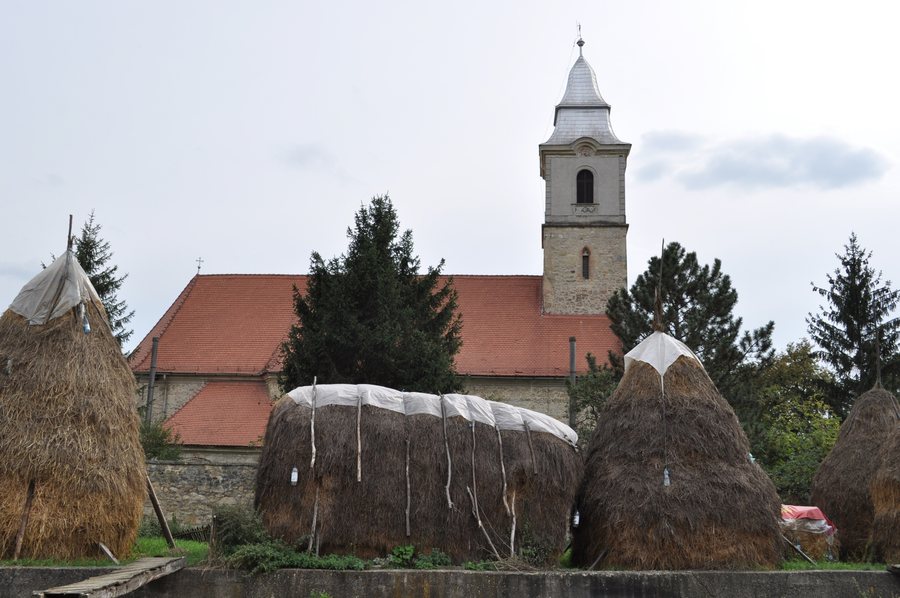 File:Biserica romano-catolica din Floresti (11).JPG
Photo: Țetcu Mircea Rareș via Wikimedia Commons, CC BY-SA 3.0 ro
File:Biserica romano-catolica din Floresti (11).JPG
Photo: Țetcu Mircea Rareș via Wikimedia Commons, CC BY-SA 3.0 ro
Cetatea Fetei, also known as Cetatea Florești, is a medieval monument in Floreşti; ruins are all that remain today of the castle built in the 13th century and destroyed in the early 15th century. The Romanian parish church Biserica Sfântul Dumitru in Floreşti was built entirely between 1830 and 1834 at the expense of the canon and professor Dumitru Căian-Tânărul. Thus, a medieval structure and a 19th-century church stand side by side in Floreşti, with their dates of origin clearly differing from one another.
History and Remembrance
Personal and commemorative history are also part of the designated cultural sites. The bust of Gheorghe Șincai in Floreşti was created by sculptor Virgil Fulea and unveiled in 1978 on the occasion of the 200th anniversary of the founding of the first Romanian-language school in the village of Floreşti. The Monumentul Eroilor in Floreşti was erected in 1925 as a memorial monument on the initiative of the school’s director at the time, Ioachim Pop.
In front of the Liceul Teoretic „Dumitru Tăuțan” in Floreşti, which is named after him, stands the bust of Dumitru Tăuțan, honouring his legacy as a teacher. The commemorative selection thus includes a sculptor, a connection to a school, a memorial monument and a teacher’s legacy. The years 1925 and 1978 mark different occasions of public remembrance.
Recreation
Parcul de Agrement Florești includes sports fields, an adventure park and a picnic area. The park’s facilities are integrated into a landscaped green space. The three named components differ in their use: sports, adventure and picnicking form distinct focal points within the same park complex.
The aim of the completed Parcul de Agrement Florești project was to create a modern recreation park integrated into the community and accessible to all citizens, including people with disabilities. Strada Subcetate was modernised to improve access to and connectivity with the new Parcul de Agrement Florești. The project objective, park design and connection to the road thus describe different aspects of the same recreation facility.
Stay
For a stay in Floreşti, travel dates, room category and cancellation conditions are among the details that structure an individual travel plan alongside the historic sites and Parcul de Agrement. These three details represent different practical conditions without conflating the named attractions and park components. During a hotel stay in Floreşti, travel dates, room category and cancellation conditions can be considered separately. These points form the practical framework, while the choice of destination can be connected to the named cultural sites or Parcul de Agrement Florești. This keeps cultural history and recreation recognisable as distinct focuses of the stay.
More places: Moldovenești, Huedin, Margau, Ciurila, Nădăşelu, Lunca Vişagului, Smida, Cluj-Napoca
For the overarching travel overview: Cluj-Napoca.

.JPG)