
Mărgău: Mountain Community, History and Gumuțeasca
Accommodation in Margau
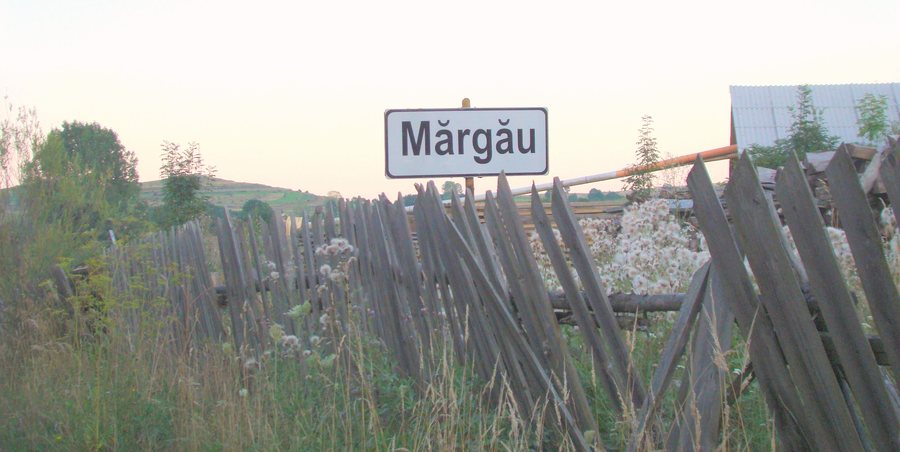
Mărgău is a mountain community at the foot of the Vlădeasa Mountains and belongs to the Apuseni Mountains. The village of Mărgău dates back to the year 1200. The present-day settlement site of Mărgău has been inhabited since the 14th century.
History
A historic monument in Mărgău is the Church of the Holy Archangels Michael and Gabriel, which was built between 1804 and 1810. A stone wall around the church and cemetery of Mărgău was erected in 1735. The Church of the “Sfinții Arhangheli” in Mărgău is made of dressed stone and river stone; its bell tower was built from beams, while the nave and porch are covered with sheet metal. The construction period of the church and the earlier date of the stone wall therefore belong to different points in the history of the settlement.
Culture
Since the beginning of the 20th century, itinerant glassmaking was practiced on a large scale in Mărgău. Women from the Mărgău area were known for producing high-quality textiles and traditional costume elements. The glassmakers from Mărgău traveled throughout the country and earned their livelihood by selling glass. To communicate during price negotiations and while working, the glassmakers from Mărgău invented Gumuțeasca without their customers understanding them. The linguist Romulus Todoran studied Gumuțeasca and described it as an independent rural occupational jargon. Individual expressions from Gumuțeasca can still be heard today in conversations among the inhabitants of the Mărgău commune. Thus, a cultural view of Mărgău encompasses both a craft with far-reaching travel routes and textile work from the commune's area. Gumuțeasca connects the glassmakers' working world with a linguistic trace that can still be heard today.
Nature and Trails
The Mărgăuța River crosses Mărgău from south to north. The Bánffy K60/70 cycling tour passes through Mărgău and is classified as moderately difficult. In the wider regional surroundings of Mărgău, the Răchițele circular trail runs as an easy loop over 12.5 kilometers, with 450 meters of elevation gain and a walking time of 4 to 5 hours. It passes through the settlement of Răchițele and follows the Valea Stanciului valley to the Cascada Vălul Miresei waterfall.
When comparing the routes, activity and difficulty can be considered separately. For the Răchițele circular trail, distance, elevation gain and walking time are additional planning values in their own right; a cycling tour and a circular trail therefore do not have to be treated as equivalent in wording. When choosing between the two descriptions, the mode of transport and the respective difficulty are therefore the primary factors. For the circular trail, the distance in kilometers, elevation gain and stated walking time can additionally be considered together, while the cycling tour is classified as moderately difficult.
Further options for selecting a destination include Poieni, Bica, Petreștii De Jos, Băișoara, Suatu, Izvoru Crişului, Ciurila and Smida.
The commune of Mărgău can be reached from Cluj via DN 1 (E 60); the connection to the national road is via DJ 108C, which passes through Mărgău.
For the broader travel overview: Cluj-Napoca.

