
Izvoru Crişului: Crafts, Churches and Landscape
Accommodation in Izvoru Crişului
In Izvoru Crișului, traditional handicrafts are presented in specially arranged areas along the village road. Local handicraft products include wooden objects, sewing work and embroidery. The local population has specialized in woodworking and the crafts that developed from it for centuries.
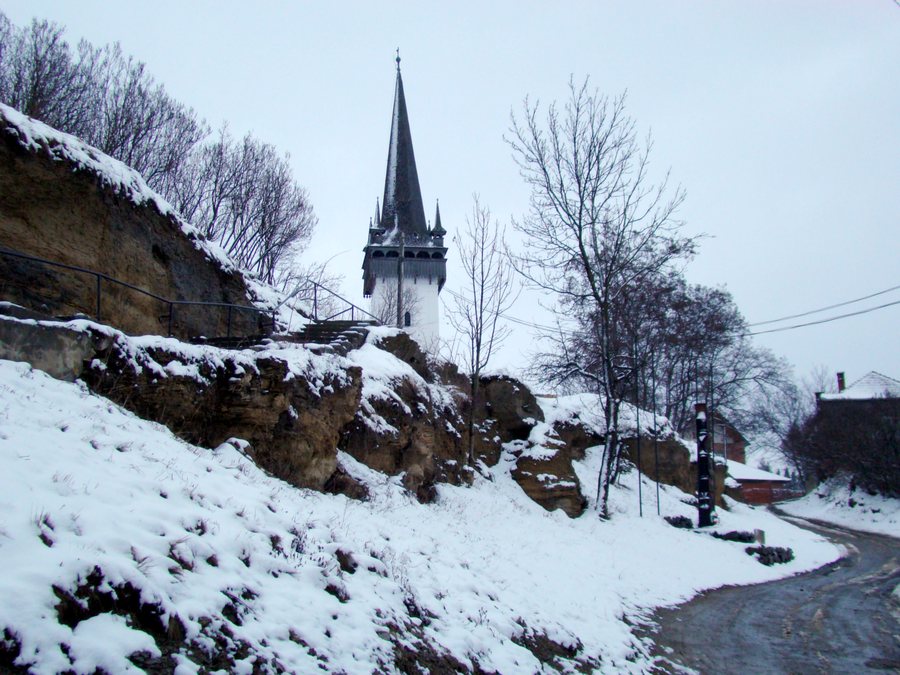 File:Biserica reformată din Izvoru Crișului (1).jpg
Photo: Țetcu Mircea Rareș via Wikimedia Commons, CC BY-SA 4.0
File:Biserica reformată din Izvoru Crișului (1).jpg
Photo: Țetcu Mircea Rareș via Wikimedia Commons, CC BY-SA 4.0
Culture
The rural architecture of the traditional households is also part of this cultural landscape: it includes wooden elements, stone foundations and stone floors. Houses dating from 1920 to 1924 preserve carved elements and original woodwork. During religious holidays such as Pentecost and confirmation, residents still wear traditional dress.
The Reformed Calvinist Church of Izvoru Crișului was documented in the 14th century. Its features include a polychrome-painted coffered ceiling, an organ and textiles with characteristic motifs that illustrate the traditions and customs of the local community. The inventory also includes a Turkish carpet donated by a local resident in 1754 after receiving it from Prince György Rakóczi II in thanks for helping treat the prince’s wounds.
In front of the Reformed church stands a memorial column for the heroes of the 1848–1849 Revolution. At Izvoru Crișului No. 318, a memorial house commemorates the 1848 revolutionary Vasvari Pal. The administrative territory of Comuna Izvoru Crișului also includes an ethnographic house in the old style characteristic of the local tradition as part of its cultural and historical heritage. Permanent exhibitions featuring handicraft objects offered for sale are held there.
Nature
Riszeg Hill is located in Izvoru Crișului and towers over the village. The rare plant Daphne cneorum, known in Romanian as “Tulichina mică”, grows on its sunny slope. Daphne cneorum on Riszeg Hill blooms in April and May and grows on rocky limestone slopes.
The Crișul Repede rises at an altitude of 710 metres near Izvoru Crișului, in hilly terrain on the northern edge of the Huedin Basin. A stone structure from 1936 named “Izvorul Crișului Repede” marks the source of the Crișul Repede. Peştera Rakoczi is located in Izvoru Crișului near the source of the Szalapataka stream. A local legend says that the water from this spring washed the wounds of Prince Rakoczi Gyorgy II after the lost Battle of Floreşti in 1660.
Festivals and Routes
The Reformed Calvinist Church in Izvoru Crișului is part of the route of the fortified churches of Cluj County. The Festivalul Tradițional din Dealul Riszeg has been held annually since 1956 on the weekend closest to 1 May. Zilele Vasvári takes place on 5 and 6 July and coincides with Zilele Satului, the village days.
Local Cuisine
Traditional dishes prepared in households in Izvoru Crișului include ciolan cu fasole and goulash.
More destinations
More travel destinations: Câmpia Turzii, Moldovenești, Jucu de Mijloc, Sic, Suatu, Huedin, Petreștii De Jos, Mihai Viteazu
Back to the higher-level travel overview: Cluj-Napoca.

.jpg)