
Pucioasa between spa history, the Ialomița Valley and the Leaota Mountains
Accommodation in Pucioasa
Geographical setting
Pucioasa lies on the DN 71 national road between Târgoviște, Pietroșița and Sinaia. The town is situated in the middle reaches of the Ialomița Valley, in the Subcarpathian hills, which rise to just over 600 metres.
History
After the sulphur springs were discovered after 1828, Pucioasa developed into a balneoclimatic spa resort. The Ethnographic Museum’s exhibition, reorganised in 2020, presents the written and unwritten history of Pucioasa, as well as the town’s development into a balneoclimatic spa resort.
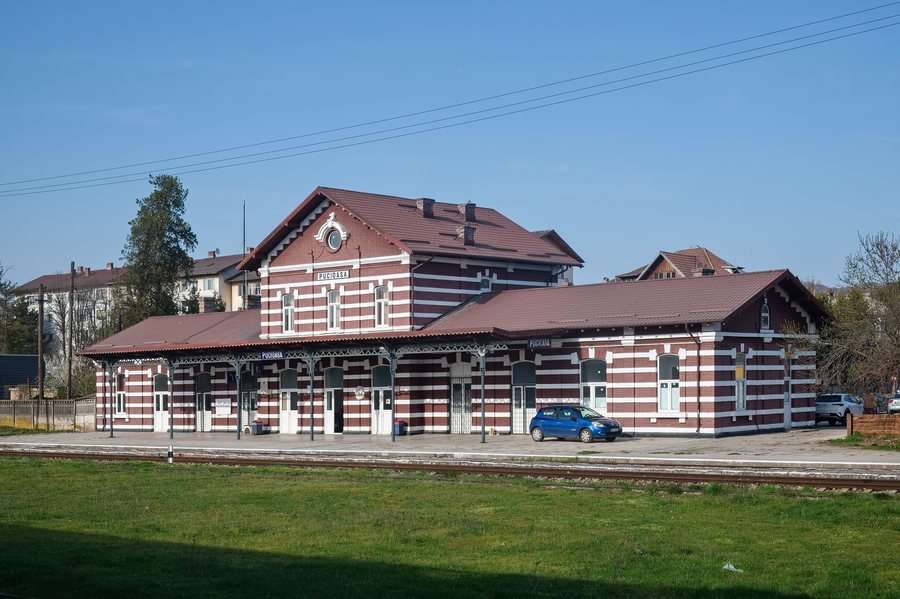
Casa Nicolae Mateescu was built in 1934 by the architect Constantin Joja and combines elements of traditional Romanian architecture with elements of modernism. Biserica din Șerbănești was built in 1894 by Trandafir Maltezeanu. Gara Pucioasa railway station was inaugurated on 27 May 1894.
Culture
The Ethnographic Museum is housed in Casa Dobrescu, a building characteristic of Subcarpathian Muntenia, with a solid stone ground floor, an upper floor supported by wooden beams, a high shingle roof, a veranda running along the entire southern side, a wooden balustrade and carved wooden posts.
The exhibition presents traditional activities and crafts, including pottery, cooperage, domestic textile production and folk costumes.
The Ethnographic and Folklore Museum is open from Wednesday to Sunday from 09:00 to 17:00; the ticket office closes 30 minutes before the end of visiting hours.
Nature
Pucioasa Reservoir lies on the Ialomița River, covers 91 hectares and is situated at an elevation of 418 metres. The Sursa area at the foot of Spătărelul–Mitropolie Hill is associated with sulphur and iodine springs.
Parcul Independenței contains the Monumentul Eroilor Neamului, a work by the sculptor Liviu Brezeanu. From Parcul Independenței, there is a view through the Ialomița Valley towards the Leaota Mountains.
Out and about
The Lunca Ialomiției circular route begins on Strada Republicii at the entrance to Central Park Pucioasa and follows the Ialomița Valley towards Pucioasa-Sat. The Patrana circular route is a one-hour walk that starts in the centre of Pucioasa and leads to the bridge over the Bizdidel.
The Mironosițelor circular route has a viewpoint at the Măgura-Bela point, at an elevation of 664.7 metres. The starting point, stated duration and elevation provide different comparison data for planning your own day trip.
Cycling in the Pucioasa area offers the opportunity to explore the forests, forest tracks, trails and gentle ridges of the Leaota Mountains. Cycle routes in the Pucioasa and Runcu areas begin in villages and lead into alpine areas known for mountain-bike competitions.
When comparing hotels in Pucioasa, check the travel dates, room category and cancellation conditions on the offer pages. The three details can be considered together for the intended travel period, while differences between room categories and conditions remain easy to identify.
Other places
Găești, Crevedia, Moroeni, Fieni, Târgovişte, Tătărani, Corbii Mari, Cazaci
To the higher-level travel overview: Dimbovita.

