
Afumați in Romania: Churches, Manor Houses and Rural Culture
Accommodation in Afumați
Afumați lies in the plain in southern Romania, about 20 km from the Danube. The Baboia and Balasan streams cross the commune. For travelers who wish to explore a place through its landscape, history and everyday culture, several distinct themes stand side by side.
History
The first documented mentions of the commune of Afumați are said to date from 1618. From 1941 to 1943, Afumați bore the name Amzulești. Those who wish to arrange the historical development chronologically can consider these details as a separate focus alongside landscape and culture.
Culture
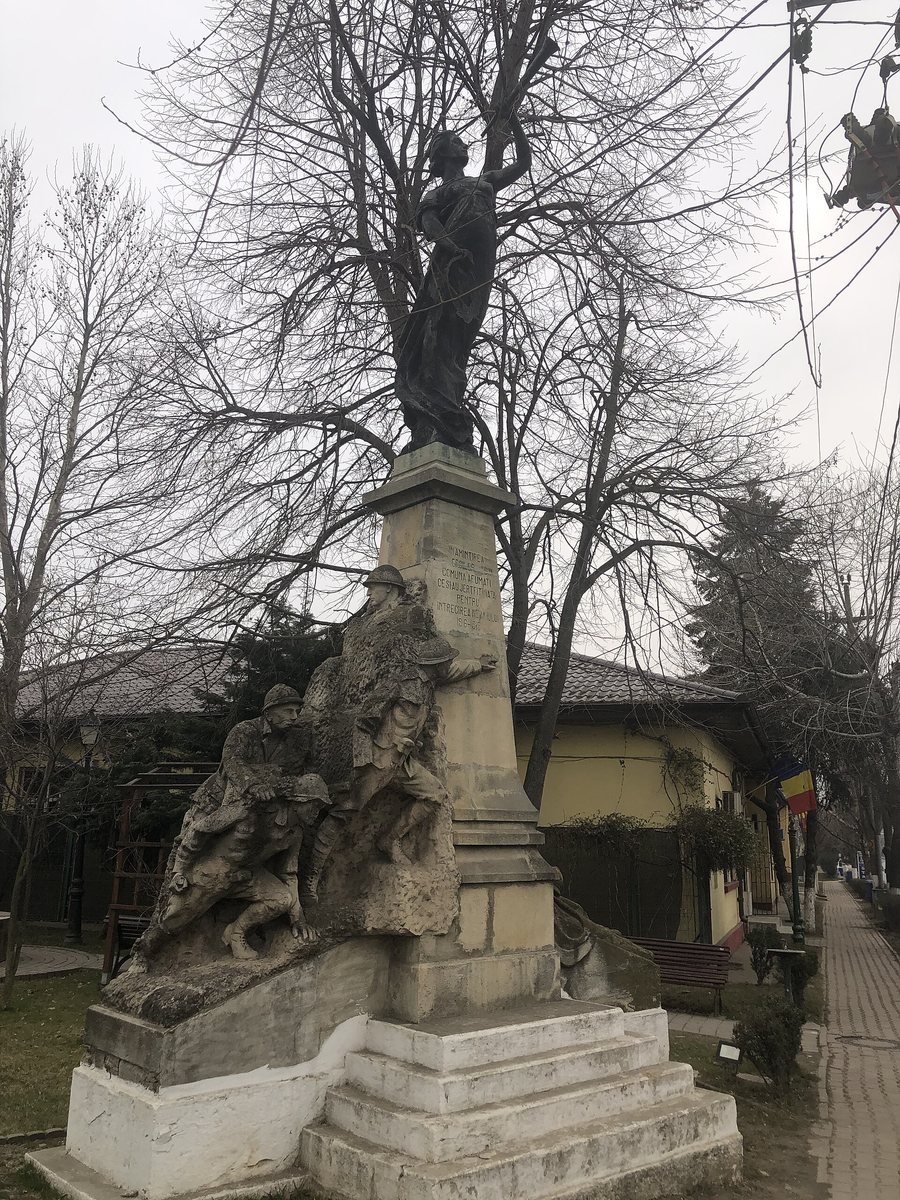
The Orthodox Church of Izvorul Tămăduirii in Afumați was founded between 1861 and 1863 and consecrated in 1941. The Afumați Heroes' Monument stands in the churchyard. It consists of a stepped pedestal, an obelisk and an eagle with half-open wings. When examining the place, sacred architecture and memorial design can be considered separately.
Townscape
The historical buildings mentioned include Conac Seulescu Manor House, built in 1908, Conac Dinopol Manor House, built in 1902, and Conac Vorvoreanu Manor House, built in 1904 and now used as the town hall. The Museum of Rural Culture and Civilization in Afumați was founded in 2009. According to historical accounts, the inhabitants of the area produced charcoal in summer and transported or sold it elsewhere in winter. For their own selection, visitors can consider architectural history, the museum and traditional working practices as separate themes.
Events
At a cultural and culinary event in Afumați in 2018, an exhibition of Oltenian carpets kept in some local households was presented. Ropotinul Țestelor was held in Afumați as a competition featuring folk dances and artistic performances. In 2026, the commune of Afumați held the tenth edition of its Community Day. The expression Ropotinul țăstelor refers to a day on which housewives made earthenware vessels for the entire year, in which bread and dishes were prepared. When preparing for a trip, it may be helpful to note the cultural highlights separately and only then decide on an order. Historical buildings, the museum, events and craft-related topics thus remain comparable as distinct areas of interest.
Those comparing a hotel in Afumați can consider travel dates, room category and cancellation conditions together. These details reveal differences in scheduling, space requirements and flexibility, while keeping the price comparison focused on the specific travel period for their own trip. For personal planning, it can also be noted whether the stay is intended to focus more on the local buildings, the museum or an event date. This supports a clear comparison of the period, desired room category and flexibility. Even with limited time, different areas of interest remain visible, without combining them into a single expectation for the trip, and planning can be aligned with the days available.
Getting there
Regional road DJ561A runs through Giurgița, Urzicuța, Afumați, Boureni and Băilești.
To the higher-level travel overview: Dolj.

