
Sarasău: Culture, Violin Making and Zăvoaiele Tisei
Accommodation in Sarasău
Nature on the Tisa
The UNESCO-protected Zăvoaiele Tisei wetland lies in the Tisa floodplain of Sarasău. The area includes former river channels and ponds, and is also home to a diverse fish and bird population. Alongside the historical and cultural sites, this gives the village a clearly defined landscape area at its centre. The combination of standing waters, former river channels and wildlife gives this section its own distinctive natural focus.
A special natural phenomenon is the Ciuroi. The temporary waterfall apparently forms only in spring during the snowmelt. Its period of occurrence is therefore limited to a specific part of the year. For a seasonal natural event, checking the current conditions is part of travel preparation; the snowmelt does not mark a year-round date.
Culture and Craft
Casa Man now serves as a cultural centre. Casa Iurka, by contrast, is privately owned and severely dilapidated. Both houses are among Sarasău’s notable cultural sites, but they differ considerably in their current condition and use. The contrast between public cultural use and a privately owned, severely dilapidated property shapes the way these two houses are viewed.
The violin maker Ion Ghereben is closely associated with Sarasău. On 20 June 1999, he demonstrated the construction of a handmade violin at the Smithsonian Folklife Festival in Washington, DC. Ghereben, from Sarasău, is considered one of the most productive violin makers in Maramureș. He supported and continues to support this craft in his commune, in Maramureș County and within the Romanian community in the United States. His work thus extends from his own commune through Maramureș County to the Romanian community in the United States.
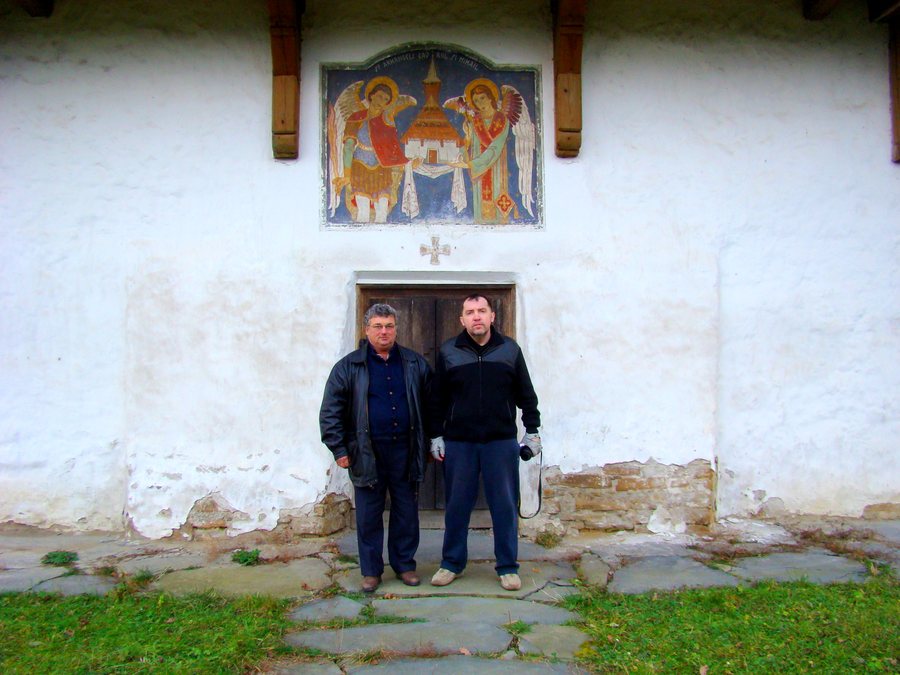
Among the town’s historical traces is a medieval castle complex whose dating is uncertain. The age of the old church in Sarasău is also disputed: some date it to the 14th century, while others assign it to the year 1600. The two dates represent a considerable time span for the same building. It is certain that the church was painted in 1935 by Traian Bilțiu Dăncuș. It is also the oldest building in the village.
Viflaimul is part of the living tradition—a Christmas custom that can still be heard in the streets and homes of the Sarasău commune. Thus, alongside the historic buildings, a seasonal custom also forms part of the commune’s cultural character. The custom connects the public space of the streets with the private setting of homes and is explicitly tied to the Christmas season.
Transport Connections
National road DN19 runs through Sarasău and connects Oradea with Sighetu Marmației. The commune is also crossed by a railway line. This connects Sighetu Marmației, Câmpulung la Tisa and Teresva in Ukraine. The road and railway therefore form two explicitly named transport routes linking Sarasău with places in Romania and beyond the border. When planning a journey, check the current timetables for rail connections and the applicable traffic conditions for the road route.
Other Places
Other places in the same higher-level area include Ocna Sugatag, Baia Mare, Seini, Remeţi, Hoteni, Suciu de Sus, Medium-sized town and Cavnic.
For the higher-level travel overview: Maramureş.

.jpg)