
Trifești: Local History, Religious Connections and Hilly Landscape
Accommodation in Trifești
Trifești can first be explored through the Church of St. Nicholas. The stone church was completed on August 15, 1799. It is listed as a historic monument; 1798 is recorded as the year, and it dates from 1798.
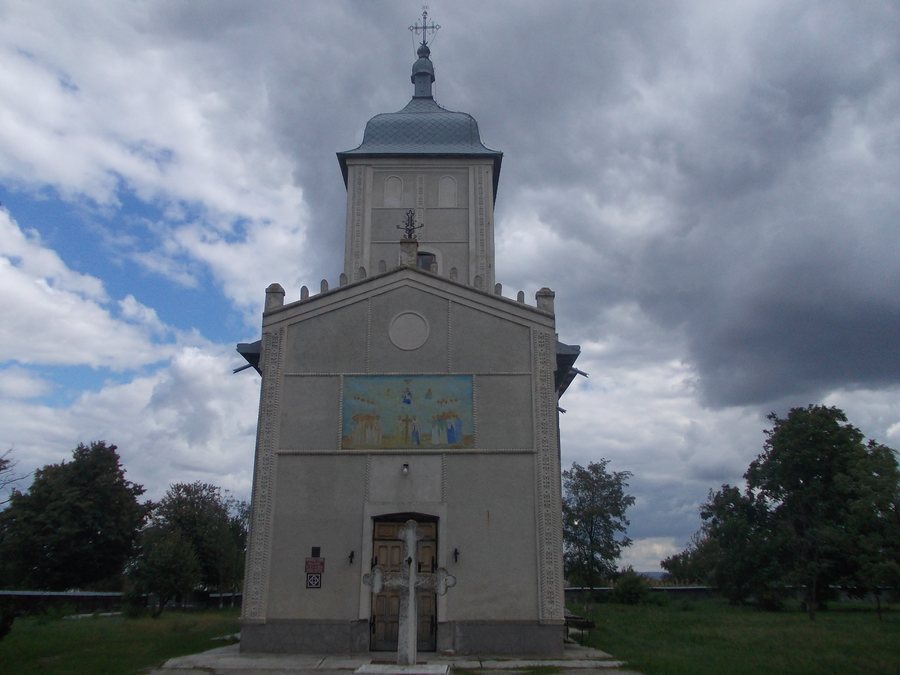 File:RO NŢ Trifeşti Miron Costin Biserică.jpg
Photo: Bogdan Muraru via Wikimedia Commons, CC BY-SA 3.0 ro
File:RO NŢ Trifeşti Miron Costin Biserică.jpg
Photo: Bogdan Muraru via Wikimedia Commons, CC BY-SA 3.0 ro
History
The place name “Trifești” first appears on January 21, 1588, in a deed of sale. The village church in Trifești is mentioned in 1428 in the deed of donation from Alexandru cel Bun to Bistrița Monastery.
Religious Heritage
Many Christians from the eparchy and beyond pilgrimage to the miraculous icon from the church in Trifești—either in this church or in churches where the icon is carried in procession.
In the wider regional area around Trifești is Mânăstirea Miclăuşeni, a monastery. Biserica Miclăuşeni, Biserica Fedeleşeni and Biserica Brătuleşti are also located in this wider regional area; all three are churches.
Other Places
Other place pages: Agapia, Viișoara, Dumbrava Roșie, Văratec, Roman, Târgu Neamţ, Bodești, Schitu Tarcău.
History, religious heritage and landscape offer different perspectives when preparing for a trip. You can weigh the chronological context, sacred connections and geographical areas separately instead of grouping all interests under a single travel theme. Those primarily seeking culture can begin with the historical information; those wishing to include landscape can focus on the natural features. This comparison helps you determine your own focus without prescribing a fixed itinerary.
When comparing hotels in Trifești, you can place travel dates, room category and cancellation conditions side by side on the offer pages. This allows you to assess the financial and time constraints using the same information and keep your accommodation decision clear.
You can deliberately keep the different spatial scales separate. The immediate connection to Trifești stands alongside destinations in the wider regional area; this makes it clear whether you are exploring the town’s history or planning regional additions. For budget-conscious travel planning, it makes sense to determine your own focus and available time frame first. You can then combine cultural, religious and landscape interests in the proportions you prefer.
If you approach the trip with different expectations, this structure can be used flexibly. A focus on history places different emphasis on the trip than planning in which nature and religious sites stand side by side on an equal footing. This allows you to organize the available days and budget according to your own priorities.
Nature
Dealul Secueni, a hill, is located near Trifești. The wider regional area also includes Dealul Bahnei, Dealul Butea and Dealul Stanca; these are hills as well.
The Pădurea și Lacul Mărgineni protected area lies in the Moldavian Plateau. It is situated in a broad, gently undulating, hilly landscape that extends from the bed of the Moldova River to the Subcarpathian ridges, and it also lies within the administrative area of Trifești.
Getting There
Trifești is most easily reached via DJ 15D, the road between Roman and Piatra Neamț.
To the main travel overview: Neamt.

