
Viișoara: Bistrița Valley, Churches and Monasteries
Accommodation in Viișoara
Location and Townscape
Viișoara is located near the Bistrița River and along the DN15 national road. The railway line runs through the town. The area includes parts of the foothills of Mount Simon as well as the Bistrița Valley on the left side of the old riverbed. During the interwar period, Viișoara acquired a square layout through development works. The streets are arranged symmetrically and intersect along the north–south and east–west axes.
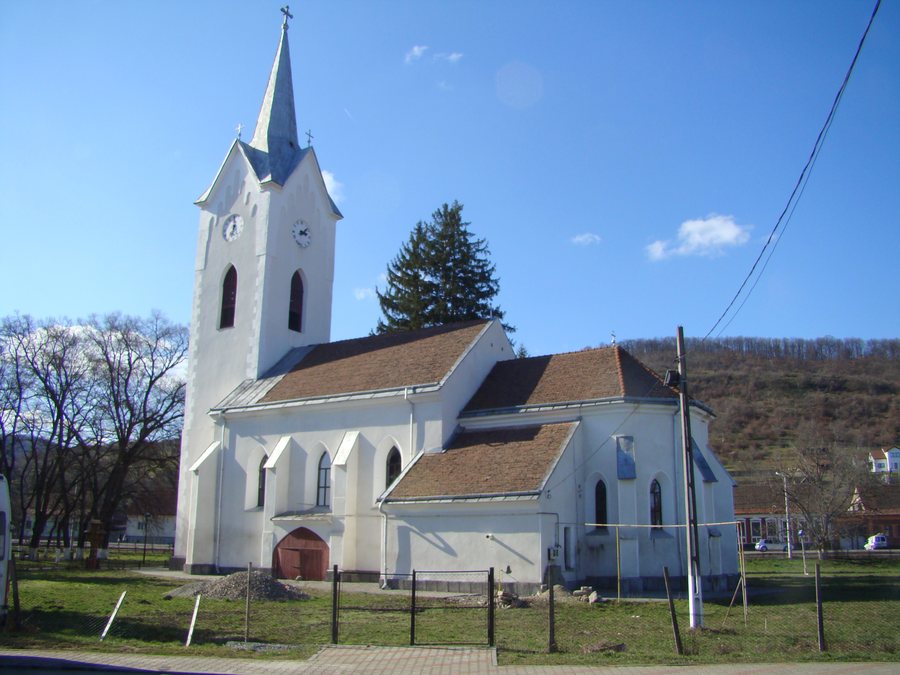 File:RO BN Biserica evanghelica din Viisoara (12).jpg
Photo: Țetcu Mircea Rareș via Wikimedia Commons, CC BY-SA 4.0
File:RO BN Biserica evanghelica din Viisoara (12).jpg
Photo: Țetcu Mircea Rareș via Wikimedia Commons, CC BY-SA 4.0
Traditional livelihoods in Viișoara included raising livestock in the hills and farming in the Bistrița floodplain. A large part of Viișoara’s former hay meadows and agricultural land is now built up with holiday homes and guesthouses. Historically, Viișoara belonged ecclesiastically to Bistrița Monastery; parishioners had to travel six kilometres to get there.
Nature and Regional Routes
From the DN15 national road between Piatra Neamț and Bicaz, the Viișoara–Bisericani county road leads to the Scăricica viewpoint. Within the municipality, Scăricica offers a panoramic view of the entire Bistrița Valley and Piatra Neamț. From the viewpoint, the road continues through the forest to Bisericani Monastery. Alexandru cel Bun lies along the tourist route connecting Piatra Neamț with the Bicaz Gorge, Red Lake, the Bicaz Reservoir and the resort town of Durău.
Within the municipality of Alexandru cel Bun, Lake Vaduri is one of the natural tourist resources. In the surroundings of Viișoara, Lake Pângărați forms part of a system of nine reservoirs along the Bistrița River. This system is designated as a special protection area and provides a habitat for numerous migratory bird species. The different landscape and route connections can be considered separately when planning: Scăricica represents the view over the valley and city, while the road connection through the forest leads to Bisericani Monastery.
Churches and Monasteries
The parish church of Viișoara was consecrated in 2010 and is dedicated to Saints Constantine and Helena. Its iconostasis was made from oak and walnut wood; the icons were painted at Agapia Monastery. Viișoara is also home to the Benedictine Monastery of Maica Unității. Construction was completed in 2003, and the inauguration took place on 29 June 2003. Benedictine nuns who follow the Rule of Saint Benedict live at the monastery.
In the surroundings of Viișoara, Bistrița Monastery is an architectural monument of national importance. Its museum collection includes icons from the 16th to the 18th century, archaeological terracotta, sculpture and fresco fragments, historical coins, and objects from the princely necropolis. It also preserves a tower chapel built by Ștefan cel Mare; it is considered the oldest surviving building within the present-day monastery complex. The collection includes an 800-kilogram bell donated by Ștefan cel Mare in 1494.
Bisericani Monastery was founded in 1508–1512 by Bogdan III on the foundations of an earlier wooden church. Between the 16th and 19th centuries, it was one of the major monasteries in this part of the country.
Other Places in the Surrounding Area
For further regional orientation, you can also find Dumbrava Roșie, Roman, Bicaz Chei, Bodești, Tupilaţi, Săvinești, Târgu Neamţ and Piatra Neamţ.
For the broader travel overview: Neamt.

.jpg)