
Poiana Câmpina: Salt Tradition, Architectural History and Parks
Accommodation in Poiana Câmpina
Poiana Câmpina is located in the hilly area of the Southern Carpathians, in the valley of the Prahova River. After the former salt baths ceased operating, a natural saltwater spring still remains here.
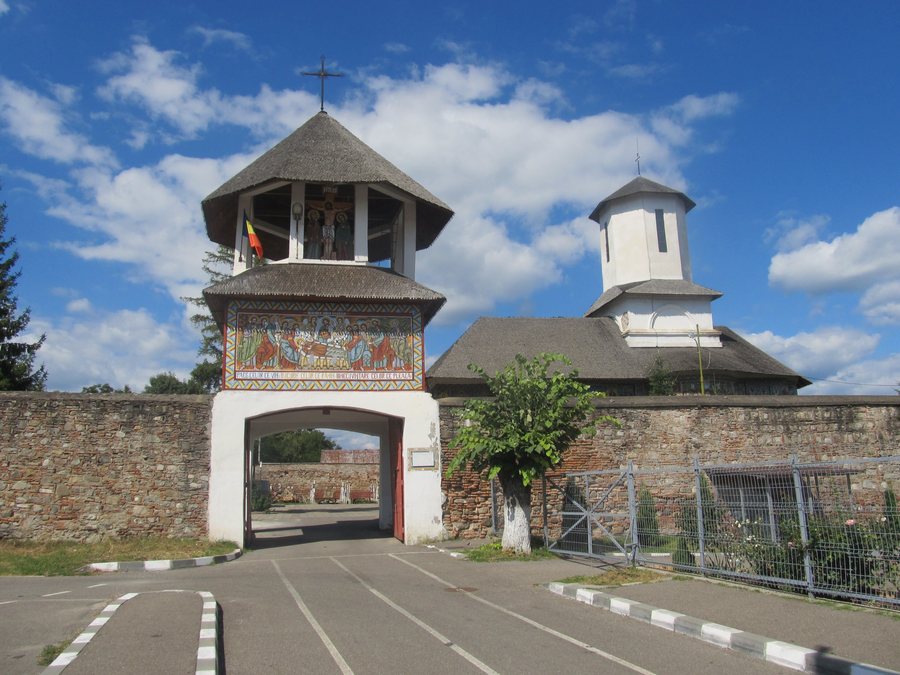 File:Church of the Assumption in Poiana Câmpina, Prahova.01.jpg
Photo: Nenea hartia via Wikimedia Commons, CC BY-SA 4.0
File:Church of the Assumption in Poiana Câmpina, Prahova.01.jpg
Photo: Nenea hartia via Wikimedia Commons, CC BY-SA 4.0
Nature and Salt Tradition
The first salt baths in Poiana Câmpina were operated in the former town hall until 1908. SanConfind’s rehabilitation centre includes hydrokinetic therapy in saltwater pools and balneotherapy with Techirghiol mud; in addition, SanConfind’s balneotherapy centre in Poiana Câmpina uses saltwater obtained from natural springs. The SanConfind Poiana Câmpina treatment centre is open Monday to Friday from 08:00 to 20:00 and Saturdays from 08:00 to 16:00. These time slots can be incorporated directly into your daily itinerary.
Culture and History
The former Schitul Poiana is a local architectural monument dating from the 17th and 18th centuries, with a preserved surrounding wall and bell tower. The construction of Mănăstirea Poiana was commissioned by Toma Cantacuzino in 1690 and completed in 1711; the bell tower, monks’ cells, administrative buildings and surrounding walls were completed in 1721. Along the Câmpina–Poiana Câmpina–Provița/Breaza route, Schitul Poiana is described as a 17th-century architectural monument with a preserved surrounding complex and underground vaults.
In autumn 1935, a higher agricultural school was established in Poiana Câmpina under the patronage of the Royal Cultural Foundation for young people from the hill and mountain villages of Buzău, Făgăraș and Prahova counties.
Parks and Cultural Life
“Triumf” Park has a stage, children’s play areas, recreation areas and a street library. “Pietrișu” Park has a children’s playground and a recreation area. Several paved paths cross “Marshal Alexandru Averescu” Park and connect it with the residential buildings on Strada Gării. A bronze bust of Marshal Alexandru Averescu stands in the centre of the park.
Cultural events in Poiana Câmpina include the interregional music competition festival “Flori de cântec prahovean”. The traditional festival for Sf. Maria is entitled “Cântec, joc și voie bună”; Poiana Câmpina’s community day is associated with 15 August. The named parks and dates can be incorporated into your own travel plans by location, theme and date.
When choosing a hotel in Poiana Câmpina, you can compare travel dates, room categories and cancellation policies. This look at the offer details complements your exploration of the salt tradition, architectural history, parks and cultural events as part of your personal travel planning.
Getting Around
Poiana Câmpina CFR railway station is an important point on the Bucharest–Brașov railway line. The Drumul Fructelor passes through Poiana Câmpina; the route runs through villages, hilly landscapes and orchards, and there are rest areas along the way. The railway line and scenic route provide different reference points for travel planning.
Other Places
Other places: Băicoi, Măgurele, Boldești-Scăeni, Talea, Valea Doftanei, Cheia, Câmpina, Bughea De Jos
To the overarching travel overview: Prahova.

