
Discover Cheia: hiking trails, museums and Cheia Monastery
Accommodation in Cheia
Nature and trails
The Cheia–Muntele Roșu–Cabana Ciucaș hiking route takes 3 to 3.5 hours and is classified as moderate. For planning your day, you can use the time frame as the first criterion and the classification as the second point of comparison.
The Cheia–Cheile Cheiței–Valea Berii hiking route takes 1 to 1.5 hours and is classified as easy. Comparing the two hiking details results in a different combination of duration and difficulty level, so the routes can be considered separately.
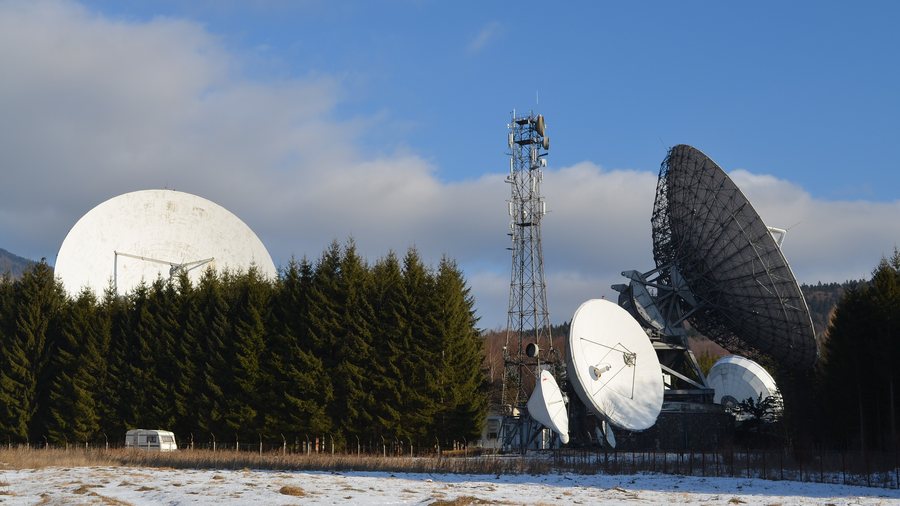 File:Centrul de comunicații prin satelit de la Cheia (3).JPG
Photo: Razvan Socol via Wikimedia Commons, CC BY-SA 3.0
File:Centrul de comunicații prin satelit de la Cheia (3).JPG
Photo: Razvan Socol via Wikimedia Commons, CC BY-SA 3.0
The details for the two routes allow an objective comparison according to two different criteria: the time frame describes the extent of each route, while the classification indicates its stated difficulty level. This keeps it clear during further selection whether the route’s duration or category should be the deciding factor.
Ciucaș National Park is a tourist attraction associated with Cheia. The Tigăile Mari–Vârful Ciucaș nature reserve is also a tourist attraction associated with Cheia. When organizing the nature-related topics, you can record the route details and the two names of the protected areas independently of one another.
Culture
The “Francisc Rainer” Museum of Anthropology presents the scientist’s life, work and achievements in four halls on two levels. The “Francisc Rainer” Museum of Anthropology is housed in Francisc Rainer’s holiday home. The name, exhibition layout and building thus form three separate details about the institution.
The Muzeul Flori de Mină houses items from the “Mihai Viteazul” mineral flower collection. For personal planning, the anthropology exhibition and the aforementioned collection can be noted as different cultural topics.
The cultural attractions cover different topics side by side: anthropological presentation, a mineral flower collection, sacred architecture and historical construction periods. The events section adds its own format to the cultural structure.
The present-day “Sfânta Treime” Church of Cheia Monastery was built between 1835 and 1839. The paraklesion of Cheia Monastery, dedicated to the “Adormirea Maicii Domnului,” was built between 1924 and 1927. The “Sfânta Treime” Church of Cheia Monastery is designated as a historic architectural and built monument. The two construction periods and the dedication of the paraklesion remain separate historical details.
When comparing hotels in Cheia, you can place the travel dates, room category and cancellation conditions side by side on the respective offer pages. Such a comparison keeps the accommodation decision focused on the details specifically stated on each offer page.
Other destinations: Măneciu-Ungureni, Valea Doftanei, Homorâciu, Comarnic, Drăgăneasa, Valea Călugărească, Negrasu, Câmpina.
Events
The Centrul de Ecologie și Antropologie at the museum in Cheia hosted a series of anthropological discussions and a summer school for anthropology. The names distinguish a discussion series from a summer school; both formats explicitly indicate their connection to anthropology in their names.
For the higher-level travel overview: Prahova.

.JPG)