
Bogda: Mineral Springs, Spa History and Culture
Accommodation in Bogda
Bogda has carbonated, iron-rich, iodine-rich and oligomineral mineral springs. The communal baths of Bogda, Băile comunale Bogda, date back to 1771. As early as the 1820s, Bogda was regarded as a well-known spa resort. These three points of reference provide different ways of approaching the history of the place without reducing it to a single period. The springs, the baths and the historic designation of the spa resort represent different aspects that can be considered separately in terms of time and subject matter.
Culture and Local History
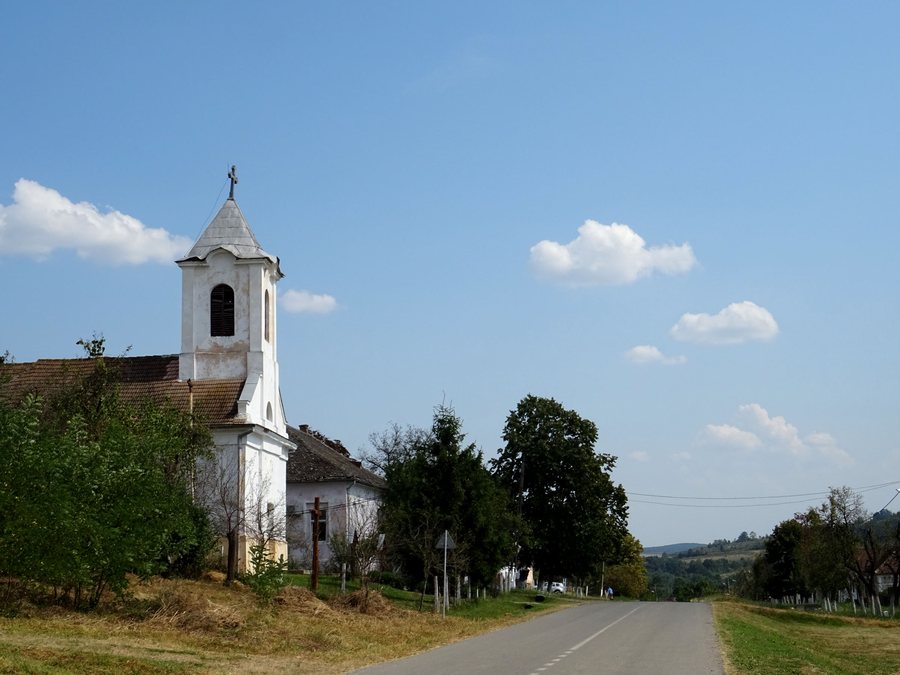
Charlottenburg is considered Romania’s only circular village and is fully protected as a historic monument. In nearby Charlottenburg, the Sina de Hodos et Kizdia family began construction of the present-day church in 1876. The Charlottenburg Hunting Museum includes the “DESCOPERĂ PĂDUREA” ecological education centre with three spacious rooms for educational programmes as well as outdoor educational activities.
Bogda is home to the cultural attraction Muzeul „Satul Sursa Tradiției“. A Marian altar in Bogda remains a pilgrimage site that is visited by only a few pilgrims today. Charlottenburg is associated with a wild garlic festival and a doughnut festival. The different forms of cultural heritage can be considered separately rather than combined into a single focus.
History, religious tradition, spa culture, educational formats and festivals offer different thematic approaches to Bogda and Charlottenburg. Architectural history, pilgrimage, mineral water, educational programmes and events can be compared separately; a chronological arrangement creates a different emphasis from a thematic one. The different formats and historical layers remain recognisable alongside one another without creating a single unified focus. Moving between local history, the spa connection and cultural offerings keeps several perspectives open. The connection between architectural history and educational formats can also be considered separately from religious tradition and later use; the topics do not have to be placed in a fixed order.
Mineral Springs and Spa Culture
Bogda has drinking fountains for mineral water. Bogda’s former spa resort was converted in the 1960s into a pioneer camp with 280 places, which had a beach, a sauna and sports facilities; the camp was closed in 2003 due to a lack of funds.
In the late 19th century, Bogda’s spa complex included Villa Theresienwiese, treatment buildings and ancillary buildings. For your personal selection, you can distinguish between natural resources, architectural history and later use; the chronological intervals provide a clear framework for this. Thus, the mineral springs and drinking fountains on the one hand, and the buildings of the spa complex and their later use on the other, represent clearly distinguishable historical layers.
For Bogda, you can compare accommodation on booking pages based on travel dates, room category and cancellation conditions. Travel dates refer to the desired period, the room category to the selected type of room, and the cancellation conditions to the respective booking terms. This allows these details to be considered separately.
More local pages: Sacalaz, Giroc, Făget, Buziaș, Zolt, Fârdea, Ghiroda, Sânnicolau Mare.
For the broader travel overview: Timis.

