
Sânnicolau Mare – Border Town on the Mureș
Accommodation in Sânnicolau Mare
Border Town on the Mureș
Sânnicolau Mare is located as a border town along the unregulated course of the Mureș and shares a border with Hungary over a length of 6 km. This geographical location shapes the town’s position between the river landscape and the border region. The Aranca Canal crosses Sânnicolau Mare and was formerly used to drain flooded areas.
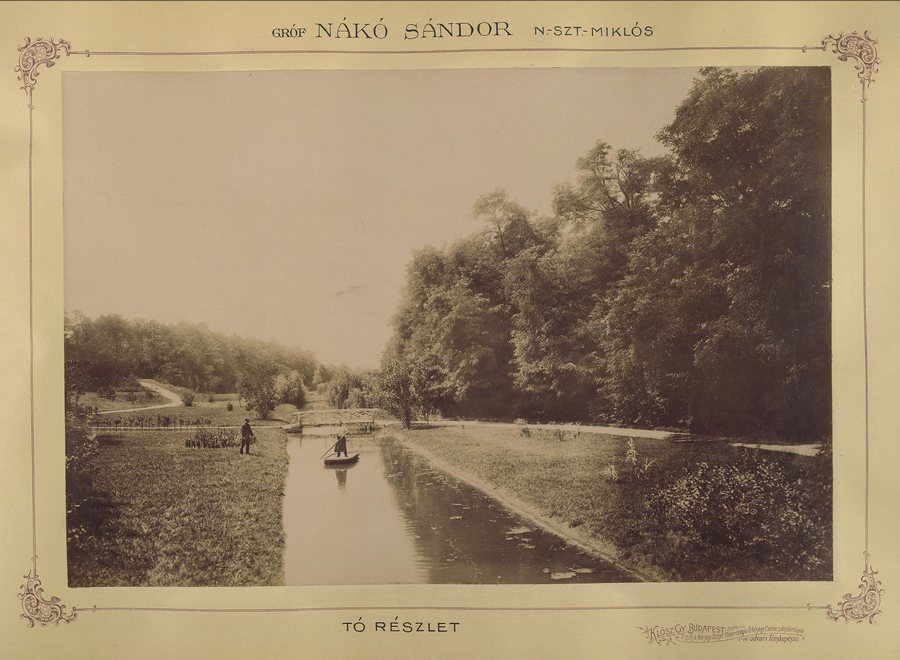 File:Nagyszentmiklós (Sânnicolau Mare), Románia. A Nákó-kastély parkja, 1895-1899 között. - Fortepan 83246.jpg
Photo: Photo: FOTO:Fortepan — ID 83246 : Adományozó/Donor: Budapest Főváros Levéltára.
File:Nagyszentmiklós (Sânnicolau Mare), Románia. A Nákó-kastély parkja, 1895-1899 között. - Fortepan 83246.jpg
Photo: Photo: FOTO:Fortepan — ID 83246 : Adományozó/Donor: Budapest Főváros Levéltára.
Culture and History
The Serbian Orthodox Church of “Adormirea Maicii Domnului” dates from 1783 to 1787 and is listed in the Romanian register of historic monuments. The Cărămidărie archaeological site is a Bronze Age settlement.
Nakó Castle is registered as a historic monument in Timiș County. It was built in 1864 by Count Kálmán Nakó in the neoclassical style. The castle currently houses the cultural centre and the town museum of Sânnicolau Mare. The cultural centre also provides access to the “Béla Bartók” memorial exhibition.
A regional route to the manor houses leads from Timișoara via Jimbolia and Sânnicolau Mare onwards to Lovrin and Lenauheim. Nakó Castle is one of the sights along this route. The sequence thus connects several places in Timiș County in a clear regional line.
The “Béla Bartók” memorial exhibition presents original photographs and documents about the life and work of the composer Béla Bartók, who was born in the town. The exhibition is accessed through the cultural centre; it is open Monday to Friday from 8:00 to 16:00. The connection between the birthplace, the documents, and the cultural centre places the exhibition directly within the townscape.
The regional traditional costume is also associated with its own terminology: The Romanian folk costume of the Sânnicolau Mare ethnographic subzone uses the fabric “de cinari”, while the Romanian blouse is known as a “spăcel”. The two terms therefore refer to different components of the costume.
Those wishing to organise the town’s cultural history thematically will find different points of reference: the church, castle, museum, memorial exhibition, archaeological site, and regional traditional costume each represent distinct historical or cultural themes.
Water and Arrival
The watercourse is therefore part of the geographical description of the town, while its former drainage function records a historical aspect of the landscape.
The nearest railway station is approximately 3 km from Sânnicolau Mare town centre. For travel planning, this approximate distance should be distinguished from the exhibition’s fixed opening hours and the harvest festival’s reference to a particular month.
Annual Cycle
“Chirvaiul german – Ziua Recoltei” is associated with the month of October in Sânnicolau Mare. This reference to a month complements the cultural and local information described as year-round with a clear point in the annual cycle.
Anyone choosing a hotel in Sânnicolau Mare can read the travel dates, room category, and cancellation conditions as separate details on the booking pages. This practical accommodation level stands alongside the local information about Nakó Castle, the Bartók exhibition, the Serbian Orthodox Church, and the regional manor-house route.
