
Măldăreşti: Cula Buildings, Museum and Landscape
Accommodation in Măldăresti
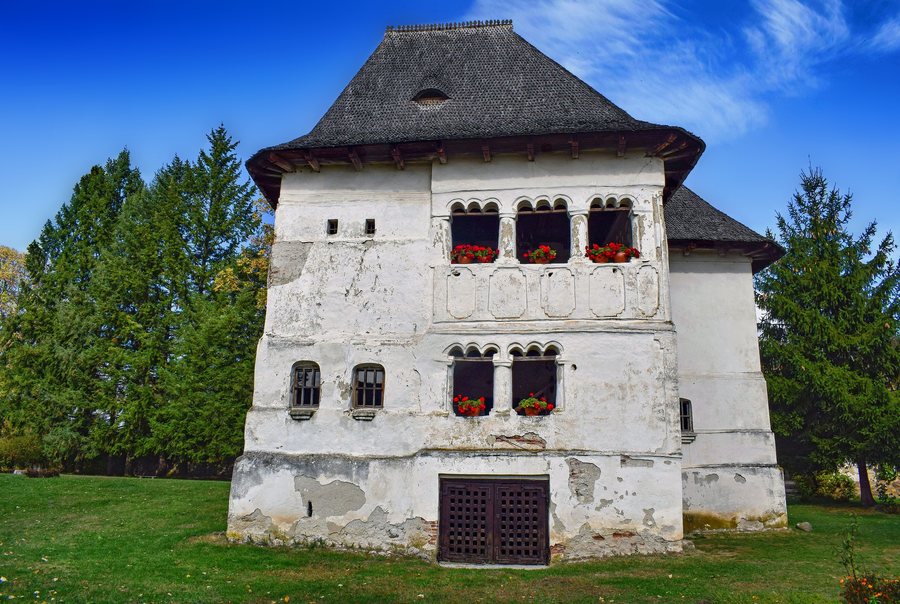
The Măldăreşti Museum Complex combines fortified residential architecture, an ethnographic collection and the historical heritage of the village. More than 3,000 ethnographic objects are preserved in its buildings. The complex includes Cula Duca, a fortified residence of the culă type that is used as a museum. Cula Greceanu, an architectural monument dating from the 18th century, also stands within the museum complex. When visiting the museum, current opening hours are among the practical details that can be checked before travelling.
 File:Cula Greceanu, Maldaresti (55000004772).jpg
Photo: Jocelyn Erskine-Kellie from London, UK via Wikimedia Commons, CC BY-SA 4.0
File:Cula Greceanu, Maldaresti (55000004772).jpg
Photo: Jocelyn Erskine-Kellie from London, UK via Wikimedia Commons, CC BY-SA 4.0
Culture and History
Cula Duca was built in 1812 by Gheorghiță Măldărescu; the stucco work followed in 1827. The building has three levels. Gun slits are located on all levels and also in the parapet of the pavilion. The three levels, the gun slits and the openings in the pavilion parapet are among the architectural features of this culă.
The present form of Cula Greceanu dates from the 18th century. Between 1780 and 1790, it was renovated by the boyar Gheorghe Măldărescu and his wife Eva. The cula complex gives visitors an insight into the historical life of the boyars. The building history of Greceanu stands alongside the preserved interior and everyday culture, which is complemented by the ethnographic collection in the museum complex.
In the centre of the Măldăreşti municipality, on the right bank of the Luncavăț River, stands a masonry church dedicated to Saint Nicholas. Because of its age, its brâncovenesc-influenced architecture and the quality of its wall paintings, it is listed as a historical monument. The dedication to Saint Nicholas, its location by the river, and its architectural and painted features are distinctive elements of this building.
A painting course also takes place at the Măldăreşti Museum Complex, with painters from across the country taking part. In addition to its architectural and collection history, the complex therefore also hosts an explicitly designated artistic event. For such events, current course times can be checked before travelling. When attending a painting course, the event date and course times are among the details that can be checked in advance for personal day planning.
Nature
Măldăreşti's landscape features include the trovants along the Neagra and Gresarea streams. They are designated as a local attraction. The veranda of the upper cerdac of Cula Greceanu offers another view of the surroundings: from there, the vistas extend to the Arnota, Builă and Bărbătescu mountains as well as the Luncavăț Valley. When planning an outdoor visit, current route conditions can be checked before departure.
Location
The Măldăreşti Museum Complex is accessible via the DN 65 and is located approximately 3 km from Horezu. Current traffic and route conditions for travelling via the DN 65 can be checked before the journey.
For the overarching travel overview: Vâlcea.
Other destinations at the same higher-level location are Ocnele Mari, Horezu, Obârşia Lotrului, Lazaret, Baile Govora, Brezoi, Pietrișu and Călimănești.

.jpg)