
Moštenica Hotels – Moštenické Travertines and the Low Tatras
Accommodation in Moštenica
Moštenica lies on the southern slopes of the western part of the Low Tatras. Most of the municipality's area is forested, while the village also serves as a starting point for the ridge of the Low Tatras. In Moštenica, landscapes, springs, and trails are therefore found alongside a number of cultural and memorial sites that reveal different facets of the village.
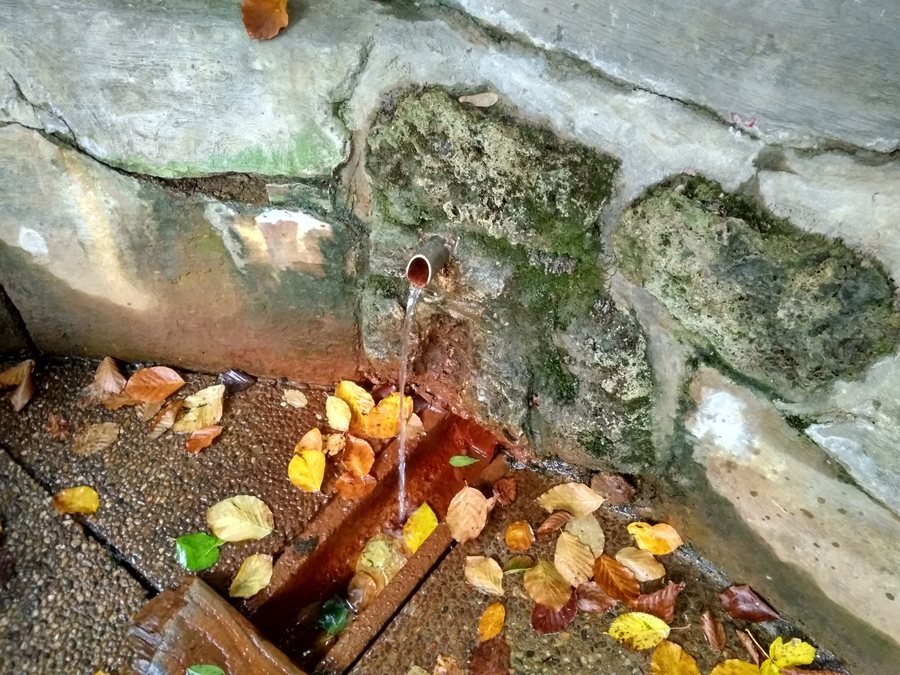 File:Jegorov prameň v k.ú. Moštenica, wgs84 48.8485N 19.2749E.jpg
Photo: Lubosb via Wikimedia Commons, CC0
File:Jegorov prameň v k.ú. Moštenica, wgs84 48.8485N 19.2749E.jpg
Photo: Lubosb via Wikimedia Commons, CC0
Nature
The Moštenické Travertines are located in the cadastral area of Moštenica and form a protected natural monument within the protection zone of a national park. At Moštenické Travertines, a still-active travertine terrace comprising five water outlets is also protected. The travertine complex forms an approximately 500-metre-long cascade with six steps and lies at elevations between 650 and 800 metres.
The Moštenické Travertines area is used for recreation, but is accessible neither by a hiking trail nor by an educational trail. This distinctive feature is part of the character of the place, just like the protected geological formation itself.
Hiking and Springs
A recreation centre developed around the Moštenická kyslá mineral spring. A hiking trail from Moštenica via the Uhliarska Valley, Moštenická Kyslá, Zubová, Hadlanka, and Kozí chrbát to Hiadeľské sedlo takes 3 hours and 30 minutes. The route thus names not only its starting and ending points, but also several stops and sections of terrain along the way.
Culture
Traditional household production in Moštenica included woodwork and linen weaving. Another important building is the Church of the Exaltation of the Holy Cross in Moštenica. It is a Neoclassical church built in 1846–1847. Its main altar features a Crucifixion painting created in 1846 by J. B. Klemens. The church is considered well preserved and continues to serve its religious purpose.
History
The cemetery in Moštenica contains the graves of fallen partisans. Near the former lime kiln in Moštenica stands a monument to murdered Hungarian soldiers and one civilian victim. The historical trail reaches further back still: Hradište is a hilltop settlement from the Early and Late Bronze Ages, fortified by what was probably a ditch. A cremation burial of the Lusatian culture was found near Hradište.
The former mining office in Moštenica is also part of the historic building stock. The Renaissance building, erected in 1561, has a U-shaped floor plan. It is remembered as the site of a military hospital during the Slovak National Uprising.
When you view or compare offers in Moštenica, you can compare the details important for your budget on the respective offer pages. Check the exact location, type of accommodation, and stated occupancy. You can also compare included services, individual price components, and booking and cancellation conditions. When total prices differ, this breakdown helps you assess the scope of services provided in each case in a transparent way. Also read how many people the stated occupancy is for and which conditions apply to the selected length of stay. This keeps the comparison focused on the specific offer fields shown.
Other Destinations
For more destination pages, you can visit Dolný Harmanec, Podkonice, Slovenská Ľupča, Môlča, Brusno, Nemce, Horné Pršany, and Staré Hory.
For the higher-level travel overview: Banská Bystrica District.

