
Veľké Straciny – Church, Castle Ruins and Rural Landscape
Accommodation in Veľké Straciny
Veľké Straciny lies in the northeastern part of the Ipeľská pahorkatina hills, in a side valley of the Stracinský potok stream. In this rural setting, traces of settlement dating far back, preserved historic buildings and a wetland in the nearby surroundings come together. Archaeological finds provide evidence of settlement in Veľké Straciny during the Neolithic, the Chalcolithic and the Late Bronze Age. In addition, a silver Roman coin from the 1st century AD was found here.
Culture and History
An important architectural monument in the locality is the Protestant church. It is a Baroque-Classical church dating from 1776 and was remodelled in the second half of the 19th century. At the same time, it is considered the oldest architectural monument in the municipality. Its interior is Neoclassical. The church is in good condition and continues to be used for its intended purpose. The inventory of the Protestant church recorded two chalices from 1652 and 1752 in 1969.
The history of the Čemický family includes a former castle in Veľké Straciny, which housed extensive collections of museum objects and a library. This castle was destroyed in the 20th century. By contrast, remnants of the western perimeter wall of the late-Renaissance castle Kaštieľ vo Veľkých Stracinách have survived. Gabriel Čemický had the castle built around the turn of the 17th and 18th centuries. The former castle complex included a stable, a coach house and servants' buildings, which have survived to this day.
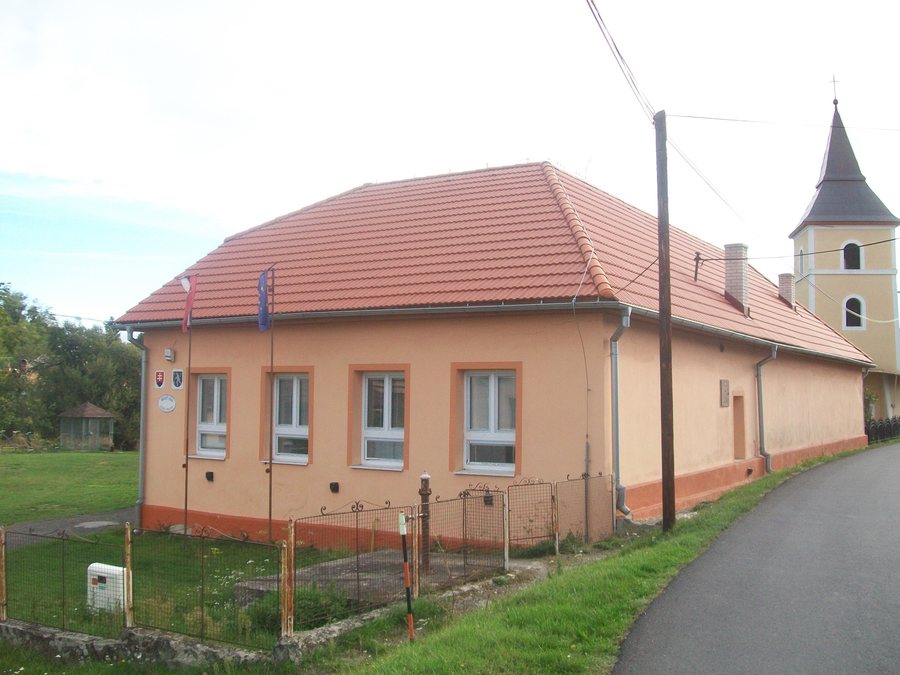
The historic villagescape also includes farmhouses from the 19th and 20th centuries. Together with the archaeological finds and the preserved parts of the castle complex, they represent different periods of the locality's history, while the present-day appearance cannot be reduced to a single era.
Landscape and Wetland
The location in a side valley and the hilly landscape also shape the vegetation. Oak, beech and black locust forests grow on the steeper slopes near Veľké Straciny. The Močiar Veľké Lúky wetland lies about 500 metres east of Veľké Straciny. It covers around 10 hectares. Breeding birds and amphibians occur there; the presence of the protected otter has also been confirmed.
Agriculture and Viticulture History
Veľké Straciny belonged to the historic wine-growing region around Modrý Kameň, but it was never the most important centre of viticulture there. At the same time, Veľké Straciny is documented as a municipality shaped by agriculture. In today's rural landscape, remnants of vineyards and a wine cellar have been preserved. These traces connect the locality's agricultural character with its regional viticultural history.
The services included, individual price components, as well as booking and cancellation conditions are equally important. With several options, these points can be compared directly; especially when travelling with different lengths of stay or with several people, complete information makes the selection clearer.
More locality pages: Kleňany, Malý Krtíš, Vinica, Ďurkovce, Obeckov, Širákov, Veľký Krtíš, Horné Strháre
To the higher-level travel overview: Veľký Krtíš District.

