
Radvaň Nad Dunajom on the Danube – History and Nature
Accommodation in Radvaň Nad Dunajom
Radvaň nad Dunajom lies where the townscape and river landscape meet directly: the town’s streets and houses are situated on the banks of the Danube, with views across the river extending to the hilly Hungarian side. For travel planning, the town can be explored through several clearly distinct themes – history, religious buildings, nature and paths along the water.
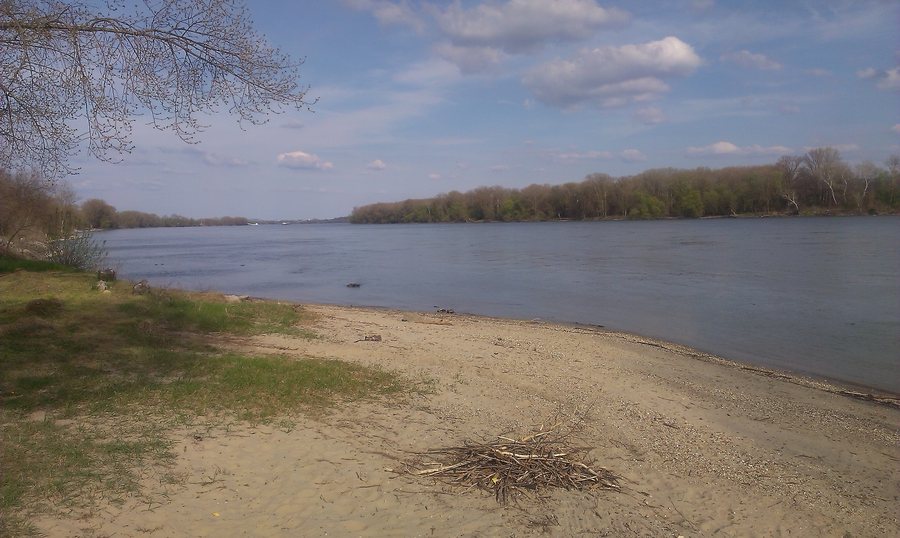 File:Radvaň nad Dunajom, Slovakia - panoramio (1).jpg
Photo: Laci30 via Wikimedia Commons, CC BY 3.0
File:Radvaň nad Dunajom, Slovakia - panoramio (1).jpg
Photo: Laci30 via Wikimedia Commons, CC BY 3.0
History
A particularly precisely dated historical reference is the so-called Žitavský mier, the Peace of Žitava. It was concluded on 11 November 1606 in the middle of the Danube between Rudolf II and the Turkish Sultan Ahmed.
In the Žitavská Tôň district of Radvaň nad Dunajom lies an important archaeological site that has been inhabited since the Neolithic period. Finds from the Early Bronze Age, the Hallstatt period, the Roman period and the era of the Avar Khaganate were discovered near Žitavská Tôň. For your own planning, these historical references can be considered by period and examined separately.
In March 1945, a Soviet flotilla landed on the banks of the Danube near Žitava in Radvaň nad Dunajom; a monument was erected at the landing site. A kopjafa monument in Radvaň nad Dunajom commemorates the Hungarian poet Dávid Baróti Szabó.
Culture
The Reformed Church is an Articular Church dating from the second half of the 17th century and was remodelled in the Classicist style in the first half of the 19th century. It was completely rebuilt in 1925.
The Roman Catholic Church of Panny Márie is a Classicist building dating from 1833. It has a single nave and features a semicircular apse, a northern sacristy and a small roof turret above the gable field.
When comparing cultural sites, you can use architectural form, style and period as separate points of reference.
Nature
The Dolné Pohronie Bird Protection Area covers the cadastral territory of Radvaň nad Dunajom. It was established to ensure the favourable condition of the habitats of the European Bee-eater (Merops apiaster), a species of European importance, and to safeguard its conditions for survival and reproduction.
The bird protection area features vertical sand and loess walls with adjacent xerothermic vegetation of a steppe and forest-steppe character. When planning nature activities, protection status, habitat and vegetation type can be classified separately.
For further orientation, you can also view the entries for Marcelová, Veľké Kosihy, Imeľ, Zlatná Na Ostrove, Buc, Bodza, Vrbová Nad Váhom and Komárno.
On the Way
Route ST207 runs from Radvaň nad Dunajom along the Danube embankment and passes Moča. ST207 Radvaň nad Dunajom–Mužla is a section of the international long-distance hiking trail Sultans Trail from Vienna to Istanbul.
The international EuroVelo 6 cycling route also passes the Peace of Žitava monument in Radvaň nad Dunajom. For planning purposes, the hiking trail, cycling route and ferry connection can be distinguished according to activity and timeframe without treating them as equivalent.
A cross-border ferry connects Radvaň nad Dunajom with Neszmély in Hungary. The crossing between Radvaň nad Dunajom and Neszmély is 800 metres long and takes 5 minutes.
For the broader travel overview: Komárno District.

.jpg)