
Goldmorawitz Hotel: Culture and Nature
Accommodation in Goldmorawitz
In Zlaté Moravce, river landscapes, geological transitions and a diverse cultural heritage come together. The confluence of the Žitava and the Hostiansky potok stream, also known as the Zlatnianka, defines the city's geographical setting. At the same time, the city lies at the transition of three significant geological and geomorphological units: the Tribeč, the Pohronský Inovec and the Pannonian Basin, represented here by the Danubian Lowland.
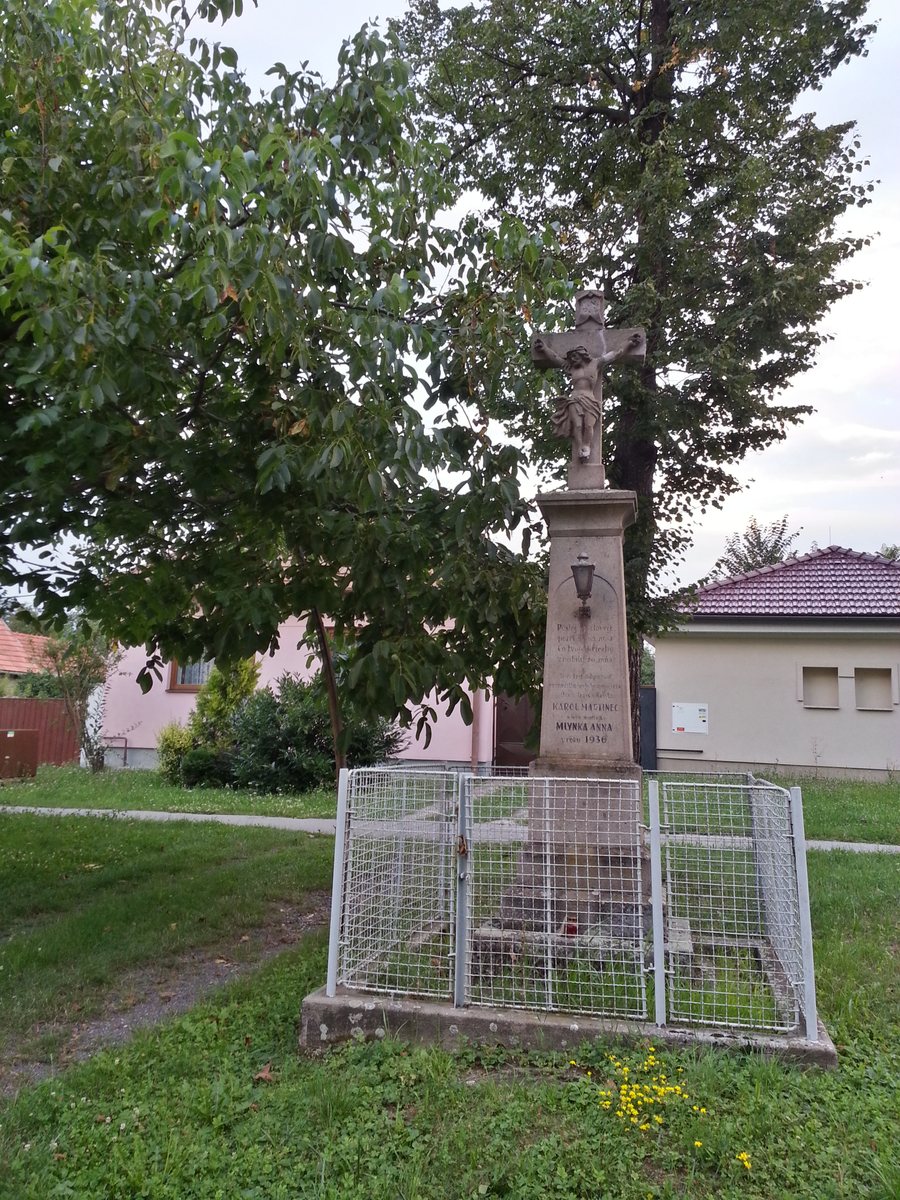 File:Chyzerovce, Zlaté Moravce, Slovakia - panoramio (2).jpg
Photo: Peter Bútora via Wikimedia Commons, CC BY-SA 3.0
File:Chyzerovce, Zlaté Moravce, Slovakia - panoramio (2).jpg
Photo: Peter Bútora via Wikimedia Commons, CC BY-SA 3.0
Nature and Trails
There is a bicycle parking facility on the banks of the Žitava. The area around Zlaté Moravce offers good conditions for cycling tourism; in addition, the local tourist association organizes hiking and cycling tours almost all year round. The Zlaté Moravce educational trail provides a direct connection between the city center and the surrounding landscape. It leads from the bus station through the city center to Kalvarie, with St. Anne's Chapel. The trail is 6 kilometers long, takes approximately 2.5 hours and includes 13 stations as well as an introductory information panel. It is self-guided and linear, can be walked in both directions, is intended for pedestrians and is accessible year-round.
The preserved section of the former manor park, now used as a city park for recreation, is also part of the cityscape. In the courtyard of the Migazzi Manor House, a preserved stone fountain structure is presented as a historical feature of Zlaté Moravce.
Culture and History
The museum in Zlaté Moravce is a regional history museum focusing on the upper Požitavie region. It is housed in the Baroque Migazzi Manor House, which was added to the list of National Cultural Monuments of the Slovak Republic on October 2, 1963. The permanent exhibition The Migazzi Family was opened to visitors and presents the history of the Migazzi noble family. It includes a tea salon installation with objects that belonged to and were used by members of the Migazzi family. The exhibition also includes a salon of the Paluškov family, furnished with Baroque inlaid furniture from the 18th century.
The Migazzi family mausoleum was built in 1887 in the Neo-Romanesque style. It is listed in the central register of cultural monuments and contains black marble sarcophagi. Another historic building is the Janko Kráľ Memorial House: it was built in the first half of the 19th century, and the poet Janko Kráľ lived there from 1862 until his death. The Classicist Church of St. Michael the Archangel in Zlaté Moravce dates from 1785 and was rebuilt in 1823.
Activities for Different Days
The outdoor swimming pool in Zlaté Moravce has a 50-meter swimming pool and two small children's pools. During the season, the winter stadium on Továrenská Street is also open; it is used for recreational ice skating and ice hockey games. For sports activities, TJ Sokol offers organized individual sport climbing on an artificial climbing wall. Climbing competitions for the Slovak Cup and the Slovak Junior Championships are organized annually.
Other places that you can access from this page are Martin Nad Žitavou, Tesárske Mlyňany, Velčice, Ladice, Zlatno, Topoľčianky, Hostie and Jedľové Kostoľany.
To the higher-level travel overview: Zlaté Moravce.

.jpg)