
Pärnu: Beach, spa resort and Baltic coast
Pärnu lies on Estonia’s Baltic coast and is one of the country’s best-known seaside resorts. Its sandy beach, shallow coastal waters, spa tradition, parks and compact city centre make it an ideal destination for a relaxing stay. In summer, beachgoers and events add to the appeal, while the quieter seasons are better suited to walks, wellness and culture. Pärnu can be a destination in its own right or a stop on an Estonian itinerary between Tallinn and the west of the country.
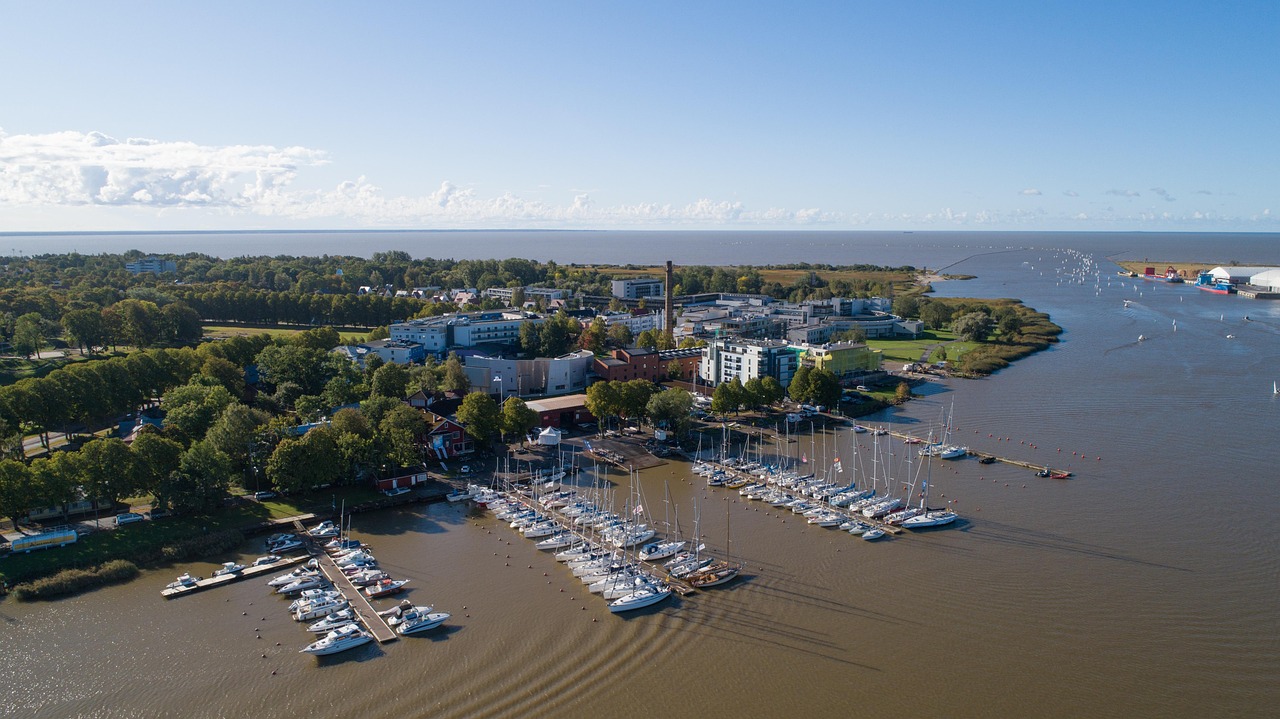 Yachthafen an der Mündung des Pärnu-Flusses an der estnischen Ostseeküste.
Photo: Tiit Aunaste auf Pixabay
Quick facts: Pärnu
- Pärnu lies on Estonia’s Baltic coast and is known as a spa and seaside resort.
- The beach, promenade, parks, wooden houses and city centre each offer something different.
- Summer, the shoulder seasons and winter each bring different conditions for swimming, culture and wellness.
- Wind, water temperature, weather and daylight all affect a seaside stay.
- Tallinn, Tartu, Narva and Saaremaa are distinct stops on an Estonian trip.
- The Pärnu Museum, Koidula Museum and Red Tower complement the beach, spa history and parks with a variety of indoor visits.
The beach is close to the city and accessible via paths and the promenade. Water temperature and weather determine whether swimming or simply taking a walk is more enjoyable. Visitor numbers peak in July and August, so it’s best to plan accommodation and travel well in advance. Spa facilities, museums, cafés and parks offer alternatives in cool or rainy weather.
Beach and summer city
The wide beach is the best-known reason to visit Pärnu. Families often appreciate the shallow water and proximity to walking paths, but should keep an eye on the wind, sun and current bathing conditions. The beach promenade is ideal for a walk in the morning or evening, when it’s cooler and the atmosphere is more peaceful. Even on warm days, pack sunscreen, drinking water and a windproof layer.
Pärnu is also a cultural and spa destination beyond the height of summer. The Pärnu Museum at Aida 3 explores the history of the city and region; the Koidula Museum at Jannseni 37 is dedicated to poet Lydia Koidula and the history of the Estonian press. The medieval Red Tower at Hommiku 11 adds to the city’s historic character. Alongside the beach and parks, these make for worthwhile indoor visits on cooler or rainy days.
Old Town and surroundings
The Pärnu Museum is open Tuesday to Sunday, 10 am–6 pm, from 21 August to 19 June, and Tuesday to Sunday, 10 am–7 pm, from 20 June to 20 August. The Koidula Museum is open Wednesday to Saturday, 10 am–6 pm, from September to April. Museums, the beach and walks offer a range of things to do outside the swimming season.
The timetable and length of stay determine the order of stops between Pärnu and other destinations. Allow separate blocks of time for travel, accommodation and the return journey.
When to visit and where to stay
The beach, promenade and events are at their liveliest in the height of summer. In turn, prices and occupancy rise, and popular accommodation can book up quickly. Spring and autumn are better suited to walks, wellness and a quieter city visit. Pärnu in winter is a different destination from Pärnu in July: swimming takes a back seat, while spa treatments, restaurants and the coastal scenery take on greater importance.
When choosing accommodation, consider the distance to the beach, shops, parking and the route back in the evening. If you’re travelling without a car, consider the distance to the bus station and the routes to the places you want to visit. Staying close to the beach is convenient for a short seaside break; on a round trip, accommodation near transport links can save time. Two or three nights leave enough time for the beach, city centre and a weather-dependent alternative.
On a round trip, Tallinn adds big-city sights and a harbour atmosphere to your stay. If you’re visiting Pärnu for its spas and relaxation, the guide to wellness and thermal baths offers more ideas to suit your trip; for historic city visits, explore the selection of cities and architecture.
Enjoy the beach, spa heritage and city centre at an easy pace
Pärnu is a good fit for travellers who want to combine the beach, promenade and spa heritage with short walks around the city. Estonia provides the wider setting; Tallinn and Tartu offer larger city experiences and destinations with a stronger cultural focus.
On a longer trip through Estonia, Tallinn and Tartu combine urban destinations with Pärnu’s coastal setting. Saaremaa and Narva are more distant, standalone stops. Lakes and wetlands add another dimension to the landscape; let travel times and the amount of time you want to spend at each stop determine the order.
Getting between Pärnu’s beach, city centre and bus station involves separate stretches of travel. Getting there and getting around and travel planning are useful for organising transport, accommodation and your stay.
For a stay of several days in Pärnu, choose accommodation based on the beach, city centre and bus connections. Holiday apartments and hotels can be selected to suit your destination and travel style.
A longer trip could include Estonia, Saaremaa and Narva as separate island, coastal and city stops. Wellness and thermal baths fit with Pärnu’s spa tradition; cities and architecture offer more ways to explore the city centre.
Frequently asked questions about Pärnu
When is the best time to visit Pärnu?
Summer is best for the beach and long evenings. Spring, autumn and winter are better suited to walks, spa treatments, wellness and quieter city visits.
Is Pärnu suitable for families?
The beach, promenade and short distances can make planning easier. Take account of the wind, sun, water temperature and weather, as well as the route back to your accommodation.
Is there a combined ticket for the three museums?
Yes. The combined ticket is valid for the Pärnu Museum, the Koidula Museum and the Red Tower.
How much time should I allow?
One day is enough for the beach and a first walk around the city. Two or three nights leave more time for spa treatments, museums, parks and weather-dependent alternatives.
Can I combine Pärnu with Tallinn or Saaremaa?
Yes, as separate stops in Estonia, allowing for extra travel time and, if you’re going to Saaremaa, a ferry crossing.
