
Tallinn: Old Town, Toompea, Harbor, and Neighborhoods
Tallinn combines a medieval old town with a harbor, modern neighborhoods, and a Baltic Sea setting. For many travelers, Estonia’s capital is their first point of reference in the country. But a successful visit isn’t about packing as many names as possible into one day. It makes more sense to choose the Old Town, Toompea, the harbor, and one other neighborhood according to your time and interests. That leaves room for walks, viewpoints, museums, or a break away from the busiest lanes.
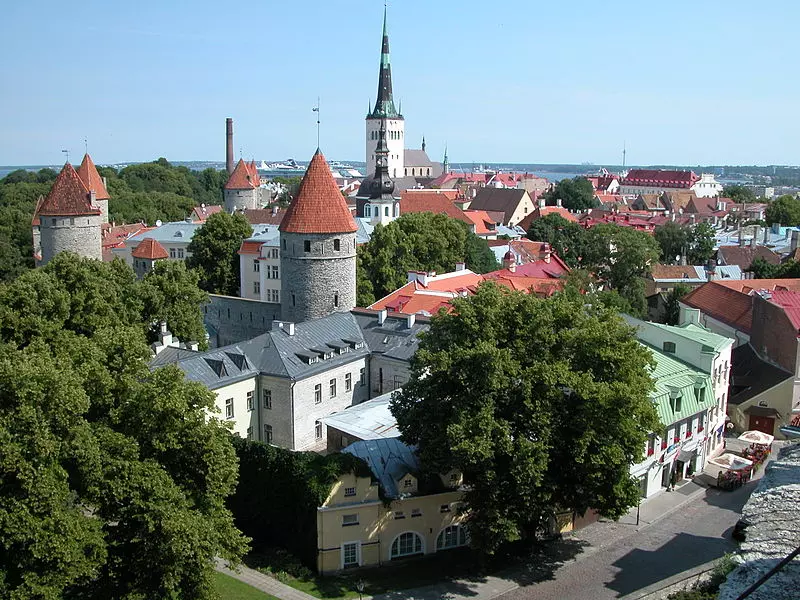 Blick über Tallinns Altstadt mit Stadtmauertürmen, roten Dächern, Kirchturm und Hafen im Hintergrund.
Photo: Brunswyk; Wikimedia Commons, CC BY-SA 3.0 DE
Blick über Tallinns Altstadt mit Stadtmauertürmen, roten Dächern, Kirchturm und Hafen im Hintergrund.
Photo: Brunswyk; Wikimedia Commons, CC BY-SA 3.0 DE
Quick facts: Tallinn
- Tallinn is Estonia’s capital on the Baltic Sea, combining an Old Town, harbor, and modern neighborhoods.
- The historic Old Town and Toompea are well suited to a focused walking tour, with cobblestones and steep slopes.
- The harbor, Kalamaja, Kadriorg, and other neighborhoods each offer a different focus.
- Museums and indoor attractions are important additions to city walks when the weather is changeable.
- Tartu, Pärnu, Narva, and Saaremaa are independent destinations that require their own travel or ferry planning.
- Check opening hours, transport, weather, harbor information, and accommodation location before your visit.
- Tallinn is Estonia’s capital, located on the Baltic Sea.
- The Old Town and Toompea define the city’s historic skyline.
- The harbor connects the city to ferry and coastal traffic.
- Kalamaja and other neighborhoods offer a perspective beyond the Old Town.
- The image shows Tallinn’s Old Town, with its city walls, towers, and a view toward the harbor.
Understanding the Old Town and Toompea
The Old Town is more than a backdrop of lanes and towers. Its position between the Lower Town and Toompea explains why routes can be steep and views unexpectedly striking. Taking your time makes it easier to notice the differences between residential streets, squares, and viewpoints. The photo on this page shows this relationship: city walls, red rooftops, church spires, and the Baltic Sea in the background. To put the historic Old Town in context, the university city of Tartu can also serve as a counterpoint—not because the two cities are alike, but because Estonia offers more than one kind of city.
The harbor, neighborhoods, and daily rhythm
The harbor is a visible part of the cityscape and shapes the atmosphere of nearby neighborhoods. If you arrive by ferry or cruise ship, be realistic about the time available: a short stay is better suited to one clear focus than to a full city itinerary. On a longer trip, consider exploring Kalamaja, museums, or the waterfront as well as the Old Town. The guide to city and nature destinations in Estonia can help you avoid treating Tallinn as your only stop. Pärnu, Saaremaa, and Narva also offer different landscapes and reasons to travel.
A city visit and onward travel
Tallinn can be a city destination in its own right or serve as the framework for a trip around the Baltics. The key is to decide what matters most: architecture, history, museums, a harbor city, or onward travel into nature. If you have only two days, don’t plan as though long transfers and several regions can easily be fitted in along the way. For a more leisurely comparison, other destinations in Eastern Europe and regions of the Balkans offer different perspectives on city and cultural travel. They don’t replace local planning, but they highlight the variety of travel experiences across Europe.
The cityscape and modern life
Tallinn’s strength lies in the coexistence of history and modern life. A medieval wall says something about the cityscape, but not necessarily about everyday life in the neighborhoods beyond it. Keeping this perspective in mind reveals more than the familiar photo spots. Saaremaa island and Pärnu on the coast also show just how different Estonia can be beyond its capital. Narva demonstrates how border and industrial history can offer another perspective on the country. The city of Tartu adds its university and cultural history to this selection; Eastern Europe and Riga can also be considered distinct perspectives on the Baltic cities. Lithuania’s Klaipėda offers yet another Baltic port city. That’s precisely why it’s worth giving Tallinn its own generous time frame. A city visit feels more complete when the Old Town, harbor, and a modern neighborhood are seen not as competing attractions but as different parts of the same city.
Combining the Old Town, Toompea, and harbor
The Old Town is ideal for a first walk through its lanes, squares, churches, and city walls. Toompea extends the route with viewpoints and historic buildings, but also involves stairs and cobblestones. Check actual opening hours and allow the time you want for museums and indoor visits in advance.
The harbor and neighborhoods such as Kalamaja show a different side of Tallinn from the historic center. If you have a longer stay, you can compare Tartu, Pärnu, Narva, or Saaremaa as separate stops. Riga and Vilnius are part of longer Baltic itineraries and should only be added if you have enough travel time.
For practical planning, check getting there and transport, travel preparations, and the location of your accommodation. Visit Estonia provides up-to-date travel information; the UNESCO documentation on Tallinn’s Old Town offers additional historical context. Confirm harbor operations, events, transport, and opening hours for your specific dates.
Tallinn FAQ
How many days should I spend in Tallinn?
One full day is enough for a focused walk through the Old Town. Two or three days leave time for Toompea, museums, the harbor, Kadriorg, and other neighborhoods.
Is Tallinn interesting only for its Old Town?
No. The harbor, Kalamaja, Kadriorg, and modern parts of the city complement the historic lanes with everyday life, architecture, and a Baltic Sea setting.
Which day trips go well with Tallinn?
Tartu, Pärnu, Narva, and Saaremaa each offer a different focus. Plan travel, ferry or driving times, and any overnight stay separately.
What should I check before visiting the city?
Check opening hours, admission, weather, transport, harbor information, events, and your accommodation’s location shortly before your visit.

