
Grodno (Hrodna) — Residence of Polish Kings and Lithuanian Princes
Grodno (Hrodna) is an ancient city in the Polish–Lithuanian Commonwealth, a residence of Lithuanian grand dukes and Polish kings, and a place of beautiful architecture and rich history. Today, Grodno is an important city for the self-awareness of the young Belarusian nation.
Over 800 years of Grodno
The city is over 800 years old. Its first mention dates to the 12th century, when it was a fortress in the Russian Principality of Polotsk. Over its long history, Grodno was both the capital of the Principality of Grodno and part of various states, including the Grand Duchy of Lithuania, the Polish–Lithuanian Commonwealth, and the Russian Empire.
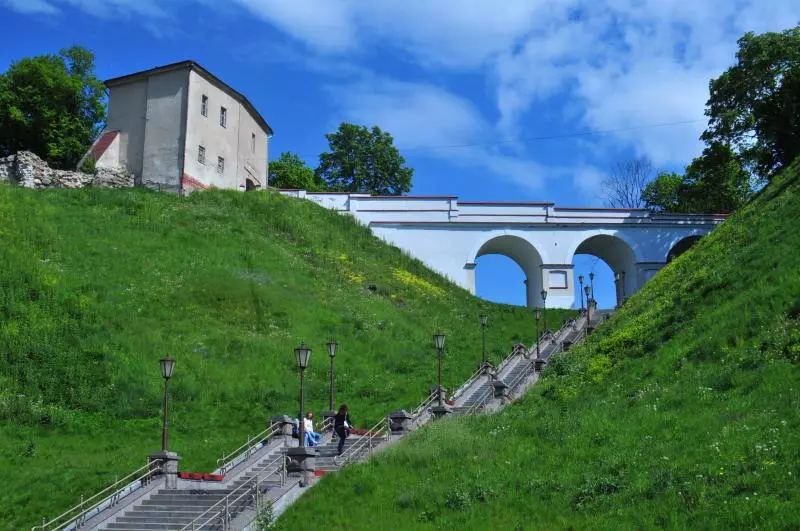 Der Schlossberg mit dem neuen Schloss in Grodno
Photo: Alesia Belaya
Der Schlossberg mit dem neuen Schloss in Grodno
Photo: Alesia Belaya
Grodno lies on the Neman River, 300 kilometers northwest of Minsk, the capital of the Republic of Belarus. Less well known is the city’s important role in Eastern European history as a royal residence of Polish kings.
There are numerous monuments here representing both Western and Eastern architecture. Most are Catholic and Orthodox places of worship located in the city center. The castles are another attraction. It is no coincidence that an application has been submitted to include Grodno’s Old Town on the UNESCO World Heritage List.
Despite the destruction, devastation, and numerous wars Grodno has survived, the city has managed to preserve its architecture. Today, Grodno is one of the unique and important cities in Belarus.
Perhaps because of Belarus’s isolationist policies, Grodno, despite its historical importance, is not a major tourist destination and slumbers in a deep sleep. Hotels in Grodno rarely see tourists from abroad; even Poles and Lithuanians hardly ever visit “their” city.
The castles of Grodno
Known beyond the borders of Grodno and important sites in European history are the Old Castle of Grodno (now a ruin) and the New Castle of Grodno (also known as the Royal Palace of Grodno). Both are located on Castle Hill and illustrate Grodno’s importance as a royal residence of Polish kings. The New Castle was the venue for the Polish-Lithuanian Commonwealth’s parliament (Sejm); the second and third partitions of Poland were proclaimed here, and Poland’s last king, Stanisław Poniatowski, abdicated here.
The churches of Grodno
Grodno’s most important church is the Kalozha Church, built in 1183, better known as the Church of Saints Boris and Gleb. It is the oldest surviving building in Grodno. In 2004, the church was added to Belarus’s UNESCO Tentative List.
Almost as well known is St. Francis Xavier Cathedral. The basilica is a pilgrimage site for Catholic Christians. It houses a miraculous icon of the Mother of God, a copy of the icon of the Mother of God in Rome’s Basilica of Santa Maria Maggiore. A celebration in her honor is held regularly on May 5.
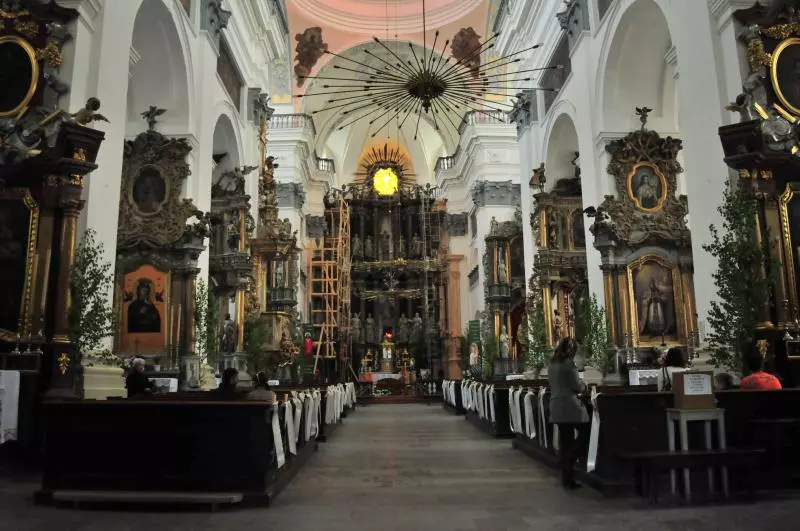
Grodno’s sights
Besides its beautiful old churches and the New Castle, Grodno also has more secular monuments. A visit to Grodno includes the Gorodnitsa district, where 18th-century buildings predominate, as well as Neoclassical architectural monuments such as the Stanislavskaya manor house and the Maksimovich House.
The museums in Grodno, as in any other city, are a kind of calling card for the living history that the city is happy to share with its guests. Probably the most interesting museum in Grodno is the Museum of the History of Religion, whose exhibits are housed in a restored 18th-century palace.
Grodno Airport
Grodno Airport (GNA) is located about 18 kilometers southeast of the city. It has little international significance, with only a few flights taking off or landing there. Belarus’s international airport is Minsk Airport.
Combine Grodno’s history with a city walk
Grodno, also known as Hrodna, lies in western Belarus and has a particularly layered history because of its location near Poland and Lithuania. Visitors may be interested in the Old Town, churches, riverside areas, city views, and traces of different eras of rule and cultural spheres. A visit is best enjoyed with enough time for walking, viewpoints, and quieter stretches.
If you are including Grodno in a trip to Belarus, check transport connections, entry requirements, accommodation availability, and local opening hours in advance. The city can be combined with Brest, Minsk, or natural attractions in the west of the country, but avoid packing the itinerary too tightly. A schedule that brings together historic sites, everyday city life, and breaks by the river is especially rewarding.
Practical preparations
Planning a specific trip involves more than choosing individual sights. The order of your days, the location of your accommodation, and a return journey that will still work if there are delays are all important. If you choose one main destination each morning and keep an optional stop in reserve, you can adapt to the weather, opening hours, and your energy levels. This is helpful when journeys between the Old Town, the river, and places farther afield take longer than expected.
Before booking, check your travel arrangements, luggage needs, access to supplies, and communication options. Public transport, rental cars, and organized excursions each have different requirements. Follow the latest information from the relevant authorities, transport operators, and service providers. A map shows the route, but may not accurately reflect current journey times.
The season also affects your stay. Daylight, precipitation, heat, and short-notice closures can influence routes and excursions. Good planning allows for an alternative date and enough time between important connections. Choose accommodation according to your priorities: central for getting around the city, well connected for transfers, or in a quiet location for relaxation.
Historical information can help you choose what to see, but it does not replace up-to-date details about admission, access, and safety. For families, older travelers, and people with limited mobility, short distances, breaks, and a safe return are especially important. Considering nearby destinations can help put the region in context, but does not guarantee that they are currently accessible. For Grodno (Hrodna)—the residence city of Polish kings and Lithuanian princes—routes, breaks, and the stamina of all travelers should be planned together.
Before making a firm decision, check official guidance and confirm details directly with the relevant service provider. A short checklist should include travel documents, entry requirements, insurance, weather, transport, accommodation, return travel, and accessible emergency contacts. This keeps the plan realistic and flexible. For Grodno (Hrodna)—the residence city of Polish kings and Lithuanian princes—compare accommodation options with the main daily routes and realistic breaks.
Avoiding too many stops gives you more time to take in the experience. One main destination, a walk, and an optional extra are often more manageable than a long list. This kind of planning leaves room for breaks and changes. For Grodno (Hrodna)—the residence city of Polish kings and Lithuanian princes—consider not only what you want to see, but also route conditions, weather, daylight, and a safe return.
Weighing up the city center, riverside, and excursions
Grodno can be explored with a walk through the Old Town, views of the Neman, and visits to selected historic buildings. However, the Holy Dormition Cathedral and the Zhirovichi Monastery Complex are not part of the same short city walk. The distance, current accessibility, and length of your stay will determine whether an excursion makes sense.
For regional context, see Belarus; plan Brest and Minsk as separate stages of your trip. Organize a day that includes the Old Town, churches, museums, and an excursion around travel times and opening hours. Culture and history can help you choose your focus without turning every historic site into a must-see.
Plan for the border location, transport, and return journey
Because Grodno is close to Poland and Lithuania, up-to-date entry and transport information is especially important when planning a trip. For your journey, check travel and transport as well as entry requirements and documents. Minsk Airport may be a regional point of reference, but it is not automatically the fastest connection to Grodno. Compare flights, trains, buses, and cars based on your actual destination and return journey.
For the city itself, choose an accessible starting point so that walking routes and breaks are realistic. For excursions, confirm the meeting point, duration, food arrangements, and return journey in advance. A map can show the way, but cannot replace current information about roads, border traffic, or local restrictions.
Combine historical highlights with everyday life
Grodno feels especially diverse when its royal history, religious buildings, museums, and modern city life are not crammed into a single block of time. The Icon of Zhirovichi points to another religious context that can be considered separately from the city walk, both in time and place. Plan for walking, seated breaks, and quieter stretches between indoor visits.
Before setting off, consult travel preparations, language and communication, and money and payments. Confirm opening hours, photography rules, admission, and current access directly with the institutions or relevant authorities. For journeys outside the city, also include staying safe while traveling in your daily planning.
For trips to religious sites or places outside the city, note meeting points and return times separately from the city itinerary. This keeps a short walk around Grodno flexible if a museum visit takes longer or bad weather cancels an outdoor route. Before booking, also check the location of your accommodation, check-in arrangements, payment methods, and the accessibility of your return journey. This creates a realistic daily rhythm without adding unsupported promises.
