
Skopje: Old Town, the Vardar, and Matka Canyon
Skopje is the capital of North Macedonia and an important gateway to the southern Balkans. When including Skopje in a trip, it is worth planning not just a list of sights, but also the location, distances, length of stay, and best time of year together. This makes for a more relaxed itinerary on the ground, while still leaving enough room for city walks, breaks, meals, museums, or excursions.
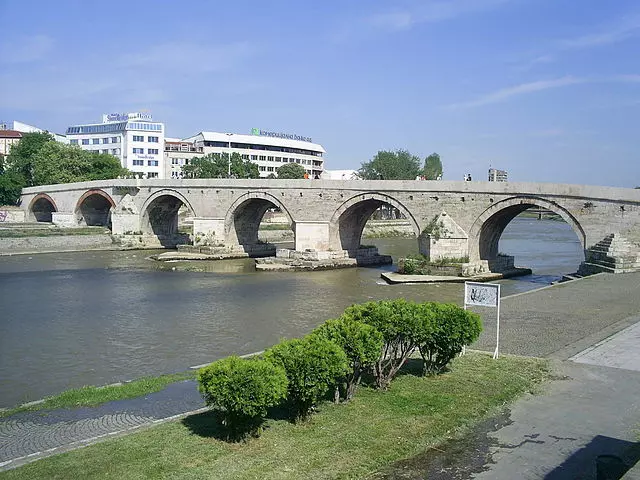 Die Steinbrücke über die Vardar in Skopje, das Wahrzeichen der Stadt
Photo: Wikipedia / Svilen Enev (CC-BY-SA-2.5;GFDL)
Die Steinbrücke über die Vardar in Skopje, das Wahrzeichen der Stadt
Photo: Wikipedia / Svilen Enev (CC-BY-SA-2.5;GFDL)
Skopje at a glance
- Skopje is the capital of North Macedonia and lies on the Vardar River.
- The Old Bazaar, Stone Bridge, fortress, and central squares reveal different layers of the city.
- Museums, religious sites, and the modern city centre call for different amounts of time and separate travel blocks.
- Matka Canyon lies outside the city centre and requires a dedicated excursion, with time set aside for the return journey.
- Ohrid, Pristina, Belgrade, and Thessaloniki are distinct stops on a Balkan itinerary.
- Check opening hours, transport, weather, access, safety, and current travel advisories.
Character and location
The city brings together the banks of the Vardar, the bazaar, the fortress, new urban corridors, religious diversity, and several very different cityscapes. When planning a trip, it is important to decide whether the city will be a base, a day trip, or one stop on a longer tour. Capitals, resort towns, coastal destinations, and inland areas can differ considerably, particularly across the Baltics and the Balkans. Taking these differences into account early helps avoid overpacked days and makes it easier to choose nearby destinations wisely.
This mix is what makes Skopje interesting, but it also calls for clear planning so that the visit does not become just a collection of disconnected impressions. A practical choice of accommodation depends on your priorities: stay centrally for short walks around the city, somewhere quiet to relax, somewhere with good transport links for excursions, or near the water if beaches and strolls are the main draw. In older city centres and popular excursion destinations, consider parking, routes with luggage, and peak-season conditions separately.
Things to see and do
The Old Bazaar, Stone Bridge, fortress, squares, museums, and riverside paths are obvious places to start. Early hours are often the most pleasant time to visit well-known sites, viewpoints, and museums. Afternoons are well suited to parks, riverside walks, cafés, or short side trips, while evenings offer a quieter perspective on old-town lanes, squares, and promenades. At busy places, it is better to choose carefully than to try to fit in an overly long list.
A visit feels more complete when historic neighbourhoods, the modern centre, and a relaxing excursion are planned separately. If you want to explore more deeply, seek out neighbourhoods, markets, local food, small museums, and everyday routes. These details make a trip more engaging than a series of photo stops. At the same time, it is worth leaving room for flexibility, as weather, traffic, and local events can change the best plan for the day.
Excursions and combinations
Skopje fits well into an overview of North Macedonia and Balkan routes that include Albania, Bulgaria, or Serbia. North Macedonia Balkans Albania A good itinerary combines destinations that make sense geographically and thematically. A capital city pairs well with resort towns, lakes, or historic sites; a broader overview of the Balkans, meanwhile, helps sort coastlines, mountains, and cities according to your travel pace.
Matka Canyon is a popular excursion, but it should be planned realistically, taking travel time, weather, and the return journey into account. For multi-day itineraries, two or three bases are often better than changing location every day. This keeps journeys manageable and leaves time for spontaneous stops. When travelling by bus, train, or rental car, actual journey times matter more than distances on a map.
When to visit and practical planning
Spring and autumn are often ideal for city visits, touring, and walks, as temperatures and crowds are usually more comfortable. Summer is especially suited to coasts, lakes, long evenings, and outdoor terraces, but accommodation and transport are in greater demand. In winter, museums, wellness facilities, cafés, and shorter walks around the city may take precedence over long outdoor itineraries. For Skopje, plan departure points, connections, and the return journey around the details of your day.
Before travelling, check current opening hours, admission rules, ferry or bus services, local advisories, and weather conditions. This is particularly important for border areas, islands, national parks, popular viewpoints, and places with seasonal opening schedules. Allowing extra time makes for a more relaxed trip and makes it easier to adapt to changes. For Skopje, plan departure points, connections, and the return journey around the details of your day.
How Skopje fits into a trip
Skopje is a good Balkan city stop for travellers looking to combine contrasts, history, and nearby excursions. The city is at its best when considered not in isolation, but as part of a well-matched itinerary. With a clear selection of sights, realistic travel times, and some time for everyday scenes, a short stop becomes a meaningful part of the journey.
Skopje between the Old Town, the Vardar, and Matka Canyon
Skopje, the capital of North Macedonia, combines an Ottoman-influenced Old Town, modern squares, bridges over the Vardar, and easy access to Matka Canyon. For travellers, the city offers an introduction to the country’s history, everyday life, and landscapes.
A visit is easier to plan when the city centre, bazaar district, and excursions are treated separately. Allow enough time for Matka Canyon, museums, or walks to viewpoints so that Skopje does not feel like just a quick transit stop.
Bringing the bazaar, the Vardar, and Matka Canyon together
A first day in Skopje can take in the Old Bazaar, the Stone Bridge, the banks of the Vardar, and a historic or modern museum district. North Macedonia provides the regional context; plan visits to squares, the fortress, and religious sites according to their locations and opening hours. In summer, plan breaks in the shade and bring drinking water.
Matka Canyon is not a quick add-on to a walk around the city centre. The journey there, trail conditions, weather, boating or hiking options, and return trip all determine how long to spend there. Serbia and Montenegro can be added to a longer Balkan itinerary, but Kotor is a destination in its own right on the coast. The official Skopje tourism information provides up-to-date details about the city.
Before your visit, check getting there and getting around, travel preparation, money and payments, and nature and landscapes. Confirm opening hours, transport, weather, access, and current guidance for the canyon for your specific travel dates.
Frequently asked questions about Skopje
What is Skopje known for?
Skopje is known for the Old Bazaar, Stone Bridge, Vardar River, fortress, and layered city history.
How many days should I spend there?
Two full days leave time for the city centre, bazaar, a museum, and another neighbourhood. Matka Canyon needs its own half-day or full-day excursion.
How do you get to Matka Canyon?
It depends on your mode of transport, the weather, the season, and the route you want to take. Check the journey, access, return trip, and trail conditions in advance.
Can Skopje be combined with Ohrid?
Yes, as part of a longer trip through North Macedonia. Allocate realistic travel and sightseeing time for both destinations, which each deserve their own visit.
