
Tashkent: Metro, Bazaars, and City Planning
Tashkent is the capital of Uzbekistan and, for many travelers, the first gateway to Central Asia. The city combines broad Soviet-era avenues, historic neighborhoods, markets, museums, parks, modern restaurants, and one of the region’s best-known metro systems. The official Uzbekistan travel portal offers up-to-date guidance on regions and attractions.For Tashkent, decide whether to visit on arrival, stay independently for several days, or continue onward based on schedules and your available time. Additional information about Uzbekistan can help with practical preparations.
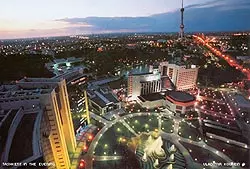 Nächtlicher Blick über Taschkent mit beleuchteten Straßen und dem Fernsehturm.
Quick facts: Tashkent
- Tashkent is the capital of Uzbekistan and a common starting point for travel around Central Asia.
- The metro connects many parts of the city and is also notable for the distinctive designs of its stations.
- Chorsu Bazaar, museums, parks, and historic neighborhoods reveal different sides of this sprawling city.
- Heat, major roads, traffic, and distances affect the order of daily destinations.
- Samarkand, Bukhara, Khiva, and Termez require separate travel or flight time and should be planned independently.
- Check entry requirements, money matters, opening hours, local rules, and current travel advisories in advance.
- Tashkent is a sprawling capital with major roads, parks, and diverse neighborhoods.
- The metro connects many central areas and is also an architectural experience.
- Bazaars such as Chorsu Market showcase food, crafts, and everyday life, but they are not just photo backdrops.
- Museums and religious sites offer insights into Uzbekistan’s history, art, and cultural diversity.
- Heat, distances, traffic, and language skills all affect daily planning.
- Check entry requirements, money matters, local rules, opening hours, and current travel advisories in advance.
Metro and city layout
The Tashkent Metro is useful for visitors, and its stations are interesting for their varied designs. Marble, reliefs, lighting, and themed motifs evoke history, nature, or notable figures. A ride should still be treated as an ordinary public-transit experience: follow entry procedures, photography rules, and local guidance, and account for rush hour. For a short tour, a few stations along a well-connected line are enough; seeing every station takes considerably longer.
Above ground, the city often feels spacious and sprawling. Major intersections, avenues, and parks can make distances seem longer than they appear on a map.The metro can be combined with Tashkent’s food scene and central museums; the capital can also serve as a base for onward travel around Uzbekistan. Additional information about Tashkent’s food scene and Uzbekistan can help with practical preparations. For older travelers and families, shade, breaks to drink water, and short walks between metro exits and destinations are especially important.
Bazaars, the Old Town, and food
Chorsu Bazaar is one of the city’s best-known places. Beneath its large dome and in the adjoining passageways, vendors sell fruit, spices, bread, sweets, meat, and other goods. A visit is worthwhile when you have time to find your way around and be considerate of ongoing trade. Confirm prices, payment methods, and opening hours on site; ask permission before photographing people.
Around the Old Town and its religious complexes, Tashkent feels different from the Soviet-era main thoroughfares. Mosques, madrasas, and squares should be treated with respect as religious and historic sites. Observe dress and conduct expectations, visiting hours, and any rules for entering buildings. Samarkand and Bukhara offer an even stronger sense of historic travel; Tashkent remains the modern administrative and transport capital.
Museums, parks, and the modern city
Tashkent has museums devoted to history, applied arts, literature, and regional culture. For a first visit, you can pair a museum with a park or central square. Check opening hours, the languages used for displays, and current exhibitions directly. Large parks and green spaces are valuable in hot weather, but paths and shade vary from one area to another.
The city is changing, with new hotels, restaurants, shopping centers, and transport projects. Older travel accounts may therefore be out of date about names, access, or services. Khiva and Termez offer historical and regional perspectives different from those of the modern capital. To reach more distant sights, combining the metro, taxis, and short walks is usually more practical than planning a day entirely on foot.
Trip planning and onward travel
Two to three days is a good starting point for Tashkent if you want to combine the metro, a bazaar, a museum, a historic neighborhood, and a park. An extra day on arrival can be useful after a long flight. In summer, plan activities for earlier or later in the day; in winter, account for temperature changes between outdoor walks and indoor spaces.
Tashkent is an important transfer point for travel to Uzbekistan, Kazakhstan, and other destinations in Central Asia. Check current timetables, domestic flights, train tickets, baggage rules, and entry requirements. Russia and Georgia are nearby geographical reference points, but onward travel to them is not automatically straightforward.
Combining the metro, bazaar, and neighborhoods
The metro is a practical way to get around Tashkent and an architectural part of the city experience. A few stations along a well-connected route are enough for a first outing. Choose when to visit Chorsu Bazaar, historic neighborhoods, and parks based on the time of day, heat, and distance, leaving time for breaks and getting around.
The Uzbekistan overview connects Tashkent with Samarkand, Bukhara, Khiva, and Termez. Kazakhstan, Russia, and Georgia are neighboring countries, each with its own border and transport requirements. Markets and restaurants in Tashkent offer a culinary focus.
Before traveling, compare getting there and getting around, travel preparations, and the latest information from the official Uzbekistan travel portal. Confirm train tickets, domestic flights, baggage rules, opening hours, and entry requirements for your specific travel dates.
Tashkent FAQ
How many days do you need in Tashkent?
Two to three days gives you time for the metro, Chorsu Bazaar, a museum, historic areas, and parks. If you arrive late, an extra half-day is useful.
Is the metro useful for visitors?
Yes. It connects many parts of the city and is also architecturally interesting. Follow entry procedures, photography rules, and current guidance on metro lines, and account for rush hour.
Can you use Tashkent as a base for exploring Uzbekistan?
Yes. Plan connections to Samarkand, Bukhara, and other places using current schedules, and don’t underestimate the distances involved.
What should you keep in mind when visiting a bazaar?
Prepare to behave respectfully, choose a suitable time of day, bring drinking water, keep personal belongings secure, and follow the rules in effect.
