
Yaroslavl on the Volga: Old Town, Churches and the Golden Ring
Yaroslavl lies where the Kotorosl flows into the Volga. Its historic city center brings together 17th-century churches, squares and riverfront paths in an easy-to-follow walking route. Highlights include the frescoes in the Church of Elijah the Prophet and a route from the former monastery complex via Strelka to the Volga.
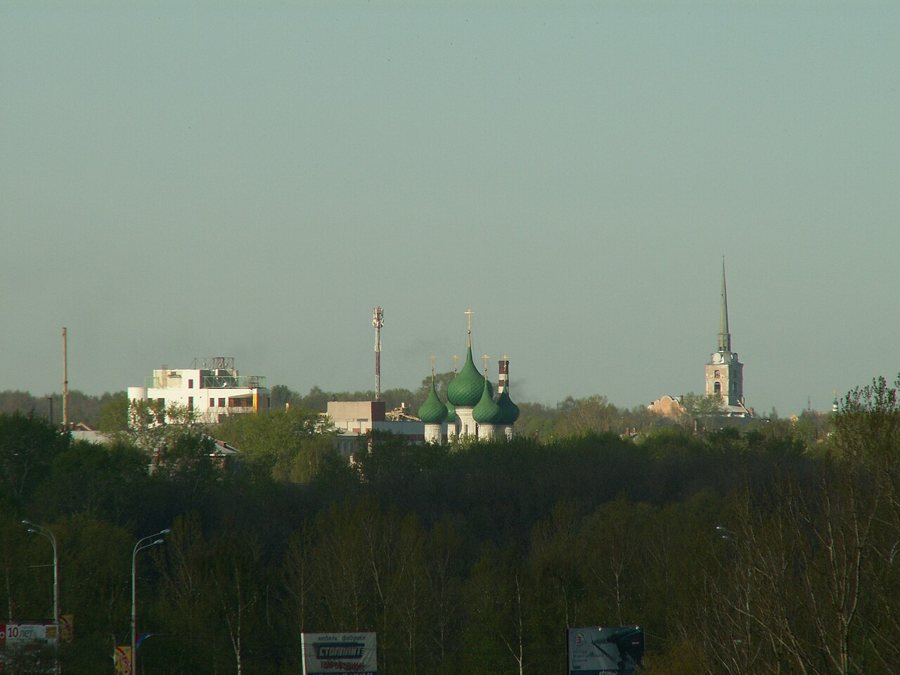 Kirchen in Jaroslawl (2007). Foto: Monedula / Wikimedia Commons. Gemeinfrei. Verkleinert.
Photo: Monedula
Yaroslavl at a glance
- Location: On the Volga, at the mouth of the Kotorosl.
- Old Town: Inscribed on the UNESCO World Heritage List as a historic center in 2005.
- Churches: The Church of Elijah the Prophet is known for its 17th-century frescoes.
- Walk: The monastery complex, Kotorosl riverbank, Strelka and Volga promenade form a clear, logical route.
- Time to visit: Allow separate time for church interiors and museum exhibitions in addition to an outdoor walking tour.
The Old Town between the Kotorosl and the Volga
Yaroslavl's Old Town lies between two rivers and combines a regular street grid with religious and civic buildings. The historic center has been a UNESCO World Heritage Site since 2005. Its 17th-century churches and neoclassical city plan, dating from the urban reforms under Catherine the Great, shape the cityscape. Many sights are clustered within a connected historic core, while the riverbanks and viewpoints extend the walk toward the water.
A good place to start is the former Spaso-Preobrazhensky Monastery, whose complex now houses the Yaroslavl Museum-Reserve. From there, follow the Kotorosl toward Strelka, where the river flows into the Volga. The riverside paths offer views over both rivers, and Strelka brings together the waterside landscape and the city's history. The Volga promenade then leads back into the historic center. This makes for a clearly structured route linking the monastery, riverbanks and central squares.
Frescoes and church art
The Church of Elijah the Prophet on Sovetskaya Square was built between 1647 and 1650 on commission from merchant brothers Voniatiy and Ioannikiy Skripin. Its largely preserved artistic interior includes frescoes, icons and a richly carved, gilded iconostasis dating from 1696.
Visiting churches is different from taking a freely accessible city walk: interiors may be open according to service schedules, exhibition hours or seasonal conditions. If you plan to visit several churches or a museum, treat them as separate stops between the riverside path and the Old Town. On the Volga's banks, you'll also find Korovnitskaya Sloboda and the Church of St. John Chrysostom. Its multicolored façade tiles were made by Yaroslavl craftsmen in the late 17th century; later restoration work replaced missing decorative elements.
City walks and how long to stay
For a first visit, you can combine the monastery complex, Strelka and part of the Volga promenade into one continuous walk. Allow extra time if you want to see the inside of the Church of Elijah the Prophet or visit the Museum-Reserve's collections. On a brief stop, focus on the historic city center; a longer stay leaves time for more museums, churches and stretches of riverbank.
Choose day trips based on your starting point: Yaroslavl is a destination in its own right within the Golden Ring. Rostov and Kostroma round out a multi-day cultural itinerary, while Myshkin, Uglich and Plyos add more towns along the Volga. The Volga region can be explored on an independent trip or on river cruises in Russia; cruises combine set times in port with onshore city walks.
If you stay overnight in Yaroslavl, choose accommodation based on its proximity to the railway station, the Old Town or the Volga, and include the general accommodation options in your search. When traveling by train, the station, the route into the Old Town and the onward journey to your next destination are separate legs. Connections depend on your arrival and departure stations; for rail travel and getting there, consider how these legs connect. If you visit several churches and museums, you can link them into a cultural itinerary based on architectural history and art.
German Visa and Mastercard cards, payment apps and cash withdrawals using German cards do not work.
Frequently asked questions about Yaroslavl
What makes the Church of Elijah the Prophet special?
The central space was painted in 1680 in just under three summer months by 15 artists from Kostroma, led by Guriy Nikitin and Sila Savin. The fresco cycle includes “The Harvest” on the south wall, a scene from the cycle about the prophet Elisha.
What does the German Federal Foreign Office advise regarding non-essential travel?
Those already in Russia should consider leaving the country.

