
Rostov Veliky: Kremlin, Lake Nero and the Golden Ring
Rostov is one of the great historic capitals of the Golden Ring. For many Russian tourists, a visit to Rostov is an essential part of a journey through Russian history—the Golden Ring. One of Rostov’s most important sights is the Rostov Kremlin, regarded as the most beautiful and imposing Kremlin outside Moscow.
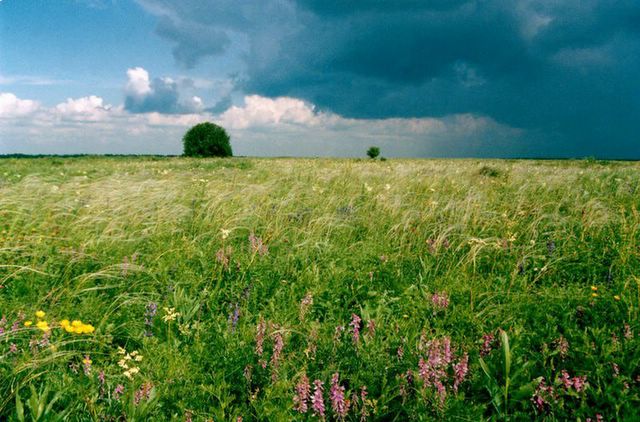 Landschaftsmotiv mit blühender Wiese und weitem Horizont.
Photo: Alexander Dobrolubov
Landschaftsmotiv mit blühender Wiese und weitem Horizont.
Photo: Alexander Dobrolubov
Rostov, in Russia’s Yaroslavl Oblast, is one of the key cities in the so-called “Golden Ring” and an important destination for domestic tourism. It lies on Lake Nero. To distinguish it from its namesake, Rostov-on-Don, the Golden Ring city is also called Rostov-Yaroslavsky. In earlier times, up to the 18th century, it was also known as “Great Rostov”—Rostov Veliky—in recognition of its historical importance to Russia.
Quick facts: Rostov and its Kremlin
- Rostov Veliky is in Yaroslavl Oblast, on Lake Nero, and is distinct from Rostov-on-Don.
- The Kremlin ensemble, the Dormition Cathedral, the bells and other religious buildings shape the city’s historic character.
- The Kremlin is a historic episcopal and metropolitan complex, not a fortress Kremlin in the usual sense.
- Yaroslavl, Kostroma, Myshkin and the Golden Ring are separate stops, each requiring its own transfer time.
- Rail connections, opening hours, tours, services and photography rules can affect the day’s plans.
- Check current travel, safety, transport and access advisories before setting out.
Rostov was a capital of Kievan Rus’
There are several theories about the founding of Rostov. Some scholars believe its roots lie in Sarskoye Gorodishche, just south of the present-day city, a medieval fortified settlement of the Volga Finns. Others say Rostov was a Viking trading enclave that guarded the Norsemen’s trade routes along the Volga. What is certain is that Rostov was first mentioned in 862, already as an important settlement. From 988, Yaroslav the Wise was a well-known prince of Rostov. Under Prince Konstantin Vsevolodovich (1185–1218), the city became an important center of Kievan Rus’. Rostov was one of the two capitals of the principality of Rostov-Suzdal. From 1207, it was the capital of the independent Principality of Rostov.
With the decline of Kievan Rus’ and the rise of Moscow, Rostov Veliky lost its political importance. However, it remained significant to Orthodox Christians: as early as 988, Rostov was one of Russia’s first archbishoprics. In the 14th century, its bishops became archbishops, and in the late 16th century some even became metropolitans. One of them, Iona Sysoevich (c. 1607–1690), commissioned the landmark for which Rostov is known today: the Rostov Kremlin, often described by visitors as the most beautiful Kremlin outside Moscow and a key destination on any Golden Ring trip.
The Rostov Kremlin
The main attraction in Rostov on the Golden Ring is its Kremlin. It originally served as the residence of the archbishop of the Rostov-Yaroslavl diocese, which is why it was once called the Archbishop’s Court (or Metropolitan’s Court). At the center of the Kremlin stands the Dormition Cathedral, built in 1589. It houses the relics of Leonty, the canonized bishop of Rostov. The sound of the Rostov Kremlin’s bells was once famous throughout Russia; bell concerts are still often held here today.
Rostov has been completely burned or destroyed several times throughout its history—including repeatedly by the Mongols in the 13th and 14th centuries, and by the Poles in 1608. The once magnificent city has never fully recovered from this destruction and is now a small town of around 35,000 residents, many of whom earn their living from tourism.
Rostov is a stop on the Trans-Siberian Railway and has excellent rail connections to Moscow. Rostov on the Golden Ring has no airport of its own.
Take time to explore the Kremlin, its bells and the lakeshore
Rostov Veliky is especially compelling for the way its Kremlin walls, cathedrals and bells come together with the open landscape around Lake Nero. Rostov Veliky is a destination in its own right on the Golden Ring. The historical background to the Golden Ring provides context, but does not replace up-to-date information about admission or schedules.
For a cultural day out, compare Yaroslavl, Kostroma, Myshkin and Uglich. The Volga region and Plyos offer different landscape highlights. Distances between these destinations should not be mistaken for short walks.
Before setting out, check for updates to getting there and transport, travel preparations, staying safe, language and communication, culture and history and contingency plans. Consult the current travel and safety advisories for the Russian Federation before relying on older tourism descriptions.
FAQs about Rostov Veliky
What is Rostov Veliky known for?
Rostov Veliky is best known for its Kremlin ensemble, cathedrals, bells and location on Lake Nero.
Is the Kremlin a fortress?
The complex primarily served as an episcopal and metropolitan residence. This historic site is not the same as every military Kremlin.
How much time should I allow for a visit?
Allow half a day to a full day if you want to visit the Kremlin, explore the interiors and lakeshore, and take a leisurely walk around the city.
Can I combine Rostov with Yaroslavl?
Yes, as part of a Golden Ring itinerary. Check travel times, opening hours, tours and return connections separately for each city.
