
Vodka Tradition
Vodka tradition can be considered as a travel idea when the route, season, transport, and current conditions all fit together. Not every historical description corresponds to an offer available today. Therefore, check specific locations, access, opening hours, and safety information again before making a decision.
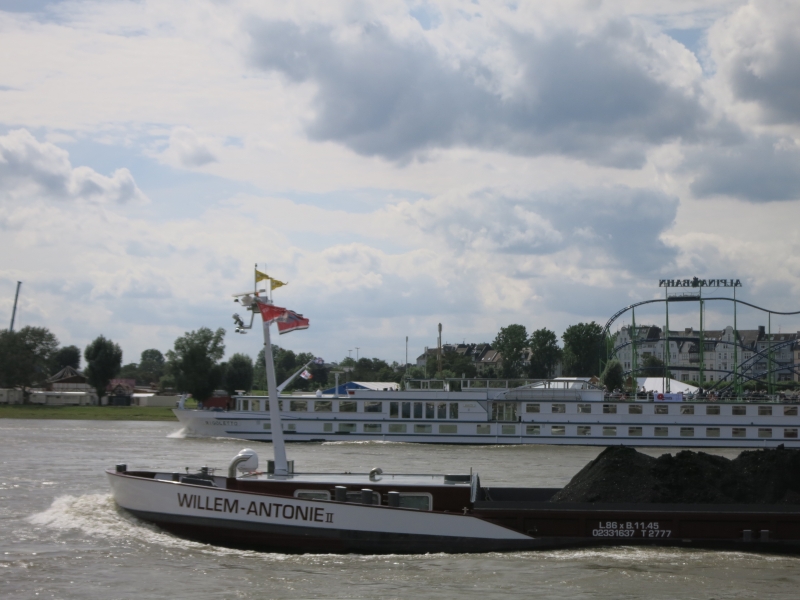 Ein Flusskreuzfahrtschiff und ein Frachtschiff auf breitem Wasser unter wechselndem Himmel.
Photo: Markus Lenk
Ein Flusskreuzfahrtschiff und ein Frachtschiff auf breitem Wasser unter wechselndem Himmel.
Photo: Markus Lenk
Vodka tradition at a glance
- The subject can look very different depending on the region, season, and personal travel goals.
- Plan a specific route around realistic travel times and adequate breaks.
- Current operating, entry, and safety information matters more than old accounts.
- Local rules, permission to take photographs, and consideration for residents or employees are all part of the preparation.
- Planning alternatives helps you stay flexible in case of weather, transport issues, or changes to available services.
Vodka is considered the main drink in Belarus, and perhaps the main entertainment as well. It is no secret that so-called vodka tours to Belarus, organized by some Belarusian travel agencies, have become very popular in Europe in recent years—no less so than traditional trips to Belarusian nature reserves, lakes, or old castles.
Official statistics show that alcohol consumption per person in the republic has reached a critical level. But things have never been quite so straightforward in Belarus. There have always been those who enjoy drinking and can hold their drink, as well as those who simply enjoy drinking. It is therefore no wonder that Belarusians often repeat the words of the famous Eastern poet Omar Khayyam, who said that before deciding to drink, one should know exactly where, when, and how much one is going to drink.
Vodka is one of the most popular products in Belarus. On average, a bottle (0.5 L) of basic Belarusian vodka costs about $2.50. The best-known “people’s brands” are “Belaya Rus” and “Belarus Sineokaya.” There is also a wide range of vodka varieties, such as “Ofizer,” “Vodoley,” “Kristall Lux,” and “Bely Korol.” They have different names, but do not differ greatly in taste or price. Belarusians joke that these vodkas are bottled “from the same pot.”
Recently, premium vodka production has begun in Belarus. Its quality is indicated first and foremost by the bottle design: unlike basic varieties, this vodka is bottled in specially ridged or unusually shaped bottles. These vodkas are generally made with various additions, ranging from hot peppers to birch buds. Premium Belarusian vodka brands include “Bulbash,” “Minskaya,” and “General.”
Belarus’s most popular homemade drink is moonshine, or “samogon.” It is made mainly in villages, usually from potatoes and red beets. Connoisseurs of strong alcoholic drinks say that Belarusian moonshine surpasses many famous vodka brands around the world in quality and range of flavors—for example, “Finlandia” or “Smirnoff.”
It should be noted, however, that illicit distilling is illegal. Belarusian law prohibits private individuals from producing strong alcoholic beverages. Nevertheless, you can find an offer of a drink in practically every Belarusian village. Each village’s moonshine has its own distinctive taste and aroma: some varieties are infused with honey or cranberries, while others are plain “spotykach.” “Spotykach” is a particular type of samogon with a very unusual effect: after a certain amount, your head becomes clear, but your legs give out and stop obeying you. It is often recommended to let the effects of “spotykach” pass while seated at the table.
The small town of Starye Dorogi is considered the center of illicit distilling in Belarus. But the place where you can officially try Belarusian moonshine is a museum: the Dudutki Museum Complex of Belarusian Culture and Everyday Life. Here, samogon is offered as a traditional Belarusian drink, produced on the museum grounds using an actual still. Following an old Belarusian tradition, samogon is usually served with a pickle dipped in honey. Apart from the Dudutki Museum, illicit distilling is officially permitted in Belarus only on the grounds of the Belovezhskaya Pushcha National Park.
History, production, and responsible enjoyment
For geographic context, beer and beverage culture is a good starting point. A travel checklist, up-to-date information on getting there and local transport, and maps saved for offline use can help with preparations. Double-check your documents, addresses, and booking details before setting out. If you are linking several stops, do not leave your return journey to the last possible connection. For Vodka Tradition, compare the location of your accommodation with your main daily journeys and allow realistic breaks.
Beer and beverage culture and history and memorial sites and cities and architecture and rivers, waterfalls, and gorges can help with planning when routes, time, and current conditions are considered together.
Lakes and wetlands and peaceful nature retreats and travel checklist and schedule and more vacation ideas can help with planning when routes, time, and current conditions are considered together.
The best travel decision is based on a suitable pace and information that can be verified. So compare your specific reason for traveling with the duration, budget, routes, and kind of stay you want. If part of the plan remains uncertain, a shorter leg or a different type of trip may be the more reliable option. For Vodka Tradition, alongside the main attraction, consider route conditions, weather, daylight, and a safe return.
FAQ
How can this theme be incorporated into an itinerary?
Fit it into a realistic day trip or multi-day itinerary, and include time for travel and breaks as well as an alternative.
Which details need to be up to date?
Check access, opening hours, transport, costs, and any safety or entry requirements shortly before your trip.
What should I keep in mind about older information?
Older texts can explain history and geographic context; current decisions require additional sources.
