
Vitiněves: Hotels and Accommodation
Accommodation in Vitiněves
Vitiněves combines local history, a rural villagescape and tangible historical landmarks.
History
Vitiněves was first mentioned in 1345; the place name is probably derived from Vít or Vitín. From 1623 to 1627, Vitiněves belonged to the estate of Albrecht von Wallenstein. He subsequently gave the village to the Jesuits, whom he had invited to Jičín after the Battle of White Mountain. In 1626, the Jesuit Father Mathiates came to Vitiněves accompanied by 14 musketeers. At the spot where one of the musketeers was killed, the Jesuits initially erected a wooden cross and later an iron cross on a stone pedestal.
A publication on the history of Vitiněves issued by the municipality can be purchased at the municipal office.
Villagescape
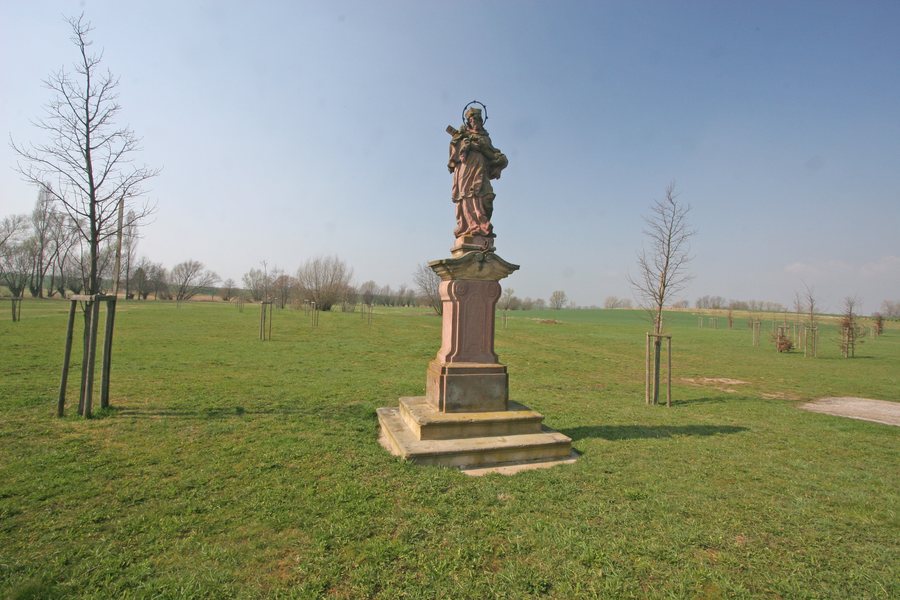
Behind the bridge over the Cidlina stands a statue of Saint John of Nepomuk; it was restored in 1993. The village square in Vitiněves is home to a statue of the Guardian Angel. It dates from 1869 and was also restored in 1993.
Near Vitiněves lies the large, isolated Hořenovský, Ořešovský Mill. On historical maps from 1836 to 1852, it is recorded under the name Wořešowský. Several large traditional farmsteads have also been preserved in Vitiněves.
Landscape
The most important watercourse in the municipality of Vitiněves is the Cidlina, which flows northward through the municipal area. A bridge over the Cidlina is located on the road connecting Vitiněves with Malá Strana. The Úlibický stream flows into the Cidlina near Vitiněves.
Other places: Nova Paka, Nevratice, Bystřice, Kostelec, Rohoznice, Volanice, Libun, Žeretice
To the higher-level travel overview: Jičín District.

.JPG)