
Hajnice: Hotels and Accommodation
Accommodation in Hajnice
Hajnice lies on a plain open to the north, bounded to the south by the Liščí vrch massif. Kamenný vrch forms part of this southern boundary and reaches an altitude of 609 metres.
History
Hajnice was first mentioned in writing as a small town in 1260. Since the early Middle Ages, a so-called Salt Route led through Hajnice from the Bohemian interior to what is now Poland.
Culture
The Church of Saint Nicholas was built from 1754 to 1782 on the site of a 13th-century church destroyed by fire. The Roman Catholic Church of Saint John the Baptist in Dolní Žďár is located in the municipality of Hajnice and is protected as a cultural monument of the Czech Republic. In the municipality of Hajnice, it is considered a prominent landmark and historic building.
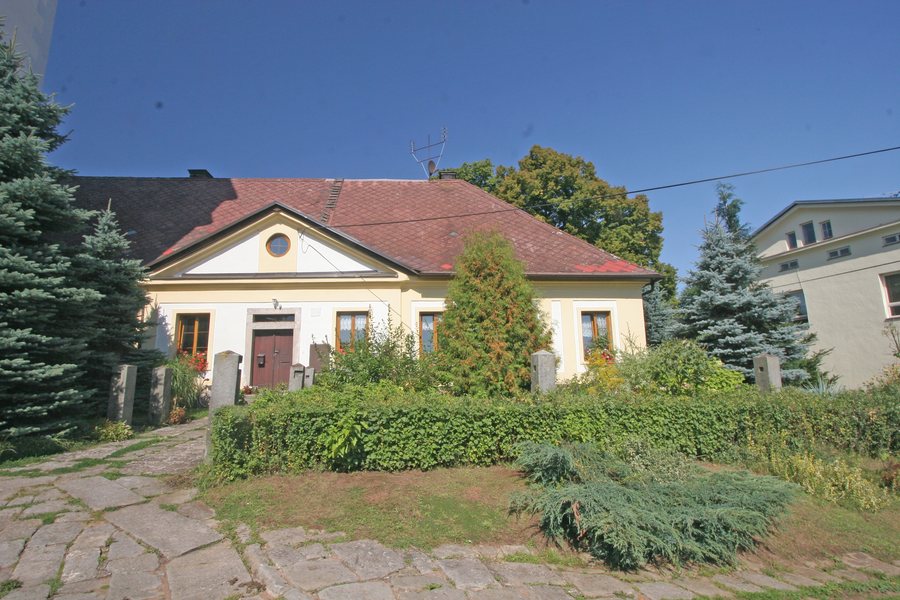
The bell tower in Hajnice was built around the turn of the 15th and 16th centuries. A surviving bell in Hajnice was cast in 1559. House No. 104 in Hajnice is a former smithy; an exhibition gallery for the works of its owner was added to this former smithy. Several log cabins dating from around the turn of the 18th and 19th centuries have been preserved in the settlement of Mravenčí domky.
Connections
Hajnice is connected by road with Trutnov, Dvůr Králové nad Labem, Jaroměř, Úpice, Staré Buky and Kohoutov. Cycle route 11a passes through Hajnice. In the Kyje district, the “Ranč Uncle Billa” complex was newly built; horseback riding was available there.
Other places: Dolni Branna, Dolni Lanov, Souvrať, Čistá V Krkonoších, Spindlermühle, Bílá Třemešná, Prosečné, Klášterská Lhota
To the higher-level travel overview: Trutnov District.

