
Ejpovice: Nature Reserve, Reservoir and Cultural History
Accommodation in Ejpovice
The Ejpovické útesy Nature Monument gives Ejpovice a clearly defined natural focus: the area covers 1.9483 ha and has been protected since 15 April 1993. It preserves a palaeontological site with fauna from the Lower Ordovician, the world's oldest known autochthonous occurrence of organisms from the surf zone.
Nature and Landscape
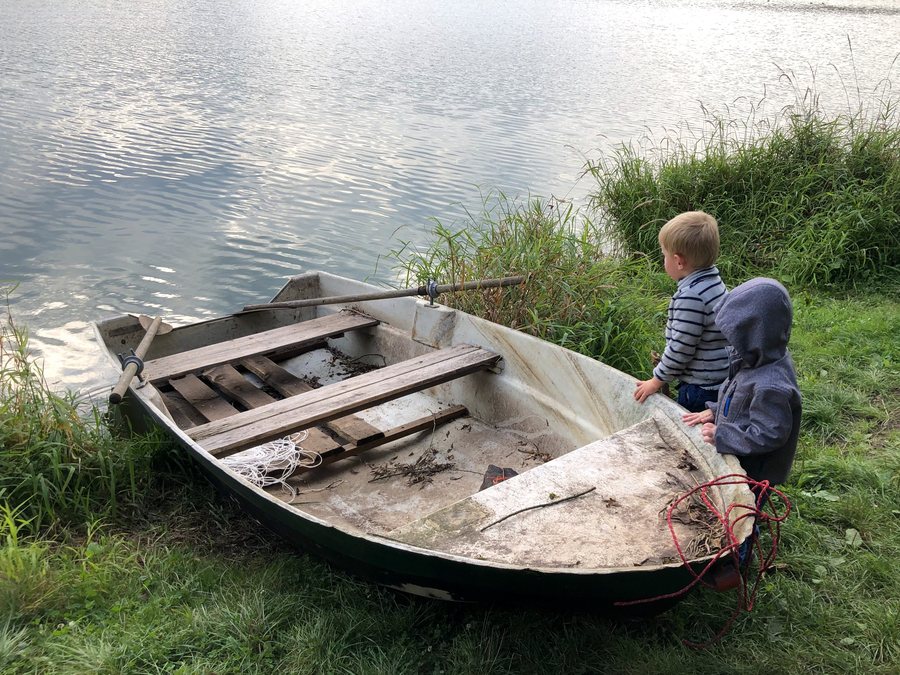
The Klabava Valley, the Ejpovice Reservoir and the adjacent forests are designated in the municipal plan as significant areas of publicly accessible green space. The Ejpovice Reservoir is also designated there as a significant body of water with recreational potential. The two designations describe different focuses: one concerns interconnected green spaces, while the other concerns an explicitly designated body of water.
The hills Hradiště [Dýšina] and Ostrý kámen [Dýšina] are located in the vicinity of Ejpovice. The Radyně mountain is also located in the surrounding area. The Berdovna mountain belongs to the wider regional surroundings. The different geographical areas can be considered separately for your own planning, without equating nearby and more distant destinations.
Regional cycle route 2124 runs through Ejpovice. Thus, alongside its natural and water-related features, the village also has a clearly designated regional cycling connection.
For a stay in Ejpovice, a hotel's travel dates, room category and cancellation conditions can be considered separately. This keeps the selection open to different travel plans, while the nature monument, body of water, cycle route and cultural history stand alongside one another as independent aspects of the place. This makes it possible to distinguish the factual themes of the place from the details of an individual offer. When planning a stay in Ejpovice, the nature monument, reservoir, cycle route 2124 and cultural history can be considered as separate focuses, while travel dates, room category and cancellation conditions remain to be checked separately.
For further research, you can also find Kamenný Újezd, Němčovice, Nevid, Vejvanov, Skomelno, Svojkovice, Osek and Trokavec.
History and Culture
Hrádek, also known as Starý zámek, was located opposite the village of Klabava near Ejpovice and was the seat of almost all the lords of Ejpovice. To this day, only a small part of the castle masonry remains from Hrádek; at the same time, the name “K Starému zámku” has survived.
Intensive iron ore mining began in Ejpovice in the 17th century. A water-powered hammer mill was also built there to work for the Horomyslice ironworks. The history of the village therefore encompasses both a medieval manorial complex and industrial use of its raw material and water resources.
The Chapel of St. Wenceslas was built in 1904 and consecrated to Saint Wenceslas on 28 September 1904. Services are held every Sunday in the Chapel of St. Wenceslas; concerts of classical and Gothic music are often held there. Another village chapel is located in Ejpovice on Hlavní Street.
The Vodní tunely u Ejpovic are considered a technical cultural monument attraction. In the wider regional surroundings of Ejpovice are the churches Plzen Barholomaeus Cathedral, Svatý Martin and U Svatého Petra. The Zřícenina Valdek ruin is also located there.
For the broader travel overview: Okres Rokycany.

