
Mosonmagyaróvár
Accommodation in Mosonmagyaróvár
Mosonmagyaróvár combines a waterway suitable for canoeing with the EuroVelo 6 cycling route and important cultural landmarks.
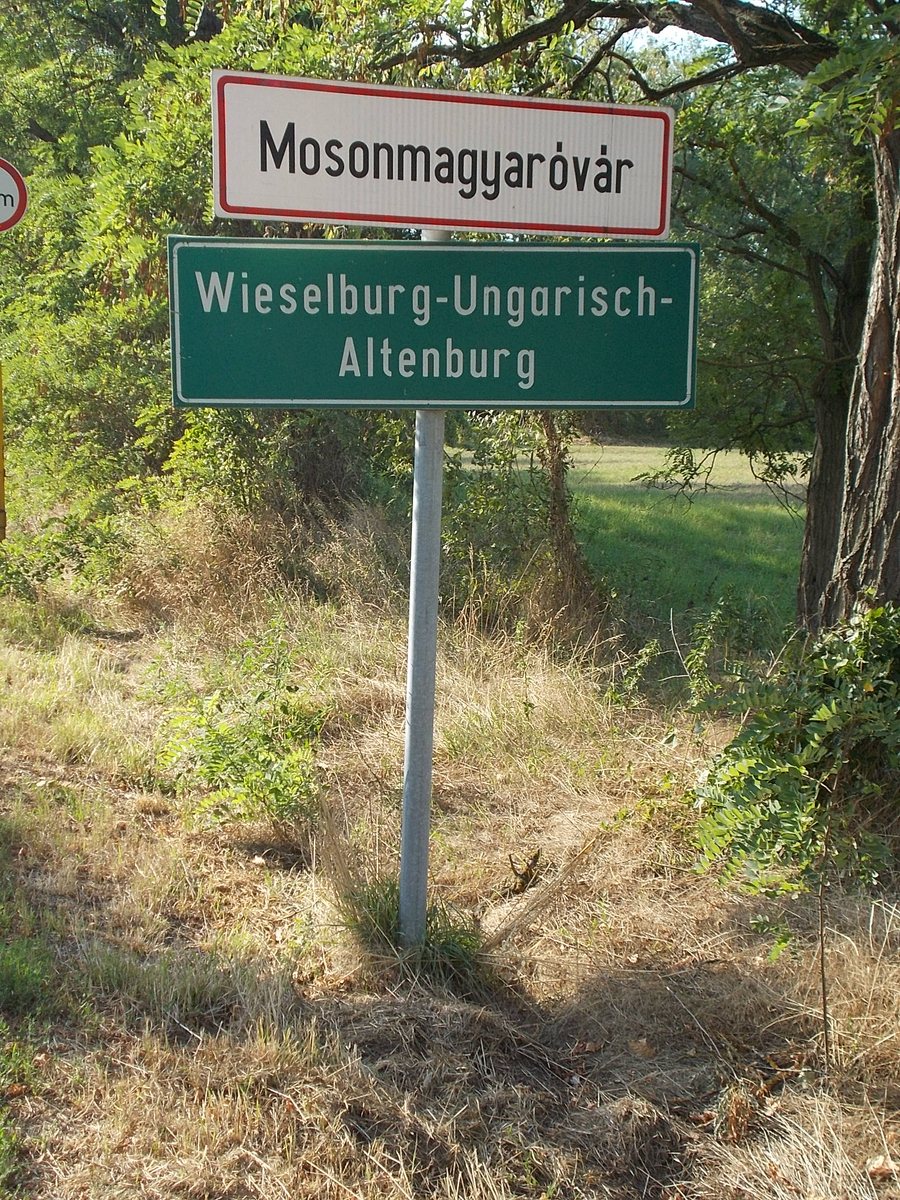 File:Wieselburg-Ungarisch Altenburg sign, 2017 Mosonmagyaróvár.jpg
Photo: Globetrotter19 via Wikimedia Commons, CC BY-SA 3.0
File:Wieselburg-Ungarisch Altenburg sign, 2017 Mosonmagyaróvár.jpg
Photo: Globetrotter19 via Wikimedia Commons, CC BY-SA 3.0
Mosonmagyaróvár at a glance
- The Lajta flows through the city center in several branches for about four kilometers before joining the Mosoni-Duna.
- The section, about seven kilometers long in total, is suitable for canoeing.
- The most significant section of the EuroVelo 6 cycling route runs through Mosonmagyaróvár and attracts cycling tourists.
- Cultural sites include Óvári Castle, the Hansági Museum and the Szent-Gotthárd Parish Church.
What experiences do the waterway and cycling route offer?
The Lajta runs through the city center in several branches before joining the Mosoni-Duna. Together, the section suitable for canoeing is about seven kilometers long. The route information gives you a concrete reference point when choosing a water-based reason to travel: it is a section of approximately seven kilometers, not a specified round trip. If you choose Mosonmagyaróvár for canoeing, you can take this distance into account in your own plans.
The town is also a destination with a clear appeal for cycling tourists: the most significant section of the EuroVelo 6 cycling route runs through Mosonmagyaróvár and attracts cycle tourists. This gives you two different activity options. The canoe route is described by its approximate length; for EuroVelo 6, its route through the town is the key point of reference. You can therefore consider whether a trip on the water or the cycling route is more likely to determine your choice of travel.
Which cultural sites are worth a look?
The Hansági Museum focuses on both local history and the history of the Mosoni Plain. Its exhibitions feature archaeological, ethnographic and local-history objects and documents. The museum opened to the public in 1887 and is one of Hungary’s oldest continuously operating museums.
The history of Óvári Castle can be understood through three dates from different periods. It was built in the mid-13th century. In the 15th century, it took on its present irregular quadrilateral shape; it acquired its current appearance in the first half of the 19th century. Its shape and appearance therefore belong to different stages of its development. If you are interested in historic buildings, this is a specific reason to explore the town’s history across several centuries.
The Szent-Gotthárd Parish Church is Mosonmagyaróvár’s finest Baroque landmark. Together with the castle and the museum, it offers another cultural point of reference when choosing a destination. The three sites appeal to different interests: the development of a building, Baroque architecture, and regional and local history exhibitions.
More town pages: Halászi, Ásványráró, Várbalog, Lipót, Levél, Kimle, Dunakiliti, Hédervár.
FAQ
How long is the section suitable for canoeing?
The section, about seven kilometers long in total, is suitable for canoeing. The Lajta flows through the city center in several branches for about four kilometers before joining the Mosoni-Duna.
What does the Hansági Museum display?
It presents an exhibition on local history and another on the history of the Mosoni Plain, featuring archaeological, ethnographic and local-history objects and documents.
When did Óvári Castle take on its present form?
The castle took on its present irregular quadrilateral shape in the 15th century. It was built in the mid-13th century and acquired its current appearance in the first half of the 19th century.
To the overarching travel overview: Mosonmagyaróvár.

