
Jucu de Sus: Salt Springs, History and Landscape
Accommodation in Jucu de Sus
Jucu de Sus has been documented in records since 1325. The place combines geological features, a connection to Roman history and landscapes with differing characteristics.
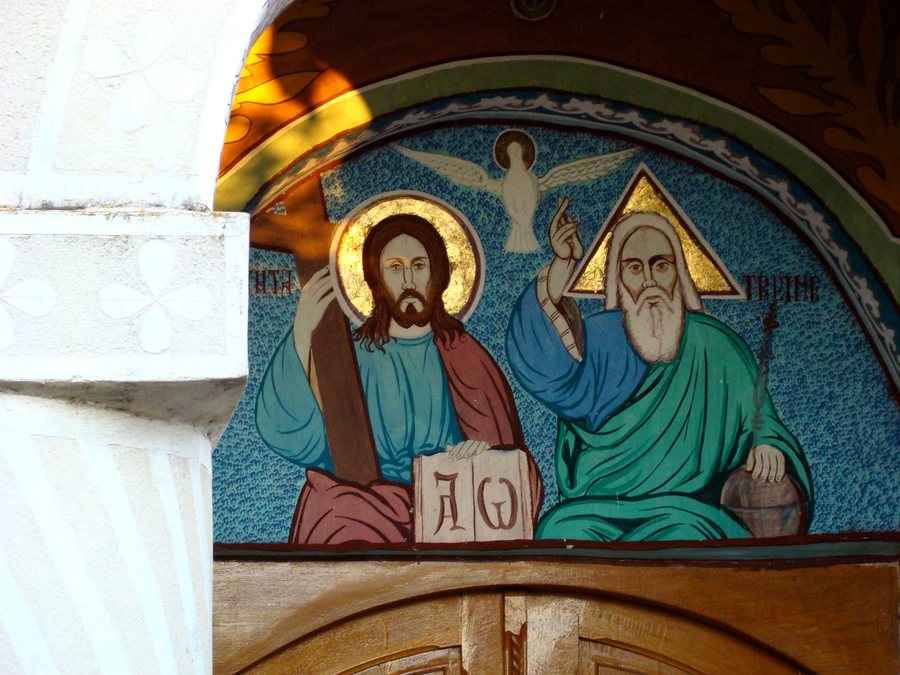 File:Biserica Sfnta Treime dn Jucu de Sus (2).jpg
Photo: Țetcu Mircea Rareș via Wikimedia Commons, CC BY-SA 4.0
File:Biserica Sfnta Treime dn Jucu de Sus (2).jpg
Photo: Țetcu Mircea Rareș via Wikimedia Commons, CC BY-SA 4.0
Landscape and Natural Environment
In the area where the Valea Sărății meets small tributaries, Jucu de Sus has saline springs and a large field with salt efflorescences. The salt massif near Jucu de Sus cuts through marl and clay layers with tuff deposits from the Upper Tortonian. Jucu de Sus lies along a terrace 25 to 30 metres high on the Someșul Mic. In the wider regional surroundings of Jucu de Sus are Dealul Sălaşului and Dealul Melinilor; both are mountains. In the immediate vicinity of Jucu de Sus is Dealul Techeneu, a hill. Dealul Tarsa Mică, a hill, is located in the surroundings of Jucu de Sus.
The landscape can therefore be read on several levels: the springs and salt efflorescences point to the geological substratum, while the terrace, river connection, mountains and hills make the spatial gradation of the surroundings visible.
Culture and History
The history of the place also includes the name itself: Jucu is associated with the noble Suki family. The Roman villa rustica at Râtul boilor was a rectangular building complex measuring approximately 150 by 50 to 60 metres. Several churches are located in the surroundings of Jucu de Sus: Biserica Catolică Apahida is Catholic, Biserica Ortodoxă Veche Apahida is an old Orthodox church, Biserica Ortodoxă Nouă Apahida is a new Orthodox church, and Biserica Ortodoxă Corpadea is an Orthodox church.
The history of the name, the Roman complex and the churches thus open up different historical perspectives: the place name points to a noble family, the villa to a rectangular building complex, and the churches to different denominational and chronological designations in the surrounding area.
Leisure
In Jucu de Sus, the Laguna pond was created as a purpose-built place for fishing and recreation. In the surroundings of Jucu de Sus, Jucu Stud Farm keeps purebred horses, including Friesians and Lipizzaners. Jucu Stud Farm frequently organised equestrian events and riding competitions.
Fishing and recreation at the pond stand alongside horse keeping and equestrian sport as distinct topics. When planning, you can therefore distinguish whether the focus is on a purpose-built waterside location, the horse breeds kept there or the competitions organised by the stud farm.
Getting There
Via county road DJ109D, Jucu de Sus has access to national road DN1C.
When choosing a hotel in Jucu de Sus, travel time, room category and cancellation conditions can serve as practical points of comparison. These details help you assess different offers according to the same personal criteria, without attributing local features to individual offers.
Other destinations: Cluj-Napoca, Floreşti, Săcuieu, Margau, Huedin, Dealu Negru, Bica, Apahida
For the overarching travel overview: Klausenburg.

.jpg)