
Krná: Forests, Hiking Trails and Living History
Accommodation in Krná
Krná lies in the southern part of the Veporské Slovenské rudohorie, in the valley of the Krná stream. More than 59 percent of Krná’s cadastral area is forested; deciduous forests grow in the surrounding area. The landscape of Krná is characterized by woodland, marked trails and traditional buildings.
Nature and Trails
The landscape includes a chestnut grove with around 20 sweet chestnut trees. One of these trees has a trunk circumference of 305 cm. The adder is also found in the scattered settlement areas of Krná. A marked red hiking trail on the Málinec–Kokava nad Rimavicou route passes by the observation tower on Jasenina. The ascent of Jasenina takes place every year. The recommended route from Krná to Jasenina starts at the bus stop in Krná, and Krná can be reached by bus.
Culture and History
The first written mention of Krná dates from 1435. The oldest monument in the village is a Neoclassical manor house from 1820. The manor house built in 1820 was erected on the site of a Renaissance manor house from the 17th century and has served the municipality of Krná as a cultural center since 1960.
The Evangelical church also bears several clearly dated traces. It was solemnly consecrated on October 22, 1905. An altarpiece by Ľudovít Kubányi was acquired for the church. The building was constructed without a tower; according to the municipal description, it was considered the only church of its kind in the Evangelical A.B. church district in Uhorské. In 1912, a freestanding belfry with two bells was added in Krná. The Krná–Závada belfry had already been built in 1893 by the inhabitants of the scattered settlement areas of Krná.
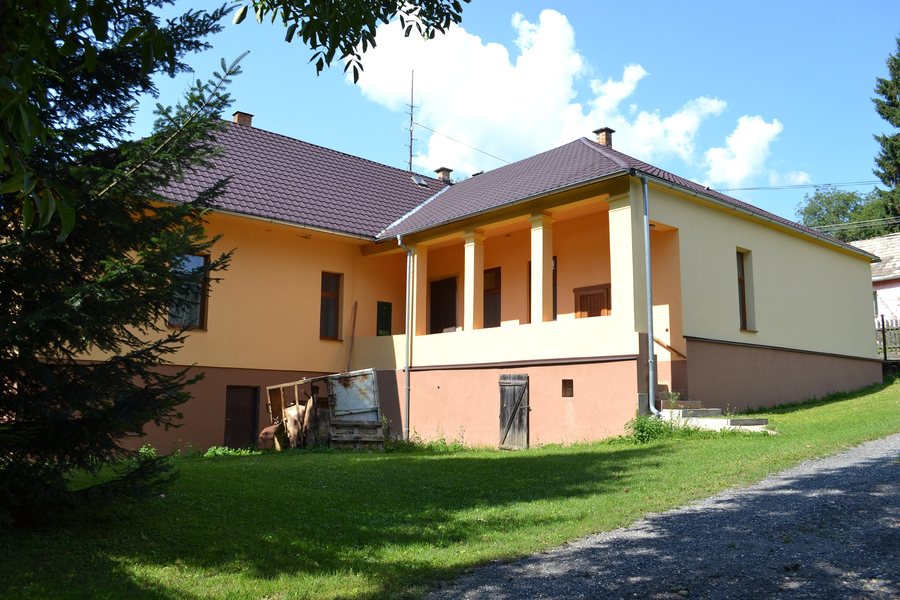
Traditional folk architecture has been preserved in the localities of Neklen, Závada, Osičiny and Nový svet. The visible history of the village thus extends from the Renaissance manor house of the 17th century through the Neoclassical manor house to the forms of churches and settlements preserved in several localities.
Rural Heritage
The traditional history of work and everyday life includes the production of wooden wheels. It was once widespread in Krná and was carried out in up to 14 households. The inhabitants of Krná raised sheep and made wooden utensils. These activities complement the architectural history with craft and agricultural connections, which are also part of the traditional character of the village.
Included services, individual price components, and booking and cancellation conditions are also important when considering the offers. Such a comparison shows which differences are actually stated on the respective offer page. Open or compare the current offers when you want to weigh these points against each other. For cost-conscious planning, it helps not to base the total cost solely on the basic price, but also to pay attention to included or additionally listed services. The features, prices and conditions must always be taken from the individual offer.
More Places
More places in the same higher-level destination: Kokava Nad Rimavicou, Uhorské, České Brezovo, Hrnčiarska Ves, Utekáč, Hradište, Cinobaňa, Poltár.
To the higher-level travel overview: Poltár District.

