
Studená: Culture, History and Hotels in the Novohrad-Nógrád Geopark
Accommodation in Studená
Studená is located in the southern part of the Cerová vrchovina, near the Hungarian border. At the same time, the village is one of the Slovak municipalities in the Novohrad-Nógrád Geopark. As a result, several distinct layers converge in the local history and natural environment: a development documented far back in history, the Gortva watercourse, and volcanic structures that can be used for educational purposes by the general public.
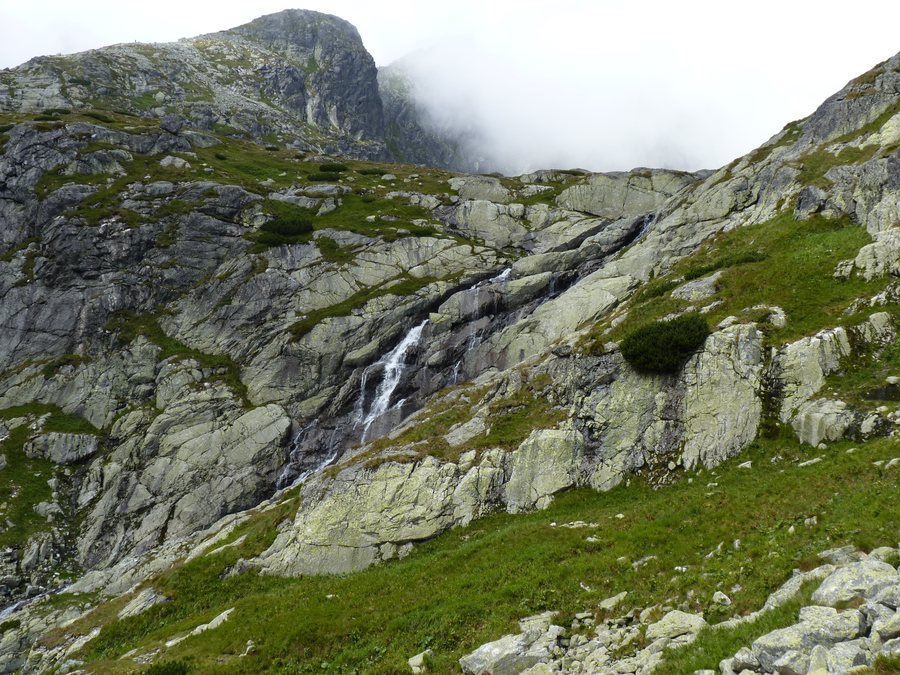 File:Malá Studená dolina, Vysoké Tatry (10).JPG
Photo: Michal Klajban via Wikimedia Commons, CC BY-SA 3.0
File:Malá Studená dolina, Vysoké Tatry (10).JPG
Photo: Michal Klajban via Wikimedia Commons, CC BY-SA 3.0
Location and Nature
Studená’s location in the southern part of the Cerová vrchovina provides the geographical setting for the village. Its proximity to the Hungarian border is another factor. The Gortva watercourse reaches the village through Studená or the municipal area and turns north-east again within the municipality. The Gortva is 32.42 kilometres long in total. Its stated flow direction within the municipality and its total length are therefore specific geographical features associated with Studená.
Studená is also one of the Slovak municipalities in the Novohrad-Nógrád Geopark. The volcanic structures of this geopark can be used for educational purposes by the general public. Since 2016, the Novohrad-Nógrád Geopark has also been a national geopark of the Slovak Republic. The natural environment and the geopark affiliation each represent clearly defined geographical and institutional connections.
History
The first written mention of Studená dates from 1304. The village was established after the Tatar invasion in the territory of Nová Bašta. In the 15th century, Studená belonged to the estate of Somoskő Castle. Another significant period followed between 1554 and 1593: during this time, Studená was occupied by the Ottomans.
The later development can also be traced through individual years. The name Studená was established in 1920. A total of 39 houses were recorded in 1828. That year, the inhabitants of Studená worked in agriculture. The documented history of the village therefore includes the early written mention as well as information about its establishment, its territorial affiliation, the Ottoman occupation, its later name, and the settlement structure of the time.
Culture
The local culture includes the Folk Dwelling House in Studená. It contains an exhibition on folk culture and housing. The Museum of Folk Dwellings in Studená presents local crafts and life in the surrounding region. Both focuses therefore draw attention to traditional forms of housing, folk culture, craft activities, and life in the nearby regional area.
Other notable buildings include a chapel in Studená, which was built in the 19th century. The bell tower of Studená, the Gemersko-Malohontská zvonica, has a bell dating from 1786. The chapel and bell tower add two specific sacred or locally significant buildings, each with its own historical date, to the village’s cultural and historical features.
Other places:Hostice, Klenovec, Babinec, Kyjatice, Širkovce, Abovce, Blhovce, Horné Zahorany
When comparing a hotel or other accommodation in Studená, check the exact location, accommodation type, and occupancy on the respective offer pages before booking. Included services, individual price components, and booking and cancellation conditions should likewise be clearly stated. Especially when comparing different budgets, this view provides transparency between the offers without making assumptions about facilities or costs. Compare the specific fields on the respective page and only then make your decision.
For the higher-level travel overview: Rimavská Sobota District.

.JPG)