
Hajtovka by the Poprad: Nature, History and Hotels
Accommodation in Hajtovka
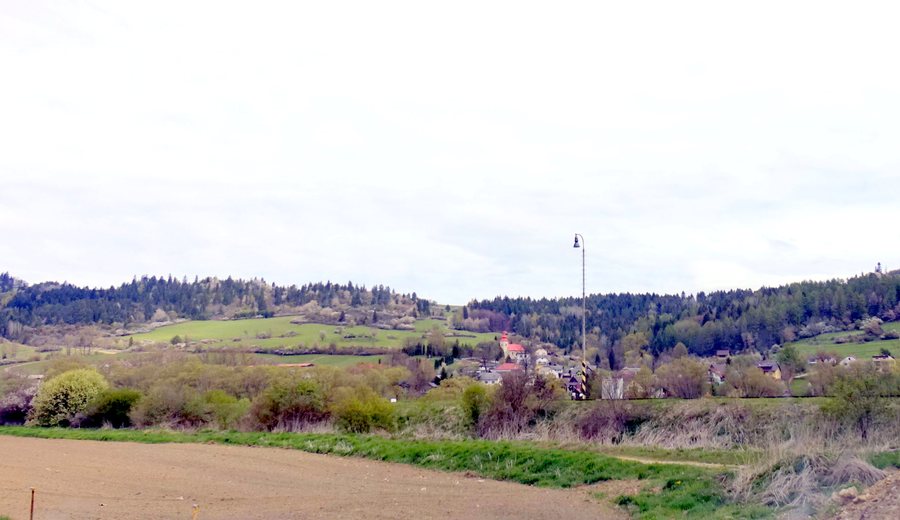
Hajtovka lies above the left bank of the Poprad River. The landscape consists mainly of hilly terrain, distinctive limestone and cliff formations, and a stream flowing through the village. The history of the settlement dates back to the Middle Ages and includes its foundation under the right of pre-emption, the earliest written mention under a historical name, its former affiliation with the Plaveč estate, and its connection with agriculture and fishing. This picture is complemented by the Church of the Nativity of the Most Holy Theotokos.
Nature
The terrain around Hajtovka is predominantly hilly and rises northward from the Poprad riverbed from 490 to 744 metres above sea level. An unnamed stream flows through the village and forms Hajtovka’s main settlement axis. The weather is influenced by the geographical location, elevation and proximity to the High Tatras; sudden changes in weather can therefore occur.
The protected Skalná ihla natural monument lies in the floodplain of the Poprad River approximately 1.5 kilometres southwest of Hajtovka. Located near Hajtovka, Skalná ihla is an isolated Jurassic cliff relief more than 10 metres high, where erosion by the Poprad River is visible. The Skalná ihla natural monument site, also known as Čertova skala, can be reached from Hajtovka via field roads. The Koteličné skaly, which are limestone formations, lie east of Hajtovka. The Opálená skala near Hajtovka belongs to the Pieniny Klippen Belt.
History
Hajtovka was founded in the second half of the 14th century under the right of pre-emption. The oldest written mention of the settlement dates from 1427, when Hajtovka was referred to as Ayathuagasa. Historically, Hajtovka belonged to the Plaveč estate. In 1456, the inhabitants of Hajtovka took part in an uprising against feudal obligations.
In the past, a commercial waterway ran near Hajtovka, connecting Slovak municipalities and towns with Poland. Historically, the inhabitants made a living from agriculture and fishing and were known in the surrounding area as fishermen. The history of the settlement and the landscape are therefore not separate from one another: the Poprad appears both as a defining watercourse of the location and in connection with the former waterway and the visible erosion at Skalná ihla.
Church
The Church of the Nativity of the Most Holy Theotokos in Hajtovka is built in the traditional East Slovak Baroque Classicist style of church architecture. It was built in 1872, and its interior furnishings date from the church’s construction period. The building is in good condition and is used for its religious purpose. Thus, alongside the natural formations and historical references, a specific sacred building is also part of Hajtovka’s townscape.
More destinations
To compare other places in the same destination area, you can also view Stará Ľubovňa, Kamienka, Maly Lipnik, Mníšek Nad Popradom, Vysne Ruzbachy, Lesnica, Plavnica and Šambron from Hajtovka.
For the higher-level travel overview: Stará Ľubovňa.

