
Hotels in Ostratice: Village History and the Electric Mill
Accommodation in Ostratice
Ostratice is a place whose character is shaped by historical traces, rural landscapes, and distinctive traditions. Religious buildings, memorials, fruit growing, and brass music come together to create a multifaceted picture that connects different periods and forms of village life.
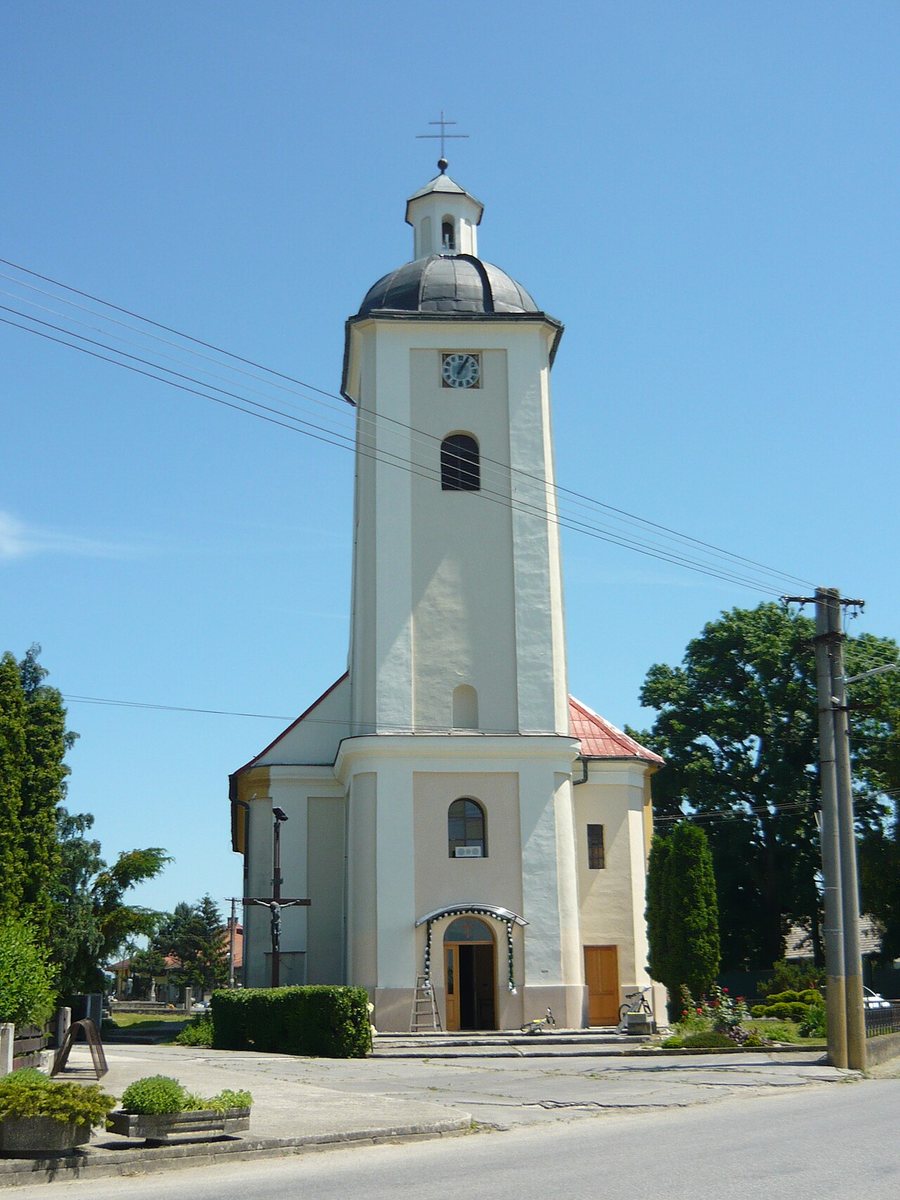
Culture and History
Veľké Ostratice already existed in the 12th century and is mentioned in 1193 under the name Strece. A Roman Catholic church in Veľké Ostratice dates from 1737. Today, the church is dedicated to Saints Peter and Paul; the parish and church probably already existed before 1332. The earlier church was dedicated to Saint Oswald. The present building includes a relatively large square chancel and a two-storey extension on the south side.
Among the historical sights of Ostratice is a bust erected in 1936 of Jozef Kompánek, a nationally minded writer, teacher, and priest. From 1872 to 1917, he worked in Veľké Ostratice as a publicist, historian, and national revivalist. A statue of the Holy Trinity, erected in 1928, also stands in Veľké Ostratice; to date, it has not been included in the register of cultural monuments.
Further evidence relates to the Šándorovci family. A stone tablet from 1617 is mentioned in Ostratice as evidence of their ownership. A gravestone near the Church of Saints Peter and Paul is also mentioned as evidence of this family’s ownership. The two memorials are therefore each associated with an explicitly identified historical context.
Landscape and Fruit Growing
Ostratice lies amid the Nitrianska loess hills, a loess-hill landscape, on the left floodplain of the Bebrava. Fruit growing is one of the village’s defining economic features: apples, as well as fruit trees and fruit planting material, are grown in particular. The landscape and cultivation represent two distinct but closely interconnected aspects of the village’s rural character.
The Electric Mill
A special part of the village’s history is the electric mill in Veľké Ostratice. It was built in 1934 by Gustáv and Jozef Oláhovci, who came from Ostratice. The mill was the first electric mill in the surrounding area and formed part of an older network of watermills.
A fully preserved, three-storey elongated building with a gabled roof has survived. To this day, the electric mill retains much of its original interior equipment. It stands among the village’s roadside buildings and has thus been preserved both as a structure and as part of the established villagescape.
Brass Music and Village Life
The Ostratice Brass Music Festival has been held in the municipality of Ostratice since the late 1980s. The venue is the municipal park, where the festival presents regional brass bands as well as a guest musician.
The Ostratičanka brass band was active during the Second World War and continues to exist without interruption to this day. Brass music in the former Veľké Ostratice was founded on the initiative of Senator Ján Podoba and the local parish administrator Jozef Kompánek. Thus, the present-day festival, the continuing Ostratičanka band, and its earlier founding history each belong to their own temporal and local contexts.
More Village Pages
For further village options, links lead to Veľké Uherce, Pažiť, Turčianky, Hradište, Žabokreky Nad Nitrou, Malé Uherce, Veľký Klíž, and Krásno.
For the broader travel overview: Partizánske.

