
Hotel in Grad, Slovenia: Castle, Volcanic Landscape and Culture
Accommodation in Grad
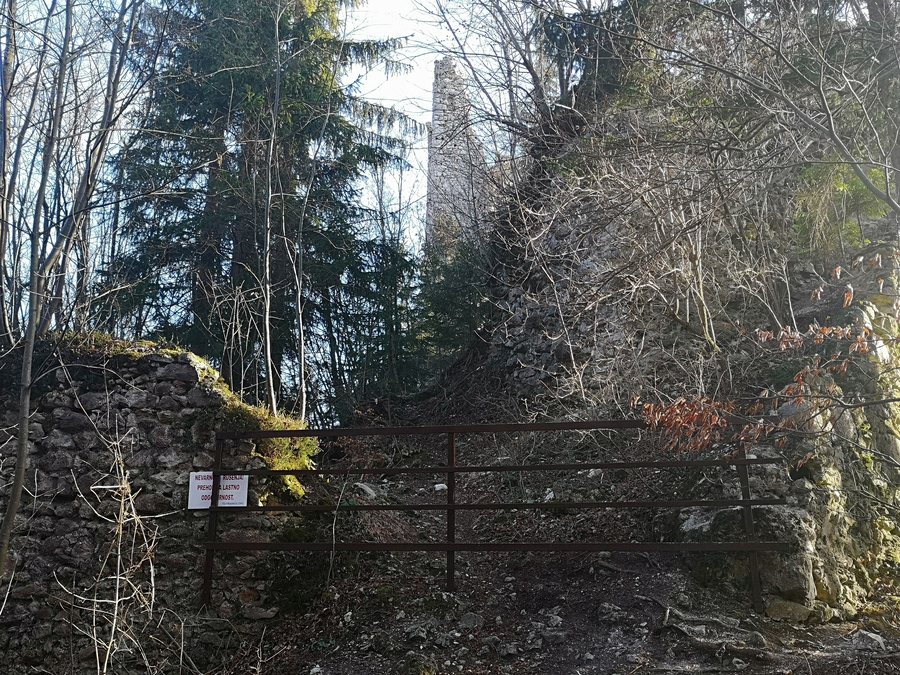
Grad Castle stands on the remains of an extinct volcano on the hill above the village of Grad and is considered the largest castle and feudal estate complex in Slovenia.
Culture
The renovated rooms of Grad Castle house an exhibition about the natural wealth and cultural landscape of Goričko Nature Park. There is also a presentation of the historical and ethnological heritage of Goričko. In this way, the natural environment, regional culture and the history of the surrounding area are brought together within the castle complex.
The Church of the Assumption of Mary in Grad is a pilgrimage church whose origins date back to the 11th century. The nave was significantly shaped by the restoration work of Jože Plečnik in the 1950s. By prior arrangement at the Grad parish house, the church can be visited; the priest or a guide explains the history of the church and Jože Plečnik’s work.
The Crypt is located in the hamlet of Kaniža, about 2 km from the castle. It is the crypt of the castle lords, has a dome and features four façades decorated with triangular gables. The structure was probably built as part of the castle’s renovation in 1751. The main parish festival is celebrated on 15 August, the Feast of the Assumption of Mary; a fair takes place along the Pörgo.
Nature
The Olivinova Path connects the upper part of the village and the castle area with the lower village centre of Pörgo and an abandoned quarry of volcanic rock containing a site where olivine nodules have been found. These nodules, which occur in the volcanic rocks of Grad, are described as remnants of an earlier volcano. Blue directional arrows guide hikers from one point to the next and indicate described natural or cultural attractions.
Geology
Vulkanija Adventure Park explains volcanoes and the geological history of Goričko using images, texts, films, playful elements and interactive content. The park includes a lift ride to the centre of the Goričko volcano and a return to the surface via Oli’s underground railway.
Vulkanija is located in the centre of a 1-km-wide crater that belongs to the last active volcano in Slovenia; this volcano was active three million years ago and is presented in the park as a volcano that was active in the area of present-day Slovenia.
The Geological Museum is located in the Lednar Tannery. It includes an Olivine Hall, a Geology Hall, Oli’s Kitchen, an exhibition and a journey through Goričko.
When comparing offers for a hotel in Grad, the fields visible on the offer page are decisive. The included services, individual price components, and booking and cancellation conditions should also be visible. This keeps differences between offers comprehensible without inferring accommodation characteristics from the attractions. Before completing a booking, it is therefore advisable to look specifically at these fields and the conditions stated there.
Other places: Gornji Petrovci, Hodoš, Melinci, Križevci, Martjanci, Šalovci, Beltinci, Rogašovci
To the higher-level travel overview: Murska Sobota.

