
Kecskemét, Hungary: City, Architecture and the Great Plain
Quick facts: Kecskemét
Kecskemét lies around 85 kilometres south of Budapest, the capital of Hungary. The approximately 100,000 residents of the administrative centre of Bács-Kiskun County live in the region’s economic, administrative and cultural hub. The world-famous Puszta begins right here. The well-known apricot brandy “Pálinka” is made here. The name Kecskemét is formed from the Hungarian words for “goat” and “passage” — and a goat also adorns the city’s coat of arms. The city’s confident slogan is “Neither heights nor depths frighten me.”
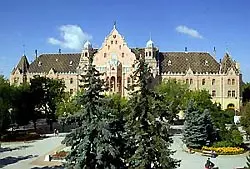 Historisches Rathaus von Kecskemét mit verzierter Fassade und Bäumen davor.
- Kecskemét lies on the Hungarian Plain between Budapest and Szeged.
- The Town Hall, Cifrapalota, museums and squares make for a compact city walk.
- The Puszta and other destinations in the countryside are outside the city centre and require extra travel time.
- Debrecen, Szeged and Budapest are distinct cities, not short add-ons to a walking tour.
- Summer heat, shade, drinking water and breaks affect the most comfortable route through the centre.
- Check events, opening hours, timetables, accommodation and current traffic conditions before your visit.
The area around Kecskemét was settled as early as 3,000 years ago. Archaeologists discovered a burial urn field from that period during excavations. Kecskemét was first mentioned in a written document in 1368. The city’s eventful history — Turkish, Hungarian and Austrian — is also reflected in its architecture. Even so, most of Kecskemét’s sights date from the Art Nouveau period. Based on plans by architects Ödön Lechner and Gyula Pártos, famous Hungarian architects of the era, the Town Hall, an important architectural landmark for all of Hungary, was built here between 1893 and 1896. The Cifra Palace (“Cifrapalota”) is a civic palace from that period, now used as an exhibition space for art shows. It hosts a variety of temporary exhibitions.
Notable sons of Kecskemét include József Katona, author of “Bánk bán,” and the world-famous composer and music teacher Zoltán Kodály.
Kecskemét is a city of fruit trees. This tradition has its roots in the region’s residents’ desire for freedom and hard work: in 1834, Kecskemét freed itself from its feudal obligations to the landowners. The large estates within the city limits were divided into plots. Thousands of individual farmsteads sprang up around Kecskemét on these plots, shaping the landscape to this day. By the mid-19th century, millions of fruit trees had been planted on these farms to stabilise the Puszta’s soft, sandy soil. Agriculture has flourished in Kecskemét ever since, particularly fruit growing.
The tourist-friendly section of Kiskunság National Park, the Bugac Puszta, lies 30 km southwest of Kecskemét. Here, you can see the Puszta landscape as it was before the land was cultivated and dotted with individual farmsteads in the 19th century.
Tourist information about Kecskemét is available from Tourinform Kecskemét:
Tourinform Kecskemét
H-6000 Kecskemét, Kossuth tér 1.
Telephone/Fax: (00-36) 76/481-065
Email: kecskemet@tourinform.hu
Recently, Kecskemét has made international headlines because Daimler plans to build a new production plant here. By 2012, the plant was expected to create around 2,500 jobs, with a further 10,000 in the supplier industry.
Photo: Tourinform Kecskemét
Kecskemét in practice
Kecskemét is a good choice for a city visit focused on architecture and culture, with the option of an excursion into the Hungarian Plain. Check the official website of the City of Kecskemét for municipal information, events and the latest details on access. For regional context, see Hungary and information about the Great Hungarian Plain. A visit to Budapest is a separate focus, although the two cities can be combined on a trip.
In the city centre, the Town Hall, Cifrapalota, squares and other cultural attractions can be combined into a walking tour. When planning getting there and getting around, consider transport options, parking and the distances between stops. If you are travelling without a car, check local public transport and your return journey. In summer, shade, drinking water and a schedule with breaks can make the day more comfortable.
Combining the city and the Great Plain
The Puszta landscape in the surrounding area makes for a separate excursion. Debrecen and Szeged are other cities in the region, but they are not automatically suitable for quick stops. Nature and landscapes can help you choose a countryside focus; for regional specialities, see Hungarian cuisine. This makes it easier to decide based on your interests and travel time.
Check current dates for exhibitions, museums and events just before your visit. The information on culture and history can help you plan your time in the city. Before setting out, also prepare for money and payments and language and communication. If you are planning a longer stay, consider thermal baths and spa towns in Hungary as a separate relaxing stop.
The Town Hall, Cifrapalota and planning your day
Kecskemét is well suited to a city visit that combines architecture, museums and regional culture. The official Kecskemét city information provides the latest details about events and facilities. Plan stops at the Town Hall, Cifrapalota and other sights according to opening hours, walking distances and the time available.
For regional context, see Hungary and the Great Hungarian Plain. Budapest, Debrecen and Szeged each offer a distinct city experience. For nature and countryside, see Nature and landscapes and information on Hungarian cuisine.
Before setting out, check getting there and getting around, transfers and local public transport, money and payments, language and communication and thermal baths and spa towns in Hungary. A day in the city followed by a separate Puszta excursion leaves more room for breaks and unexpected changes than an overpacked itinerary.
Kecskemét FAQ
What is Kecskemét particularly suited to?
The city is ideal for a cultural walk taking in architecture, squares, museums and regional history. The Great Plain’s landscape can be enjoyed as a separate excursion.
Is a day trip enough for Kecskemét?
One day may be enough for a focused city walk. If you also want to visit the Puszta or other places, allow more time or plan an overnight stay.
Can Kecskemét be combined with Budapest?
Both cities can be combined on a trip to Hungary. Travel time, luggage, opening hours and how long you want to stay will determine the most comfortable order.
What should I keep in mind in summer?
Shade, drinking water, breaks and taking your walk early or late in the day can help in hot weather. Confirm opening hours, events, transport and current access information before your visit.
