
Triglav National Park: Julian Alps, lakes and trails
Triglav National Park reveals Slovenia’s alpine side: rugged limestone mountains, forested valleys, waterways and lakes lie close together. The country’s highest peak gives the protected area its name, but a rewarding visit does not require a summit climb. Those who take trails, elevation gain and weather seriously can experience plenty of the Julian Alps on a quieter day, too. The key is not to tick off as many places as possible, but to choose an area that suits the season, your fitness and the time available.
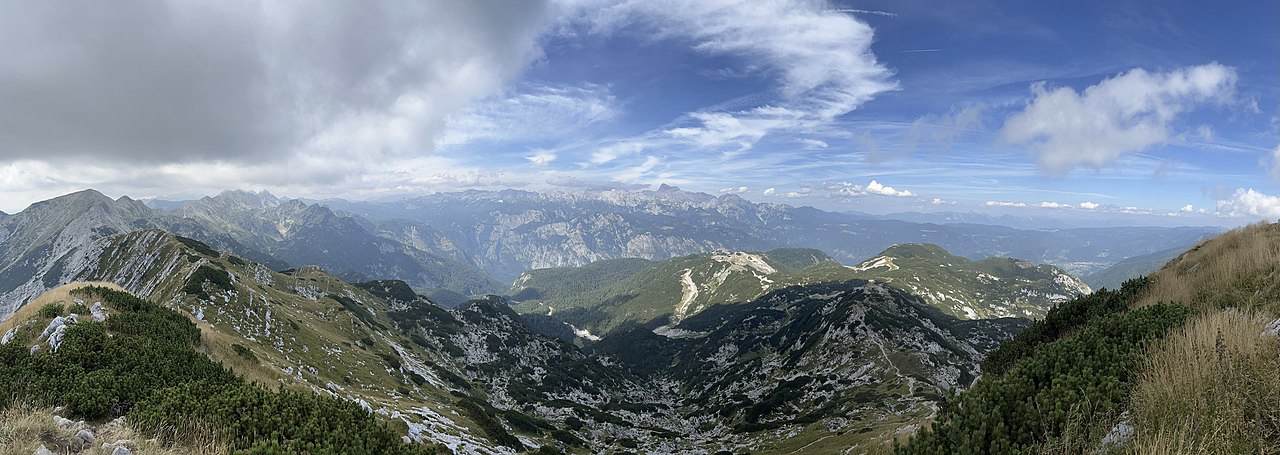 Weites Panorama aus Kalkbergen, bewaldeten Hängen und Tälern im Triglav-Nationalpark in Slowenien.
Photo: Filip Troníček; Wikimedia Commons, CC BY-SA 4.0
Weites Panorama aus Kalkbergen, bewaldeten Hängen und Tälern im Triglav-Nationalpark in Slowenien.
Photo: Filip Troníček; Wikimedia Commons, CC BY-SA 4.0
Quick facts: Triglav National Park
- Triglav National Park lies in the Julian Alps in northwestern Slovenia.
- At 2,864 metres, Triglav is Slovenia’s highest mountain.
- Valleys, limestone mountains, waterways, lakes and alpine trails offer a wide range of day-trip options.
- Lake Bled and Lake Bohinj are important regional landmarks, but they are not quick add-ons to every mountain hike.
- Weather, remaining snow, thunderstorms, trail conditions, elevation gain and daylight all affect which route is suitable.
- Check park rules, access, weather, conservation regulations, opening hours and current traffic conditions.
A protected area between mountains and water
The landscape looks compact on maps, but travelling from one valley to another takes time. A stream, gorge or viewpoint can shape the day’s plans more than the distance in kilometres. Those who want to experience the mountains without a long high-altitude route can find a different perspective on water and mountains at Lake Bohinj. Lake Bled lies in a different landscape and should not be treated as a quick add-on to a mountain hike. These contrasts are precisely what make Slovenia appealing: a lakeside visit, a valley walk and a challenging high-altitude hike each call for different expectations.
Triglav and alpine trails
Triglav is a national symbol and a challenging mountain. Climbing it is neither a prerequisite nor the measure of a good visit to the park. Many travellers get more out of a carefully chosen route in a valley, beside a lake or along a lower-level viewpoint trail. Suitable footwear, water, weather protection and a realistic turnaround time are always essential. Trail markers do not replace your own judgement. If visibility, terrain or energy levels are not right, turning back early is a sensible decision, not a holiday day wasted.
Connecting valleys and destinations sensibly
On a tour of the country, the mountain region can be combined with Ljubljana or Maribor without cramming the city and national park into a single day’s itinerary. Notranjska is known for a different, karst landscape, while Piran is on the coast. Rogaška Slatina has a very different character, too. These contrasts can help you choose: if you are looking for mountain air and water, it makes more sense to spend longer in the northwest than to drive back and forth between very different regions.
Plan with respect for nature
In a protected area, it is important to treat trails, plants and animals with care. Stay on marked routes, take your rubbish with you and make weather warnings part of your plans. Check overnight accommodation, local transport, parking options and possible restrictions before your travel date. The park changes with the seasons, so keeping your day’s plans flexible is often better than following a tight schedule. That way, you can take time to pause by a stream, appreciate a view or return safely to the valley if the weather changes.
Choose your route through the Julian Alps, valleys and lakes
Triglav National Park is suitable for easy valley and lakeside trails as well as challenging mountain hikes. The national park’s official website provides further current information about conservation rules, access and trails. Reaching the summit of Triglav is not essential to every visit to the park; choose your route based on elevation gain and a safe return.
Lake Bled and Lake Bohinj offer different ways to experience lakes and mountains. Kranjska Gora, Ljubljana and Piran can round out a Slovenia itinerary, but each is a destination in its own right and involves a different travel time. Slovenia brings together the Alps, karst and coast, but they cannot all be covered in a single day’s hike.
Before setting out, check the latest information on getting there and transport, travel preparation, travel checklist and itinerary, staying safe while travelling, money and payments, nature and landscapes and culture and history. Confirm the weather, snow conditions, trail conditions, parking, conservation rules and a safe return shortly before your hike.
FAQ about Triglav National Park
What makes Triglav National Park special?
The Julian Alps, limestone mountains, valleys, lakes, waterways and alpine trails define Slovenia’s only national park.
How much time do you need?
It depends on the valley trail, lake, high-altitude route and starting point. A longer day in the mountains requires extra time for travel, elevation gain, breaks and the return journey.
Do you have to climb Triglav?
No. Valley, lakeside and easy mountain trails offer experiences of their own. Choose a route according to your fitness, the weather, trail conditions and daylight.
What should you check before a hike?
Check the weather, snow conditions, risk of thunderstorms, clothing, water, trail markings, parking, conservation rules, your fitness and the time you need to return safely.

