
Suzdal’s Monasteries: Sacred Architecture, History, and Travel Planning
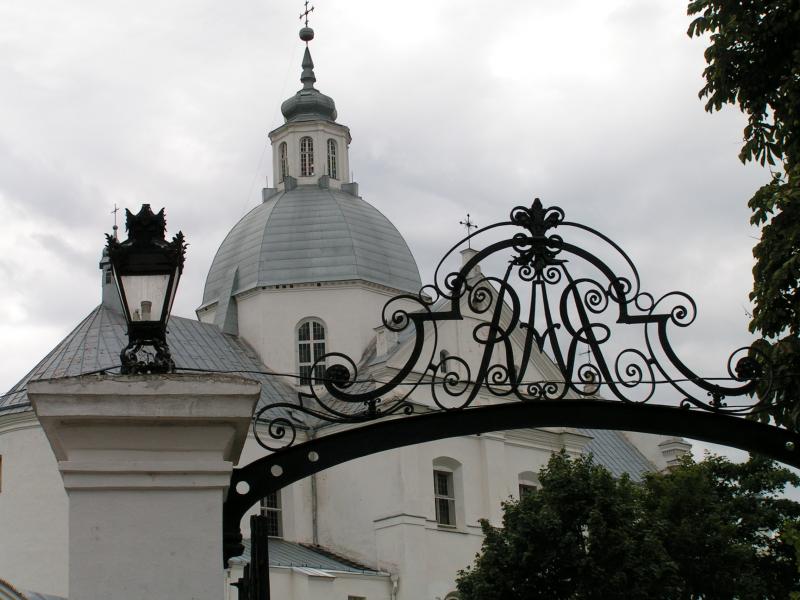 Detail einer orthodox geprägten Kirchenarchitektur mit Kuppel und schmiedeeisernem Tor.
Photo: Ilya
Detail einer orthodox geprägten Kirchenarchitektur mit Kuppel und schmiedeeisernem Tor.
Photo: Ilya
The 14th century left no mark on Suzdal’s architecture. The city rose from the ashes of Batu Khan’s raids and even extended its boundaries, but building continued to be done exclusively in wood. Not only homes and parish churches, but also monasteries—founded at the time along all the city’s main approach roads—were built from this material. Suzdal’s difficult circumstances were compounded by the fact that its princes were fighting for independence from Moscow. In the mid-14th century, they allied with the princes of Nizhny Novgorod and established the Suzdal–Nizhny Novgorod Principality, with its capital in Nizhny Novgorod. In 1392, however, the principality fell, and Suzdal lost its political significance for good. The city became a major religious center.
Suzdal once had fifteen monasteries; five remain today. Little is left of the Alexander and St. Basil’s monasteries, both known in the 13th century. At the Alexander Monastery, traditionally said to have been founded by Alexander Nevsky on the high bank of the Kamenka River, now stand the Ascension Cathedral, built by Natalya Naryshkina, the mother of Peter I, and its tall bell tower. At St. Basil’s Monastery, on the eastern outskirts of the city along the road to Yuri Dolgoruky’s former suburban residence at Kideksha, two 17th-century churches have survived: St. Basil’s Cathedral and the Church of the Purification of the Virgin, a rare example of an eight-sided-roof structure in Suzdal.
Almost in the city center—which was then the northern outskirts—stands the Convent of the Deposition of the Robe, known for the spiritual achievements of the nun Euphrosyne. The convent has two remarkable architectural monuments: a 16th-century cathedral with three domes and a Holy Gate topped by two tent roofs. The gate was built in 1688 by three Suzdal architects: Mamin, Shmakov, and Gryaznov. Its main decorative feature is a colorful tile frieze, while the tent roofs are adorned with decorative windows. The seemingly simple monastery gate is so tastefully decorated that it is rightly considered one of the finest architectural monuments in all of Suzdal. The bell tower, built in the Classical style between 1813 and 1819, is 72 meters high. It can be seen not only from anywhere in Suzdal, but also from many kilometers outside the city. It is said to have been built by the townspeople in memory of the Russian army’s victory in the Patriotic War of 1812.
Quick facts: Monasteries of Suzdal
- Suzdal has several historic monastic complexes, each with its own architectural and functional history.
- The Monastery of Saint Euthymius, the Intercession Convent, and other complexes each have their own particular character.
- Monastery grounds are religious and cultural sites; visitors should dress appropriately and behave quietly.
- Distances, ramparts, bridges, weather, and daylight affect the order of visits.
- The Kremlin, Posad, and open-air museum complement the city, but are separate destinations.
- Check opening hours, admission, services, access, transport, and current conditions in advance.
Compare Suzdal’s monasteries by location and focus
Suzdal has several monasteries with distinct histories, architecture, and atmospheres. Choosing where to visit therefore depends not only on how many complexes there are, but also on whether your main interest is church art, fortifications, religious life, or a peaceful walk. Comparing their locations can help you avoid unnecessary travel between sites.
Before setting out, check current access hours and any restrictions. Rules on clothing, conduct, and photography apply in churches that are still in active use. If you have only one day in Suzdal, you can combine two or three complexes with the Kremlin and Posad; a longer stay makes sense if you have a stronger interest in history and art.
Choose monastery complexes by location and focus
Suzdal’s monasteries are best chosen by location, architectural history, and the time available rather than by trying to fit in the longest possible list. The monasteries of Suzdal and Suzdal provide the urban context. Historical information about Suzdal offers additional regional context; check opening hours and access with the individual institutions.
The Monastery of Saint Euthymius, the Intercession Convent, the Kremlin, Posad, and the open-air museum can be combined according to your interests. Vladimir and the Golden Ring are longer excursions, each requiring its own travel and visiting time.
Before your visit, check for updates on getting there and transport, travel preparation, language and communication, staying safe, and culture and history. The current travel and safety advice for the Russian Federation takes precedence over older information about monasteries or transport.
FAQ about Suzdal’s monasteries
Which monasteries are best known?
The Monastery of Saint Euthymius and the Intercession Convent are among the most frequently mentioned. Choose other monasteries according to their location and opening hours.
How many complexes can you visit in one day?
That depends on distances, opening hours, weather, and how much detail you want to see. Visiting a few complexes at a comfortable pace is usually more enjoyable.
What should I keep in mind when visiting monasteries?
Dress appropriately, behave quietly, be considerate during services, and follow current photography rules.
Can monasteries and the Kremlin be visited together?
Yes, if the distances and opening hours work together. Allow separate time blocks for the Kremlin, Posad, and the open-air museum.
