
Ulan-Ude: Buryatia’s capital between Lake Baikal and the steppe
Ulan-Ude is the capital of Buryatia, located east of Lake Baikal along an important railway line. To plan a worthwhile visit, first decide whether Ulan-Ude will be a destination in its own right, a stop on a longer route, or the focus of a themed trip. In Russia and Central Asia in particular, distances, the season, connections, and local conditions strongly affect what is realistically possible on site.
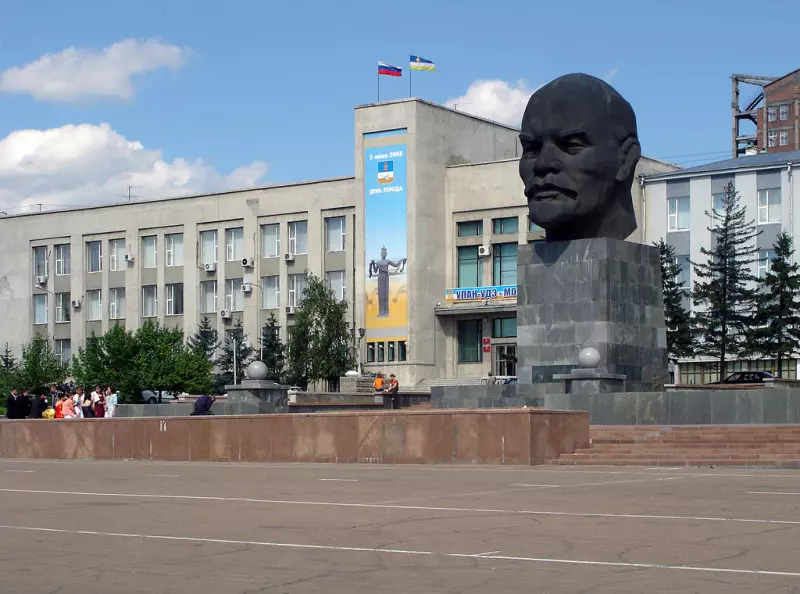 Die größte Lenin-Büste der Welt. Wer genau hinschaut, sieht Lenin mit asiatischen Zügen auf dem zentralen Platz von Ulan-Ude
Photo: Angie / Wikipedia, CC BY-SA 3.0
Die größte Lenin-Büste der Welt. Wer genau hinschaut, sieht Lenin mit asiatischen Zügen auf dem zentralen Platz von Ulan-Ude
Photo: Angie / Wikipedia, CC BY-SA 3.0
Quick facts: Ulan-Ude
- Ulan-Ude is the capital of Buryatia, located east of Lake Baikal.
- The city brings together Siberian history, Buryat culture, and Buddhist traditions.
- The city center, museums, wooden houses, and datsan complexes offer different points of interest.
- Ulan-Ude lies on the Trans-Siberian Railway and can serve as a stop on a long-distance journey.
- Trips to Lake Baikal and the mountains require separate planning for transport, weather, and the return journey.
- Check opening hours, timetables, dress requirements, weather, and current travel conditions.
Ulan-Ude between Buryatia, the steppe, and Lake Baikal
Buddhist traditions, Siberian urban history, Soviet-era squares, wooden houses, the steppe, and proximity to Lake Baikal all shape a stay here. What matters is not compiling the longest possible list of places, but choosing a route that suits your pace. If you are continuing by train, plane, bus, or boat, allow enough time for arrival, transfers, and contingencies.
Ulan-Ude also shows how varied travel can be across Eastern Europe and Central Asia. Some places are good bases for museums and walks; others are shaped by waterways, landscapes, religious sites, or vast distances. A relaxed plan makes these differences easier to appreciate.
Buddhist monasteries, city sights, and museums
The city center, the Lenin Head, regional museums, datsan complexes, wooden houses, and excursions into the surrounding area are among the key attractions. For a first visit, a clear selection is usually enough: one central area to get your bearings, one or two main interests, and plenty of time for getting around, breaks, and changing weather. For nature or waterside destinations, take particular care to check the return journey, season, and daylight hours.
Many older travel guides list attractions without providing current information. Before setting out, check opening hours, transport connections, ticket rules, the security situation, and local advice again. This is especially important in regions with long winters, proximity to borders, limited connections, or highly seasonal services. In Ulan-Ude, plan departure points, transfers, and the return journey around the day’s specific itinerary.
Combining Ulan-Ude with Lake Baikal and the Trans-Siberian Railway
Ulan-Ude combines well with Lake Baikal, Buryatia, and the Trans-Siberian Railway. Choose connections that make sense thematically and geographically: city and surroundings, river and port, railway line and stopover, mountains and capital, or cultural history and everyday life today. This makes the journey easier to follow and prevents it from becoming a collection of far-flung place names.
For further orientation, see related pages such as Buryatia Lake Baikal the Trans-Siberian Railway. They provide the broader context; for your own plans, the main considerations at each destination are how to get there, how long to stay, and local conditions. If you are linking several stops, choose the order based on transport, length of stay, and season.
Prepare for arrival, climate, and the rhythm of the day
For long journeys, it pays to plan conservatively. An extra evening at your arrival point may be more useful than another day trip. For train and air travel, think about luggage, transfer times, and the location of your accommodation well in advance. For river, lake, and mountain destinations, the weather and season often matter more than the distance on the map. In Ulan-Ude, check the location of your accommodation against your main daily routes and allow time for realistic breaks.
If you plan to take photographs, visit museums, or enter religious sites, respect local rules. At churches, monasteries, mosques, and Buddhist complexes, dress, conduct, and permission to take photographs may all matter. At markets and railway stations, and in remote areas, a discreet manner is usually the best way to ensure a relaxed visit. In Ulan-Ude, plan departure points, transfers, and the return journey around the day’s specific itinerary.
Who is Ulan-Ude suited to?
This destination is especially suited to travelers who want more than to tick off famous capitals and are interested in understanding how landscape, transport, history, daily life, and present-day use fit together. Traveling with these expectations makes for a less hurried itinerary and a closer appreciation of a place’s character. In Ulan-Ude, plan departure points, transfers, and the return journey around the day’s specific itinerary.
For a short stop, a focused walk combined with a museum or viewpoint may be enough. For a dedicated stay, two or three clear priorities are better than an overloaded schedule. On very long routes, every additional stop should have a purpose, so the journey does not become a series of transfers. In Ulan-Ude, plan departure points, transfers, and the return journey around the day’s specific itinerary.
Buryatia, urban history, and Buddhist culture
Ulan-Ude is a good choice for travelers who want to combine Siberian urban history and Buryat culture with the landscapes between the steppe and Lake Baikal. Buryatia provides the regional context; Lake Baikal and Chita are destinations in their own right. The city center, a museum, and a religious site should not be crammed into an overly packed day.
The Lenin Head, historic wooden houses, regional collections, and datsan complexes reveal different sides of the city. At Buddhist, Orthodox, and other religious sites, be mindful of dress, quiet, photography permissions, and local rules. For trips to Lake Baikal or the steppe, weather, transport, daylight, and the return journey matter more than the straight-line distance on a map.
Before your visit, check the latest information on getting there and transport, travel preparation, entry requirements and documents, and staying safe while traveling. For choosing what to see, consult culture and history and nature and landscapes; money and payments and language and communication are also useful for preparation. The latest country information on Russia supplements your safety checks.
Ulan-Ude FAQ
What is Ulan-Ude known for?
Ulan-Ude is associated with Buryatia, Buryat culture, Buddhist traditions, Siberian urban history, and the Lake Baikal region.
How much time should I allow?
A full day is enough for the city center and one cultural highlight. Allow extra days for a datsan, museums, and a trip to Lake Baikal.
Can I combine Ulan-Ude with Lake Baikal?
Yes, but Lake Baikal is a separate stop. Check current transport, weather, accommodation, and reliable return options.
What should I keep in mind when visiting religious sites?
Follow current local rules on dress, conduct, photography permissions, opening hours, and any access restrictions.
