
Planning long-distance rail journeys with long stages and well-chosen stops
A long-distance rail journey makes the route itself part of the experience. Landscapes change gradually, stops along the way take on greater significance, and the rhythm of the day is shaped more by the train than by any single attraction. The Trans-Siberian Railway is a well-known example of a historic long-distance rail connection. When planning a specific trip, however, its name should not be taken to mean that a standard journey is automatically available. Timetables, borders, entry requirements and booking options must always be checked for the latest information.
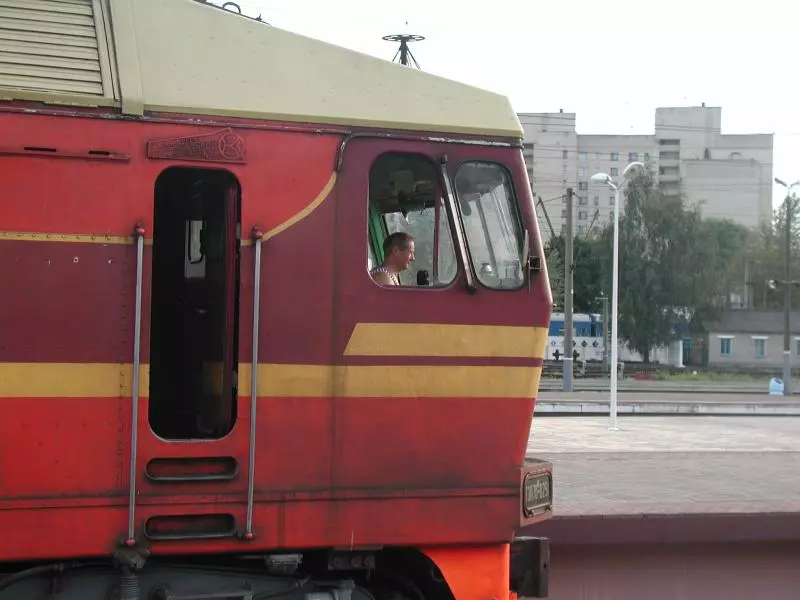 Eine rote Lokomotive steht an einem Bahnsteig; dahinter sind Bahnhofsgelände und Stadtgebäude zu sehen.
Photo: Markus Lenk
Eine rote Lokomotive steht an einem Bahnsteig; dahinter sind Bahnhofsgelände und Stadtgebäude zu sehen.
Photo: Markus Lenk
At a glance: the Trans-Siberian Railway and other long-distance rail journeys
- Long train journeys call for realistic stages, breaks and time buffers for transfers.
- A stop along the way changes the trip more than a brief stay at a station.
- Sleeper cars, seated cars and private compartments offer different levels of comfort.
- Luggage, documents, medication and charging options should be prepared for long stretches.
- Current timetables and entry requirements matter more than historical ideas of the route.
- A shorter long-distance rail journey can offer the same unhurried travel experience and be easier to plan.
Distinguishing the historical route from travel today
For many travelers, the historical idea of a connection from Europe through Russia to East Asia is fascinating. But planning a trip today means starting with the routes that are actually accessible. Political conditions, border crossings, visa rules, timetable changes and limited booking options can alter a once-familiar route or make it impossible. So first establish which countries and stations are realistically accessible at present.
If you are looking for the feel of a long rail journey, you could also choose a shorter route with two or three longer stops. Cities, landscapes and regional trains can be combined along the way. Information on cities, old towns and architecture can help you choose places to stay, while mountains and mountain landscapes show how to incorporate landscape experiences into an itinerary.
Planning stages and stops along the way
A very long journey should not be planned as one continuous stretch. First decide how many nights on the train you are comfortable with and where a longer stay is essential. A stop of just a few hours is rarely enough to see a city while carrying your luggage. Two or three nights allow time to get your bearings, rest and take an excursion if the weather is bad.
When deciding on the order of your stops, also take time zones, sleep patterns and physical demands into account. A packed itinerary is not ideal after a long overnight train ride. A relaxed day after arrival, with a break in nature or a walk, can make the transition easier. Active outings such as cycling trips and hiking, trekking and climbing are suitable only if you can be sure to get back in time for your next train.
Comfort, luggage and everyday life on the train
For long stretches, a place to sleep, washing facilities, food and storage space matter more than a particularly short journey time. Keep a small day bag close at hand with water, snacks, a sleep mask, earplugs, a charger and medication. Keep valuable documents separate from the rest of your luggage. If you have several transfers, a clear list of train numbers, departure times, platforms and accommodation is helpful.
Travelers should not assume that every train offers the same amenities. Reserved seating, power outlets, internet and food may not be available on every route. Planning what to eat at the station and allowing for delays make the trip more robust. If traveling with children or older people, check transfer routes especially carefully and consider planning an extra night rather than risking a tight connection.
Borders, documents and up-to-date checks
For international long-distance rail journeys, passport validity, visas, proof of insurance, customs rules and entry requirements should be addressed at the start of the planning process. Transit countries may also have their own requirements. Check the information with the relevant official authorities immediately before booking and again before departure. Historical travel accounts can help you imagine the journey, but they are no substitute for current information.
For destinations with a strong focus on scenery or culture, nature and landscapes, culture and history and regional cuisine can help you put together your stops. That way, the train journey becomes more than a long connection: it becomes a well-paced alternation of travel, time ashore and rest. Wildlife watching can also be a worthwhile focus during a longer stay.
Also make a point of leaving some time unscheduled. Long train journeys are not just about getting from one place to another; they are also a chance to relax, read and observe. If you fill every stop with several appointments, you lose the journey’s unhurried character. A simple daily plan with one main activity and an alternative is usually enough.
When booking, check whether tickets cover the whole journey or only individual sections, and whether reservations are required on specific days. Save important booking details offline as well. This is especially useful if internet access, language or finding your way around an unfamiliar station proves difficult.
FAQ
Can you currently book the Trans-Siberian Railway from end to end?
There is no general answer. Check the route, border situation, timetable, visa requirements and availability for your intended travel dates.
How many stops are advisable?
A few longer stays are usually more restful than lots of short stops. The right number depends on the time available and the length of the train journeys.
What matters most on the train?
A place to sleep, a day bag, water, medication, a charger and a buffer for delays are among the most important things to prepare.
