
Municipality of Matulji
Accommodation in Municipality of Matulji
The Municipality of Matulji offers a range of reasons to travel here: the memorial centre in Lipa, the Zvončari carnival tradition and trails through the protected landscape of Lisina. Which of these experiences interests you most may help determine where you stay.
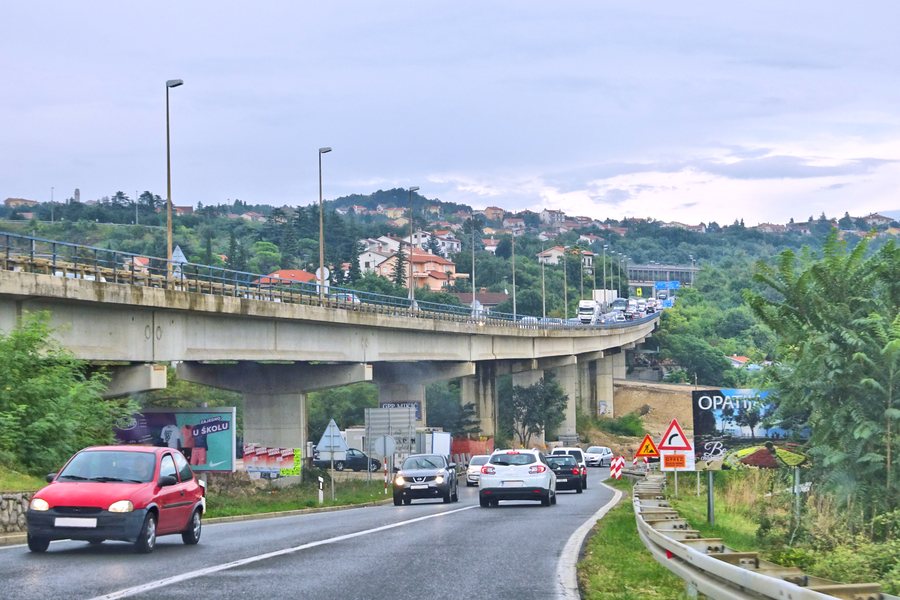
Matulji at a glance
The Matulji carnival takes place in January and February; its main event is the Zvončari Festival. In Lisina, hiking trails cross scenic ridgelines. For those interested in culture, the Memorijalni centar Lipa pamti is an important place to visit: it is dedicated to the history of the Second World War in the Liburnian Karst.
The municipality’s towns and villages include Zaluki, Pasjak, Jušići, Mučići, Zvoneće, Male Mune, Brešca, Šapjane, Rukavac, Mihotići, Rupa, Veli Brgud, Matulji and Jurdani.
How do you get to the Memorijalni centar Lipa pamti?
Suburban bus line 30 runs from Delta in central Rijeka to Lipa. Lipa is the final stop; from there, an approximately 100-metre, gently uphill walk leads to the Memorijalni centar Lipa pamti. Parking is permitted right next to the centre.
The centre is open Mondays, Tuesdays, Wednesdays and Fridays from 9 am to 3 pm. On Thursdays and Saturdays, it is open from 12 pm to 7 pm; it is closed on Sundays and public holidays. Plan your visit accordingly.
What culture and history shape the municipality?
The present-day Memorijalni centar Lipa pamti opened in April 2015 on the site of an older memorial museum that operated in Lipa from 1968 to 1989. Its exhibition interprets the history of the Second World War in the Liburnian Karst. In addition to Lipa, this area includes Pasjak, Rupa, Šapjane and Brdce.
Another distinctive feature is the language of Žejane, known as žejånska limba. It is named after the village of Žejane in the northwestern part of the Municipality of Matulji and is considered a variant of Istro-Romanian. Around 30 residents, mostly middle-aged and older, speak it. The language is included on the Republic of Croatia’s list of intangible cultural heritage.
Rural architecture is also part of the area’s character. The stone terraces of Zvonejske njivi near Zvoneća date from between the 15th and 17th centuries and cover around 60 hectares. Andrejići, a hamlet of Rukavac, is listed as a rural ensemble; it includes traditional stone buildings and a small tower-like structure called a tornica. The entire village of Veli Brgud is designated as a protected and officially registered rural ensemble.
What trails and landscapes can you explore?
The Matulji area has a network of 150 kilometres of cycling and hiking trails, including 10 circular routes. One hiking trail crosses the scenic ridge of Crni vrh, a 1,037-metre peak in the protected landscape of Lisina. It begins southwest of the mountain lodge in Lisina. The protected martagon lily (Lilium martagon) also grows in Lisina.
The Bike and Hike Route 119, “Od Golopusta do sup Šije,” begins in the centre of Vele Mune. It is 15 kilometres long and gains 240 metres in elevation. Another option is the 37.5-kilometre circular Route 113, “Mune i Žejane,” with a total elevation gain of 590 metres. It begins in Jušići and runs mostly on asphalt. The routes differ in length, elevation gain and surface, so choose according to which details matter for planning your trip.
Route 117 begins in Rukavac at the car park below the Kinkel House. It passes through Gornji Rukavac and the protected area of Lisina, then follows the old Žejane–Bukvina–Zvoneća road and continues to the terraces of Zvonejske njivi. Route 114 starts in the small village of Zvoneća, known for the indigenous Jarbola grape variety and the Church of Saint Anthony. From there, the route passes through Sušnji and Zdemer, where a memorial plaque and a bench for the milkmaids stand, before continuing to Rukavac and Lisina.
What defines carnival time and regional cuisine?
The Zvončari are traditional carnival figures whose origins date back more than 500 years. The Zvončarska Smotra is traditionally held on the Saturday before Shrove Tuesday in Matulji. At its 29th edition, 14 Zvončari groups paraded through Matulji. The carnival in January and February is a cultural highlight, while the Smotra is a specific event within the carnival season.
Jarbola is an indigenous grape variety that grows exclusively in the Zvoneća area. In Matulji, local oštarije serve dishes made according to recipes passed down through generations, complementing the experience with Jarbola, a wine made from this grape variety. Those interested in regional cuisine can thus connect Matulji and Zvoneća through different aspects of the same local wine tradition.
FAQ
When is the Memorijalni centar Lipa pamti open?
Mondays, Tuesdays, Wednesdays and Fridays from 9 am to 3 pm, and Thursdays and Saturdays from 12 pm to 7 pm. The centre is closed on Sundays and public holidays.
How do you get to the memorial centre by bus?
Suburban bus line 30 runs from Delta in central Rijeka to its final stop at Lipa. From there, it is about a 100-metre, gently uphill walk.
When is the Zvončarska Smotra held?
Traditionally, it is held on the Saturday before Shrove Tuesday in Matulji. At the 29th edition, 14 Zvončari groups paraded through the town.
What are the details of Routes 119 and 113?
Route 119 is a 15-kilometre Bike and Hike route with 240 metres of elevation gain, beginning in Vele Mune. Route 113 is a 37.5-kilometre circular route with a total elevation gain of 590 metres; it begins in Jušići and runs mostly on asphalt.
For the broader travel guide, see: Kvarner Bay.

